
 中文简体
中文简体
 English






postmaster@goobagelfood.com
Content
- 1 Sourdough Innovation Has Become a Category Standard, Not a Craft Claim
- 2 Texture Has Become the Second Language of Flavour
- 3 Swicy and Regional Flavours Move into Mainstream Bakery
- 4 Protein, Fiber, and Clean Labels Are Now the Price of Entry
- 5 Occasion-Based Formats and the Operational Reality of 2026
Product launches featuring a sourdough claim have increased 31% worldwide, and the category is forecast to grow another 33% in 2026. Fermentation has stopped being a niche selling point; it is now a sourcing requirement. For bakery brands, coffee chains, and foodservice operators, the real question is no longer whether fermentation-driven products sell — it is how to deliver them with consistent flavour, texture, and shelf life at scale.
Sourdough Innovation Has Become a Category Standard, Not a Craft Claim
Conclusion first: a bakery program without a fermentation-driven product in 2026 starts at a disadvantage. Consumer research firms keep reporting double-digit growth in sourdough interest — one major industry tracker measured a 45% year-over-year increase in sourdough-related searches and social conversation. And this is not the preserve of artisan bakeries anymore. Sourdough claims now appear in bagels, buns, crackers, pizza bases, and laminated pastry, which means the production reality has changed for every manufacturer in the supply chain.
Fermentation Is Cheap in Ingredients but Expensive in Time
Sourdough's appeal is part flavour, part perception. Long fermentation develops organic acids that create a tangy, slightly sweet, deeply toasted character. Consumers also associate fermented products with digestibility and fewer additives, which puts sourdough at the centre of the clean-label movement. But fermentation has a commercial cost: time. A traditional schedule can run 24 hours or more, requires strict temperature control, and depends on bakers who can read a ferment by sight and smell.
That is why the 2026 sourdough conversation has shifted from recipes to systems. Freezing is what makes fermentation commercially viable. A bagel that is fermented, boiled, and then parbaked or frozen as raw dough carries the full flavour development into the operator's kitchen, where it only needs a final bake. The manufacturer does the hard work; the customer gets the craft result at a predictable cost.
What Sourdough Logic Means for Bagel Texture
Bagels are a particularly honest test of fermentation because there is nowhere to hide. The crumb must be dense and chewy, the crust glossy and firm, and the flavour must come from the dough itself rather than from toppings. That is the reasoning behind kettle-boiled New York-style bagel texture: the brief boil sets the surface starch, locks in the structure, and prepares the crust for high-heat baking. When fermentation and boiling work together, the result is a tight crumb with a complex, slightly pungent flavour that toasting and filling only amplify. Reproducing that result across large batches and multiple SKUs is a process-engineering challenge, not a recipe tweak.
Texture Has Become the Second Language of Flavour
Across 2026 trend forecasts, the most consistent message is about mouthfeel. Puratos identifies texture mashups as one of the most talked-about bakery trends of 2026; Innova lists multisensory indulgence among its key innovation pillars; bakery trade media now describe texture as the factor consumers notice before they taste. The pattern is simple: contrast sells. Crispy against creamy, crusty against chewy, crunchy against soft — the gap between two textures reads as quality.
In Bagels, Contrast Lives in the Crust-to-Crumb Relationship
A New York-style bagel should offer a substantial, slightly resistant bite and a tight, chewy interior. A pretzel-style treatment pushes the contrast further. The alkaline dip and high-temperature bake produce a dark, brittle, glossy crust while the interior stays soft and elastic. The high-temperature baking pretzel bagel is our answer for buyers who need that dramatic texture in a frozen program, because a strong crust is the first thing a customer notices and the first thing to degrade when the freeze-thaw cycle is mishandled.
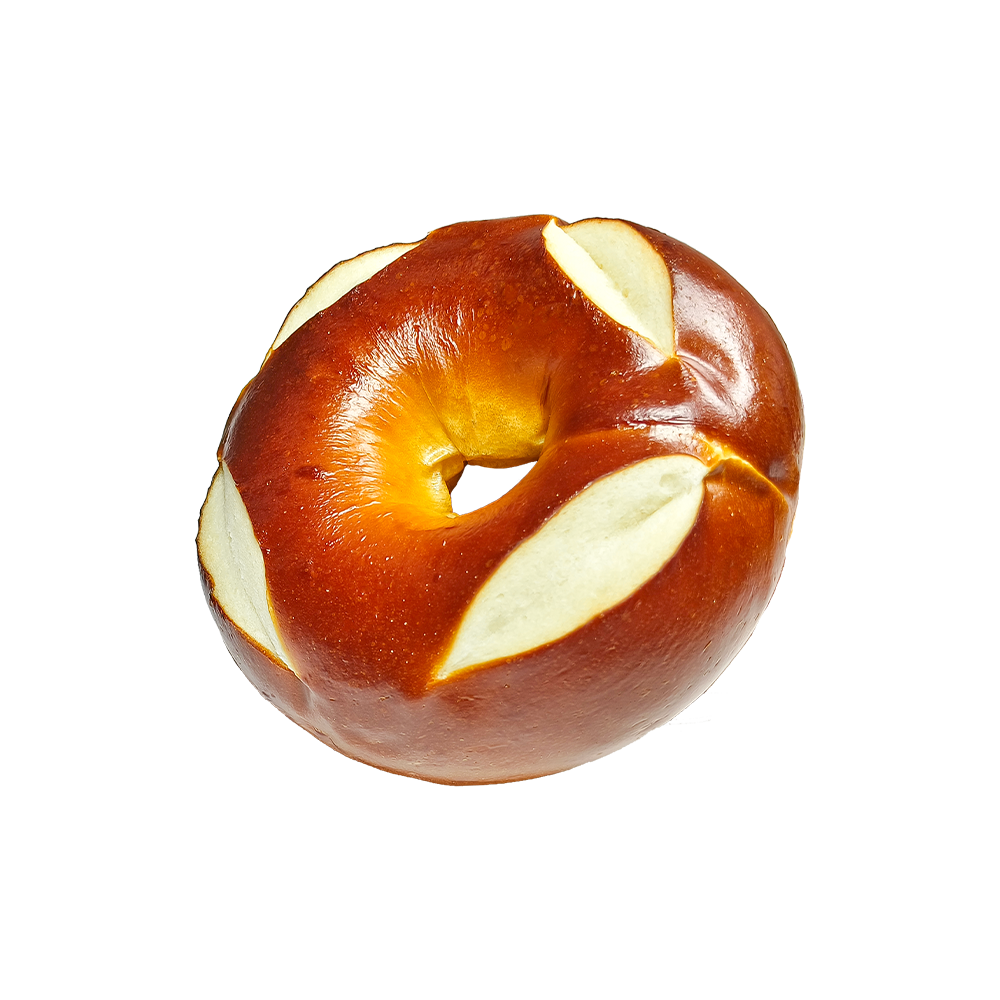 High-Temperature Baking Pretzel Bagel Manufacturers, Suppliers, Wholesalers - JiGoobagel - China High-Temperature Baking Pretzel Bagel Suppliers and Wholesaler, Custom High-Temperature Baking Pretzel Bagel Manufacture...View Product →
Texture Has to Be Engineered for the Cold Chain
Fresh bakeries can afford to be casual about texture. Frozen programs cannot. Parbaked and raw-dough bagels go through temperature swings that stress starches and compromise crusts. Water absorption, mixer development, proofing window, and bake curve all have to be locked before a product enters one of the three delivery formats. If a supplier cannot demonstrate that control, the buying risk is simple: the texture will be inconsistent by the time it reaches the customer.
Swicy and Regional Flavours Move into Mainstream Bakery
One of the most specific flavour forecasts for 2026 is "swicy" — sweet and heat in the same bite. What started as snack-industry slang is now accepted bakery trend language, and the underlying logic is sound: heat creates contrast on the palate, while a sweet or savoury base builds depth around it. For bakery buyers, swicy is a warning that a plain base is no longer enough to differentiate.
Heat Needs a Flavour Base Strong Enough to Carry It
Spicy bakery products fail when the heat sits on top of an indifferent carrier. The more reliable approach is to give the spice a structural anchor — a filling distributed through a chewy base, so every bite gets the same balance. The chewy bagel base with Sichuan pepper chicken filling is a direct example: the numbing, citrusy heat of Sichuan pepper is balanced by the bagel's chew and the savoury richness of the filling. It also holds up in cold-chain programs, because the filling's fat content and spice profile remain stable through freezing and reheating.
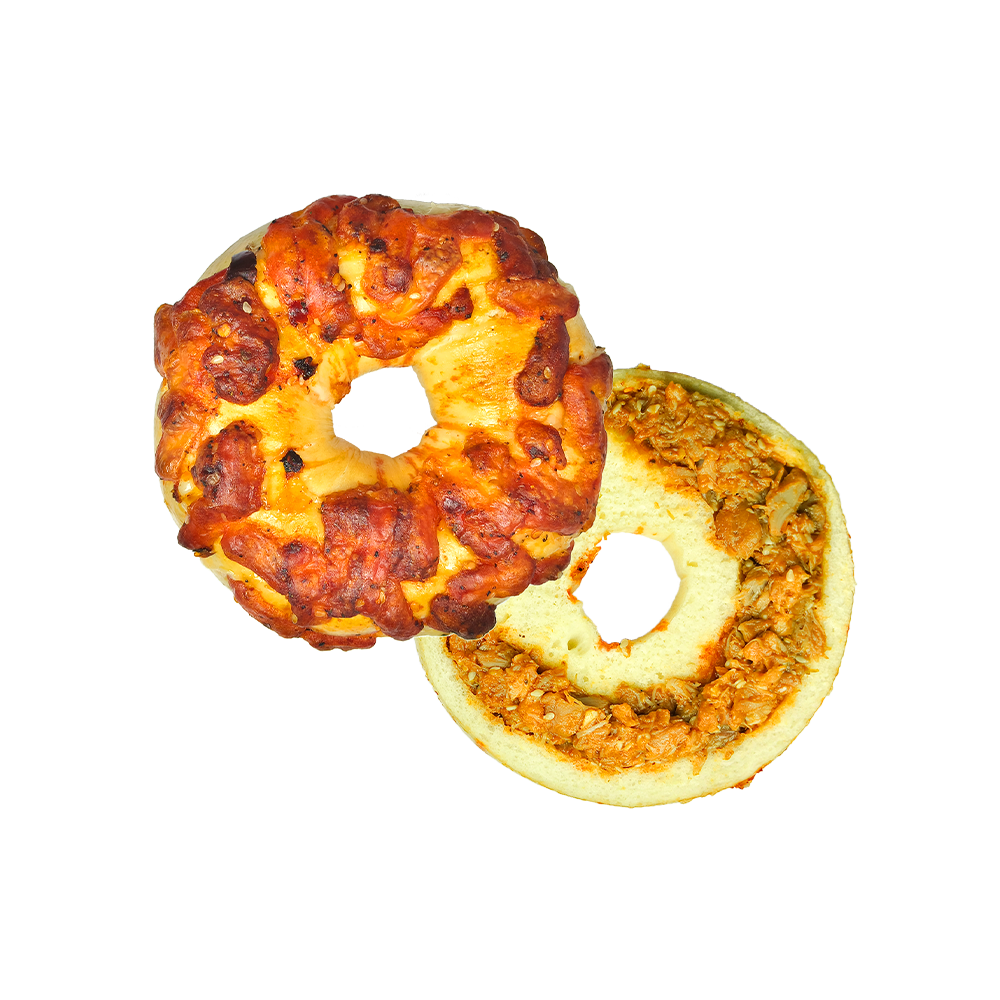 Chewy Bagel Base Teng Pepper Chicken Bagel Manufacturers, Suppliers, WholesalersGoobagel - China Chewy Bagel Base Teng Pepper Chicken Bagel Suppliers and Wholesaler, Custom Chewy Bagel Base Teng Pepper Chicken Bagel M...View Product →
Regional Taste Is a Practical Differentiation Strategy
Regional ingredients let a brand stand out in a crowded freezer case without inventing a new category. Coffee and tea chains have already adopted pepper-spiced, roasted-onion, and other locally relevant bagel varieties to make breakfast menus feel less generic. For a buyer, the implication is that flavour development support matters as much as the base product: the supplier's R&D capacity determines how fast a regional concept becomes a manufacturable SKU.
Protein, Fiber, and Clean Labels Are Now the Price of Entry
The 2026 health agenda in bakery is specific rather than aspirational. Puratos research found that 67% of consumers choose food based on health benefits, and Innova's global bakery outlook names protein as a leading purchase driver, with fiber and probiotics close behind. None of these are new ideas — what changed is that they are now written into retail specs and menu briefs.
Whole Grains and Seeds Carry the Gut-Health Message
Fiber is the easiest gut-health claim for a buyer to verify, because it appears directly on the nutrition panel. Whole-wheat flour, oats, flaxseed, and sesame seeds add meaningful fiber without requiring functional additives or premium trademarked ingredients. The low-fat whole-wheat oat and flaxseed bagel is the SKU we recommend when a retail or coffee-chain client needs a breakfast product with a defensible fiber story and a short ingredient list. The seeded crust adds texture, which makes the health message easier to sell at the point of purchase.
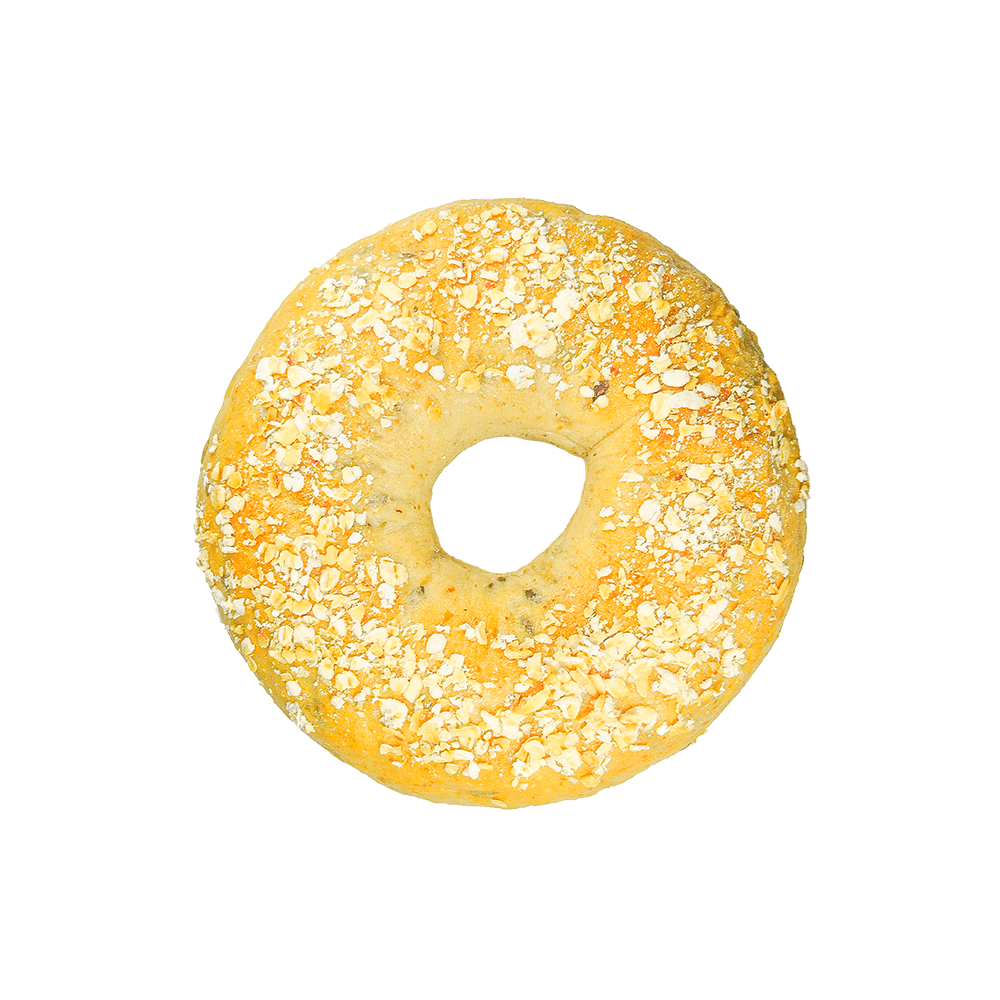 Low Fat Whole Wheat Oat Flaxseed Bagel Manufacturers, Suppliers, Wholesalers - JGoobagel - China Low Fat Whole Wheat Oat Flaxseed Bagel Suppliers and Wholesaler, Custom Low Fat Whole Wheat Oat Flaxseed Bagel Manufactu...View Product →
Clean Label Is Now a Procurement Specification
"No preservatives" has moved from marketing language to contract language. Retailers and foodservice distributors increasingly write it into specifications, and that creates a real tension: a frozen bagel has to survive months of cold-chain storage without conventional shelf-life extenders. The answer is formulation and process control — longer fermentation, tight pH management, and clean baking hygiene. Our approach to clean-label bagel formulations without preservatives is built on those tools, and it is one reason the R&D library now exceeds 100 clean-label bagel varieties, including zero-sugar and fructo-oligosaccharide (FOS) lines that serve prebiotic positioning. For a procurement team, the practical risk to check is simple: if a supplier cannot hold shelf life without preservatives, the product will either ship with a shorter code date or get reformulated at your expense mid-contract.
Occasion-Based Formats and the Operational Reality of 2026
The final 2026 trend worth acting on is occasion-based innovation. With more single-person households, more breakfasts eaten on the move, and more lunch occasions away from a proper table, bakery products are being designed for smaller, faster moments. At the same time, operators are dealing with labour shortages, shorter production runs, and a rising number of SKUs. The way to reconcile these pressures is format flexibility: the same bagel delivered in different readiness states lets the buyer control labour cost, equipment needs, and freshness perception.
| Format | What it is | Best fit |
|---|---|---|
| Parbaked | Fully baked, then frozen; finished in 3–6 minutes in a deck, convection, or combi oven | Cafés and foodservice outlets with an oven but no dedicated baker |
| Raw dough | Shaped and frozen unbaked; proofed and baked on-site | Retail bakeries that want oven-fresh aroma and crust development |
| Thaw-and-serve | Fully baked and ready after thawing at room temperature | Grab-and-go counters, coffee bars, convenience retail, and catering |
Parbaked formats are growing fastest in foodservice because they solve the skills gap: the artisan quality is built in at the factory, and the store simply finishes the bake. That is the logic behind our parbaked frozen bagel formats for foodservice — crust, chew, and aroma arrive in the box, and the oven does the rest. For brands that already operate a bakery, raw-dough delivery preserves the theatre of fresh baking; for high-throughput coffee and tea chains, thaw-and-serve keeps queues moving without a toasting bottleneck.
The 2026 direction is clear enough to act on: fermentation and sourdough character signal quality, extreme texture contrast decides first impressions, swicy and regional flavours add differentiation, and clean label is a precondition for shelf access. The brands that profit from these trends will be those whose suppliers can hold every one of those attributes constant across large frozen production runs — because consistency, not a single viral product, is the real competitive advantage in this cycle.
