The Kettle-Boiling Step: Water Chemistry Variables and Their Effect on Crust Formation
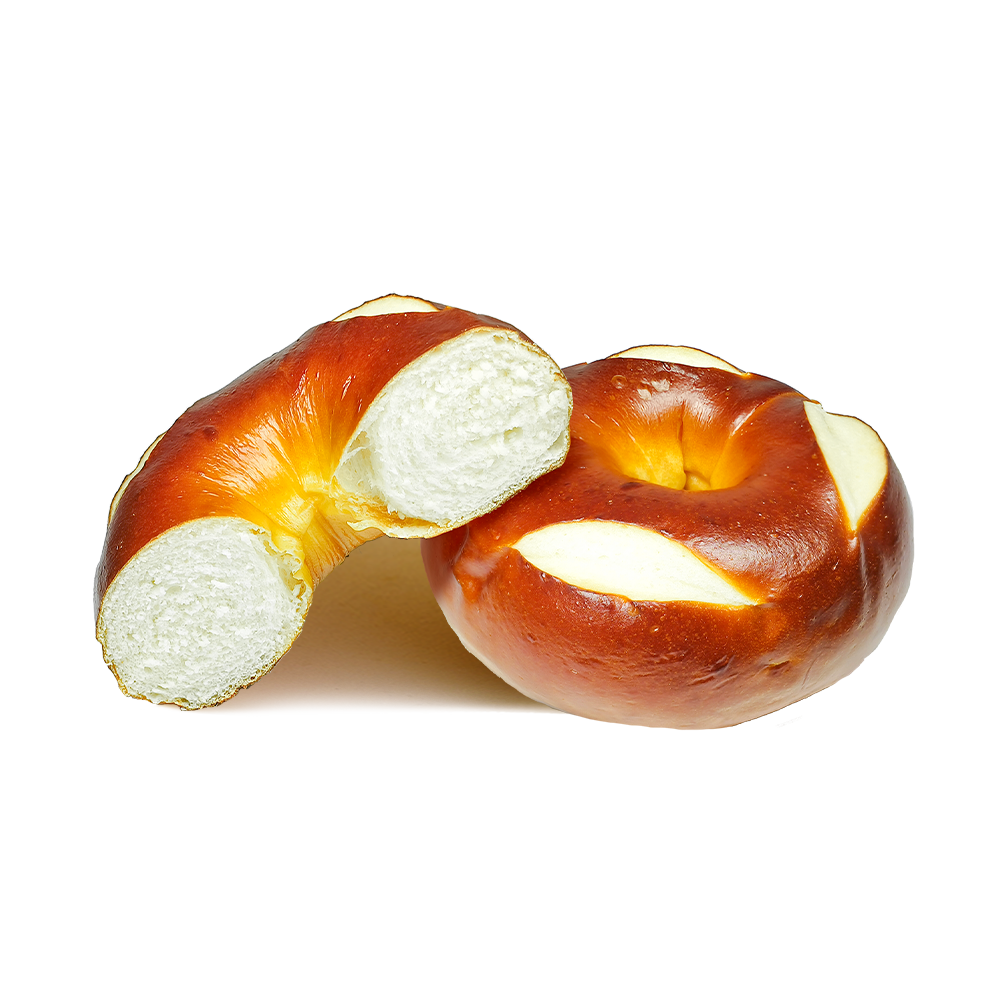
The kettle-boiled step is the single most distinctive process element separating a Classic Bagel from every other leavened bread product, and the chemistry of the boiling water has a more significant impact on the finished crust than is commonly understood. The standard traditional recipe calls for boiling water with one of several additives — barley malt syrup, baking soda (sodium bicarbonate), or lye (sodium hydroxide) — each of which produces a measurably different crust character. Barley malt syrup, the most traditional addition at concentrations of 1–2 tablespoons per liter, contributes fermentable sugars and Maillard precursors (amino acids and reducing sugars) to the bagel surface, producing a deep amber-brown, glossy crust with a subtly sweet, malty flavor note. Baking soda raises the pH of the boiling water to approximately 9.0–9.5, accelerating surface starch gelatinization and Maillard browning during subsequent baking; at this pH, the starch layer forms more rapidly and densely than in neutral or malt-enriched water, creating a crisper, thinner, more crackly crust character. Lye solutions (0.5–1.0% sodium hydroxide), more commonly associated with pretzels, raise surface pH even further and produce the darkest, most intensely browned crust with the strongest surface flavor — used in certain regional bagel traditions but requiring careful handling due to caustic safety requirements. At Jiangsu Goobagel Food Technology Co., Ltd., the boiling water specification for each Classic Bagel SKU is treated as a formula variable equal in importance to the dough recipe itself, with additive type, concentration, water temperature, and immersion time all documented in the production standard operating procedure and validated for consistency across high-volume production runs.
Boiling Duration and Its Dual Role in Crust Texture and Crumb Density Control
The duration of the kettle-boiled immersion step does not merely affect crust gloss — it is one of the primary levers controlling the interior crumb density of the finished Classic Bagel. When a shaped, proofed dough ring enters the boiling water, heat penetrates inward from the surface, gelatinizing starch and denaturing proteins progressively from the exterior toward the center. Longer immersion times allow this gelatinized shell to develop greater thickness and rigidity before the bagel enters the oven, which means the oven spring — the rapid interior expansion driven by trapped gases during baking — is more physically constrained. A 30-second boil produces a relatively thin gelatinized shell and allows meaningful oven spring, resulting in a slightly more open crumb and a softer eating texture. A 90-second boil produces a substantially thicker, more rigid shell that significantly limits oven spring, yielding the dense, tight crumb structure associated with the most traditional recipe iterations of the NY-style Classic Bagel. This relationship gives bakery operators a practical dial for tuning the crumb character of their product without changing the dough formula — shorter boil times for a slightly softer, more accessible texture profile; longer boil times for the characteristic dense chew that distinguishes a genuine kettle-boiled product from steam-oven alternatives. As a Classic Bagel Manufacturer producing for diverse commercial applications, Jiangsu Goobagel Food Technology Co., Ltd. documents boiling time specifications per SKU as a critical quality control parameter, with tolerance bands of ±10 seconds maintained through automated timing systems on the production line.
High-Gluten Flour Selection: Protein Content, Quality, and Performance in Traditional Recipe Doughs
The traditional recipe for a Classic Bagel is built on high-gluten flour — a specification that is more precisely defined in a commercial production context than simply "bread flour." The protein content of the flour directly determines the tensile strength of the gluten network, which in turn governs the dough's resistance to extensibility during shaping, its ability to hold gas during fermentation without over-expanding, and its structural resilience during the boiling step. A minimum protein content of 13% (on a 14% moisture basis) is the practical floor for producing the tight, dense crumb associated with a genuine Classic Bagel; formulas using flour below 12% protein cannot develop the gluten network strength needed to resist the oven spring-limiting effect of the boiling step and typically produce a puffier, more bread-like crumb. However, protein content alone does not fully characterize flour performance in bagel dough — protein quality, specifically the ratio of glutenin to gliadin subunits and the proportion of high-molecular-weight glutenin polymers, determines the extensibility-to-elasticity balance of the developed gluten. A flour with high protein content but a gliadin-dominant protein profile will produce an extensible, slack dough that tears during machine shaping, while a glutenin-dominant flour at the same protein level produces a stiffer, more elastic dough that holds its shape reliably through the entire production process. The table below summarizes the practical flour performance criteria used in Classic Bagel production:
| Parameter |
Target Range |
Effect if Below Range |
Effect if Above Range |
| Protein content |
13.0–14.5% |
Open crumb; insufficient chew; bagel puffs in oven |
Excessively tough crumb; difficult machine shaping |
| Water absorption (Farinograph) |
58–64% |
Dry, crumbly dough; poor shaping |
Slack dough; sticks to equipment; poor boiling performance |
| Falling number |
280–360 seconds |
High amylase activity; sticky crumb; surface blistering |
Low amylase; poor crust color; reduced fermentation sugars |
| Alveograph W value |
280–360 × 10⁻⁴ J |
Weak dough; tears during shaping; poor hole retention |
Excessive strength; difficult to shape; may require improver addition |
Cold Retard Fermentation: Flavor Development Mechanism and Industrial Standardization
The extended cold retard fermentation that defines the traditional recipe approach to Classic Bagel production is not merely a scheduling convenience — it is a biochemically active flavor development stage that produces compounds absent from quick-fermented doughs. During retardation at 2–5°C for 12–24 hours, yeast activity slows dramatically while enzymatic activity continues at a meaningful rate: proteases partially hydrolyze gluten proteins into smaller peptides and free amino acids, which become Maillard reaction precursors during subsequent baking and contribute to the characteristic complex, slightly tangy flavor of a traditional bagel crust. Simultaneously, organic acid production shifts toward acetic acid (vinegar-type) rather than lactic acid (dairy-type) as fermentation temperature drops, because the bacteria responsible for acetic acid production are relatively cold-tolerant while lactic acid bacteria are more temperature-sensitive. This acetic acid accumulation is responsible for the subtle but distinctive sharpness in flavor that distinguishes a long-fermented Classic Bagel from a fast-fermented product — a difference that experienced consumers notice and that forms the basis of premium positioning for artisanal bagel brands. The industrial challenge at a scale-production facility like Jiangsu Goobagel Food Technology Co., Ltd. is standardizing this biochemical variability: small differences in dough temperature at the start of retardation, refrigeration unit performance, and initial yeast cell count all affect the rate and endpoint of fermentation, potentially producing batch-to-batch flavor variation if not tightly controlled. The company's cold retard protocol specifies dough temperature at retarder entry (target 18–20°C), retarder air temperature (3±1°C), and maximum retard duration as a tiered control system that keeps fermentation within the flavor-optimal window across all production batches.
Scaling Traditional Recipe Bagel Production: Where Artisan Methods and Industrial Requirements Diverge
Many of the process elements that define a traditional recipe Classic Bagel — hand-rolling to create the characteristic surface tension, individual boiling in small batches, visual assessment of proofing completion, and baking in a wood-fired or deck oven — were developed in the context of small-batch artisan production and do not translate directly to industrial frozen bagel manufacturing without deliberate process re-engineering. Understanding where these divergences occur and how they are resolved is essential context for any brand operator sourcing Classic Bagel products from an OEM Classic Bagel Factory. The most operationally significant divergences are as follows:
- Shaping method: Hand-rolling creates surface tension by stretching the dough across itself, which tightens the gluten network from the outside inward and produces the smooth, taut surface characteristic of a traditional Classic Bagel. Industrial extrusion shaping — where dough is forced through a die and cut into rings — creates a mechanically different surface tension pattern and can produce a slightly more irregular surface texture. Jiangsu Goobagel Food Technology Co., Ltd. uses a rope-and-join shaping method on its production line that more closely replicates the surface tension profile of hand-rolling than die extrusion, preserving the visual and textural authenticity of the kettle-boiled product at commercial scale.
- Proofing endpoint assessment: Artisan bakers assess proofing completion by tactile and visual evaluation — the "float test" (dropping a shaped bagel into cold water to check if it floats, indicating sufficient gas volume) is a traditional recipe validation method. At industrial scale, proofing endpoint is controlled by time-and-temperature parameters validated during product development, with specific humidity and temperature profiles in the proofer defined to achieve consistent gas volume across full production batches.
- Boiling batch size and water management: Artisan boiling in small pots allows precise individual attention and frequent water refreshment. In industrial kettle-boiled systems, dozens of units pass through the boiling water per minute, which dilutes the additive concentration and lowers water temperature if not actively managed. Industrial boiling systems compensate through continuous additive dosing systems (maintaining malt or baking soda concentration within a defined band), high-capacity heating elements that maintain water temperature within ±2°C of target, and defined water change intervals based on units processed rather than clock time.
- Baking environment: Traditional deck ovens provide bottom-heat conduction and a specific humidity profile driven by steam injection and stone mass; tunnel ovens used in continuous industrial production use convective and radiant heat in a different balance. This changes the crust development curve, and bagels baked in a tunnel oven must have their time-temperature profiles specifically developed to replicate the crust color and texture achieved in a deck oven, rather than simply applying generic baking parameters from the oven manufacturer's recommendations.
Clean-Label Compliance in Classic Bagel Production: What the Traditional Recipe Actually Allows
The traditional recipe for a Classic Bagel is inherently aligned with clean-label principles — the authentic formulation requires only flour, water, yeast, salt, and malt, with no chemical improvers, emulsifiers, or artificial preservatives. This simplicity is a commercial asset in the current retail environment, where consumer demand for transparent, minimal ingredient lists continues to grow across China's premium food market. However, translating this clean-label simplicity to an industrial frozen product that must perform consistently across freezing, cold chain distribution, and consumer reheating requires careful management of a few specific formulation decisions. Vital wheat gluten addition — permitted under clean-label frameworks and declarable simply as "wheat gluten" — is the most common legitimate addition to a high-gluten Classic Bagel formula when base flour protein content is insufficient, adding gluten strength without introducing synthetic additives. Malt (barley malt flour or barley malt syrup) is both a traditional recipe ingredient and a clean-label-compatible addition that improves crust color, yeast activity, and flavor depth simultaneously. The critical clean-label exclusions for a Classic Bagel targeting premium retail positioning include calcium propionate (commonly used in commercial bread for mold inhibition), dough conditioners such as azodicarbonamide (ADA), and any artificial flavoring used to simulate the complex fermentation flavor that a genuine long-fermentation protocol produces naturally. As an OEM Classic Bagel Factory with over 100 clean-label varieties in its portfolio, Goobagel Food develops its Classic Bagel line to the most restrictive clean-label standard requested by its brand clients, and maintains formula documentation that explicitly accounts for each ingredient's clean-label status relative to the major certification and retailer standards active in each target market.

 中文简体
中文简体
 English