Original Bagel Suppliers

Home / Products / Classic Bagel / Original Bagel

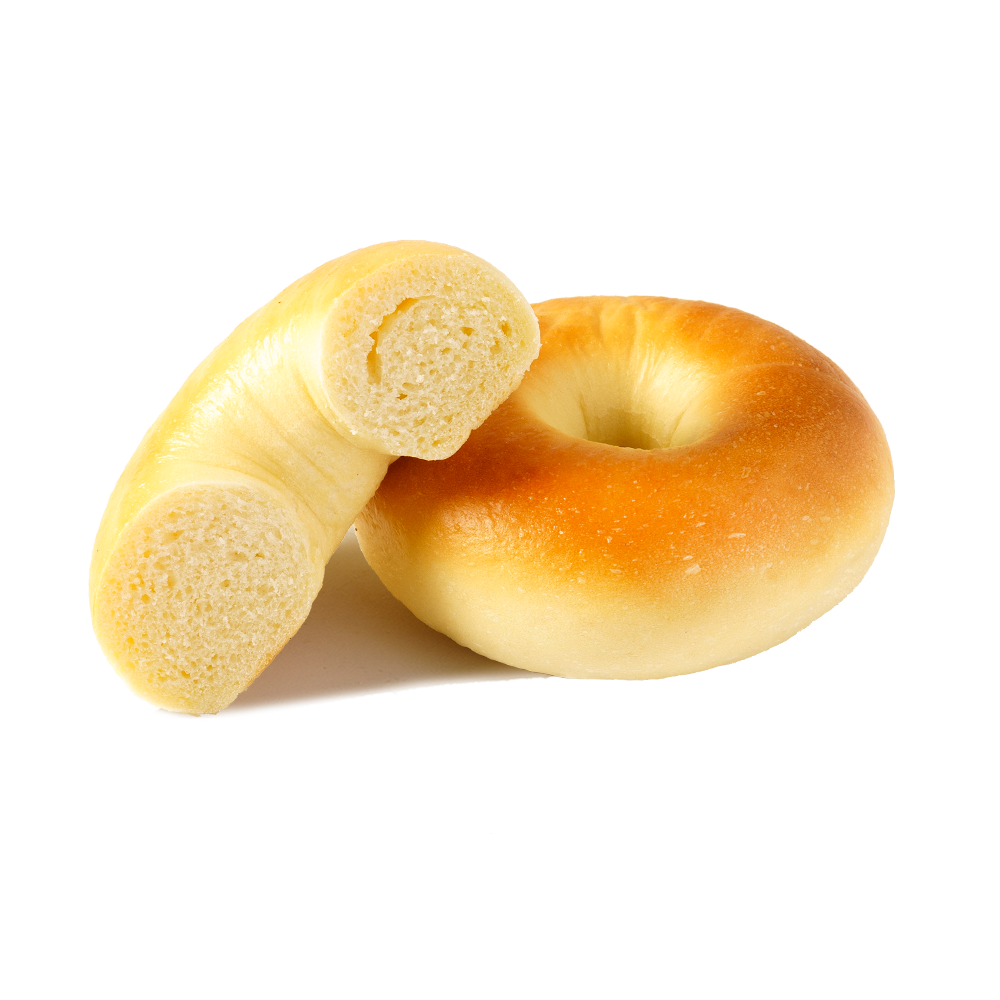
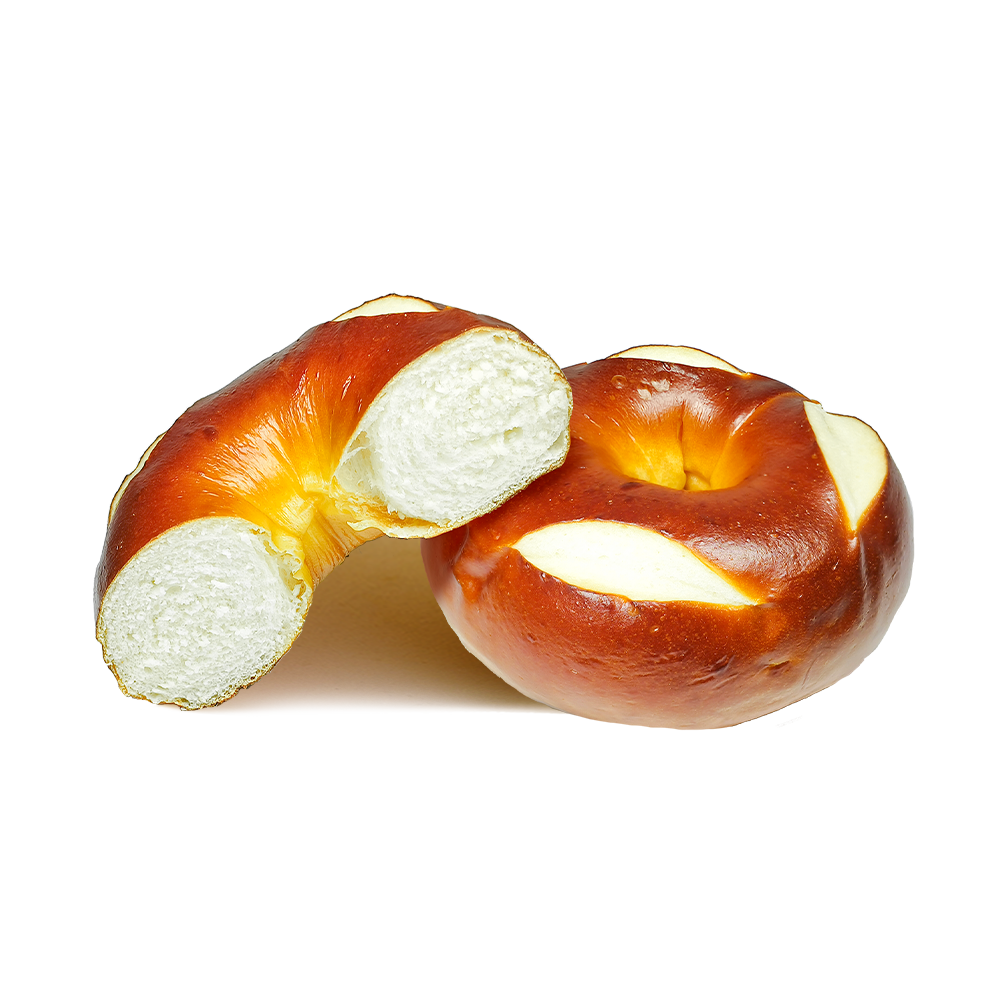
We carefully select high-quality wheat sources and combine natural yeast with a low-temperature fermentation process to create a distinctive texture in our bagels. The interior develops a porous, honeycomb-like structure, ensuring breathability and softness. The outer crust maintains a perfect level of elasticity, slowly springing back when pressed, while emitting a subtle wheat aroma that lingers in every bite.
Our Original Series bagels are crafted using the innovative Japanese long-flour method, which finely mills the wheat to reduce protein damage, preserving the purest grain flavor. The texture is dense and smooth, delivering a rich and nuanced mouthfeel. Each bite encapsulates the pure and natural wheat fragrance, providing an unparalleled taste experience.
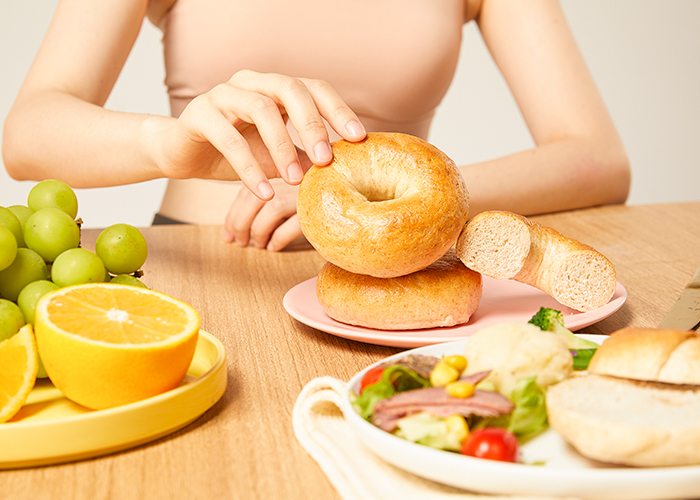
To elevate both flavor and nutrition, we recommend pairing the Original Series bagels with cream cheese, fresh fruits and vegetables, or savory meats. This combination not only enriches the taste but also offers a well-rounded nutritional profile. Whether for breakfast, lunch, or a snack, our Original Series bagels are the perfect choice.

Food Safety Standards

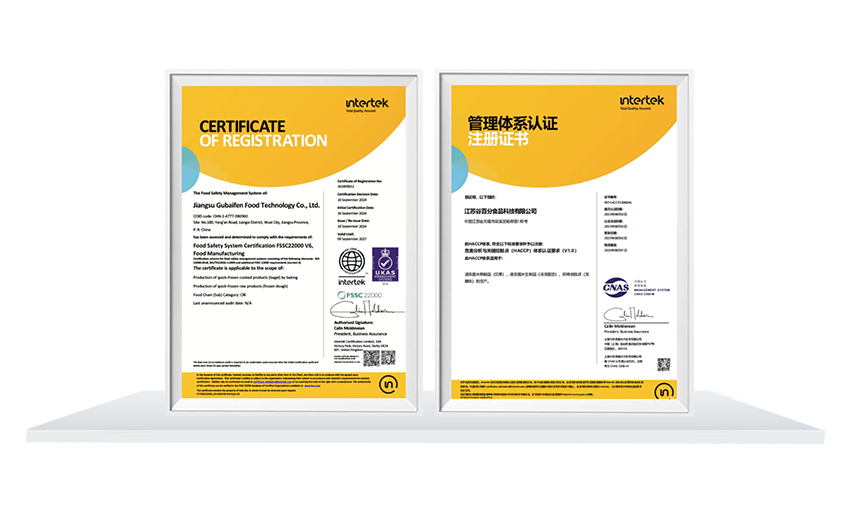
FSSC 22000 A globally recognized food-safety management system that ensures end-to-end control, traceability, and compliance across the entire food-production process.
HACCP (Hazard Analysis and Critical Control Points) A preventive food-safety system that identifies potential hazards and establishes strict control points to ensure product safety throughout processing.

Food Safety Standards
About Goobagel
Jiangsu Goobagel Food Technology Co., Ltd.
Goobagel Food has specialized in bagel research and manufacturing since 2019. As a modern frozen bakery producer, Original Bagel Suppliers and Original Bagel Factory in China, we operate a fully integrated supply chain covering raw materials, R&D, production, and nationwide distribution.

With strong product development capabilities, we have created 100+ clean-label bagel varieties designed for retail, foodservice, café chains, tea brands, and bakery operators. Supply Original Bagel Wholesale. Our products offer stable quality, consistent performance, and reliable supply for a wide range of commercial applications.

Goobagel works closely with leading brands across China, providing high-quality and innovative bagel solutions that support their growth and product development needs.

Insights
Industry knowledge

What Makes an Original Bagel Formula Technically Distinct from Modern Variants

The original bagel formula — high-gluten wheat flour, water, salt, malt, and yeast, with nothing else — is deceptively simple on paper. Its distinctiveness comes entirely from process execution rather than ingredient complexity. The flour protein content is the first critical variable: original bagel formulas require flour with a minimum protein content of 12.5–13.5%, which provides enough gluten-forming potential to produce the dense, cohesive crumb structure that defines the format. Lower-protein bread flours produce a crumb that is too open and too soft, and the crust lacks the resistance to compression that gives an original bagel its characteristic bite.

The absence of fat is equally defining. Most commercial bread formulas include at least 2–4% shortening or oil to improve crumb softness, extend shelf life, and reduce staling rate. The original bagel formula contains none of this, which means staling occurs more rapidly than in enriched doughs — typically becoming noticeably firmer within 6–8 hours at ambient temperature without toasting. This is one of the functional reasons frozen distribution became the standard commercial model for original bagels: freezing arrests the staling process at its post-baking baseline, and proper toasting after thawing restores the crust-crumb contrast that defines the eating experience better than any ambient-temperature anti-staling additive.

Jiangsu Goobagel Food Technology Co., Ltd. has built its product development work since 2019 on a deep understanding of original bagel process logic, using it as the technical foundation from which its 100+ product varieties — including enriched, flavored, and clean-label variants — are developed and benchmarked.

The Fermentation Variable: How Original Bagel Flavor Is Built Over Time, Not Added

Flavor in an original bagel is a fermentation output, not an ingredient addition. Unlike enriched breads where butter, eggs, or milk solids contribute directly to flavor complexity, the original formula relies entirely on yeast metabolism during fermentation to generate the aroma compounds, organic acids, and Maillard precursors that produce its characteristic taste. This means the fermentation schedule is not simply a proofing step — it is the primary flavor-development stage of the process, and its management has more influence on the finished product's flavor profile than any other single variable.

Yeast Level and Fermentation Rate

Original bagel formulas typically use a lower yeast percentage than standard bread doughs — 0.8–1.2% fresh yeast or 0.3–0.4% instant dry yeast against flour weight, compared to 2–3% in standard soft rolls. The lower yeast level slows fermentation deliberately, extending the window during which flavor-active metabolites accumulate before the dough piece is shaped. At higher yeast levels, carbon dioxide production outpaces organic acid accumulation, and the dough reaches adequate volume with minimal flavor development — the result is a bagel that looks correct but tastes flat and breadlike rather than complex.

Cold Retard Duration and Temperature

The cold retarding step — holding shaped dough pieces at 4–7°C for 12–24 hours before boiling and baking — is where most of the flavor differentiation between original bagel producers occurs. During cold retarding, yeast activity slows dramatically but continues producing small quantities of acetaldehyde, diacetyl, and short-chain organic acids that would not accumulate in a room-temperature proof cycle of comparable volume development. Extended cold retarding beyond 18 hours begins to develop mild lactic notes that some operators and consumers associate with a premium or artisan flavor profile. Beyond 24 hours, at most refrigeration temperatures, enzyme activity begins to degrade the gluten network sufficiently to compromise dough handling, which sets a practical upper limit on retarding duration for production environments.

Pre-Ferment Options for Original Bagel Production

Some commercial original bagel producers incorporate a small pre-ferment — a poolish or biga at 15–20% of total flour weight — to add an additional layer of flavor complexity without extending the main dough retarding cycle. A poolish fermented at room temperature for 12–16 hours contributes acetic and lactic acid notes to the final dough before retarding begins, effectively compressing the total flavor development timeline without sacrificing the depth that extended cold fermentation provides. For factories operating on tighter production scheduling windows, this approach offers a practical middle path between fast-proof convenience and long-retard flavor quality.

Flour Sourcing and Its Impact on Original Bagel Consistency at Commercial Scale

Flour variability is the most underestimated source of batch-to-batch inconsistency in original bagel production. Because the formula contains no fat, no eggs, and no dairy — ingredients that can partially mask the effects of flour protein variation in enriched doughs — every change in flour protein content, moisture, falling number, or ash level produces a visible and measurable effect on dough behavior and finished product quality. Producers who manage flour as a commodity procurement category rather than a controlled raw material input accept a level of production variability that is difficult to compensate for downstream.

The practical implication for commercial original bagel production is that flour specification documents should go beyond protein content alone. Falling number — a measure of alpha-amylase activity — is equally important: flour with a falling number below 250 seconds contains excess amylase enzyme activity that over-degrades starch during fermentation and produces a sticky, difficult-to-handle dough with poor oven spring. Flour with a falling number above 400 seconds indicates low amylase activity, resulting in poor crust color and underdeveloped flavor due to insufficient fermentable sugar production. The target range for original bagel flour is typically 280–350 seconds, and specifying this value in supplier agreements — alongside protein content, moisture, and ash limits — is standard practice in facilities that produce consistent original bagel quality across high-volume runs.

Water hardness is a related variable that receives even less attention in most procurement frameworks. Calcium and magnesium ions in moderately hard water (100–150 ppm total hardness) strengthen the gluten network by cross-linking gluten proteins, which improves dough handling and produces better crust definition in the finished original bagel. Very soft water (below 50 ppm) produces slack, extensible dough that is difficult to shape and produces a flatter baked profile. Very hard water (above 200 ppm) produces excessively tight dough that is slow to relax and produces a dense, compressed crumb. Facilities that source from municipal water supplies with variable seasonal hardness should consider dosing systems to maintain a consistent target range rather than accepting the variability as fixed.

Original Bagel Crust Development: The Chemistry Behind the Gloss and the Chew

The glossy, slightly chewy exterior of an original bagel is the result of two simultaneous chemical reactions during the boiling and baking stages — starch gelatinization and Maillard browning — and the specific conditions under which each occurs determine the crust quality of the finished product. Understanding the chemistry at each stage provides a systematic basis for diagnosing crust quality failures and adjusting process parameters with predictable outcomes.

Process Stage Primary Reaction Key Variable Effect of Under-Processing Effect of Over-Processing
Boiling Starch gelatinization of outer layer Water temperature and immersion time Pale, matte crust; minimal chew resistance Dough piece begins to expand prematurely; seam stress on stuffed variants
Early bake (first 5–8 min) Oven spring and crust setting Oven temperature (230–250°C) and steam presence Insufficient volume; dense crumb Crust sets before full oven spring; restricted volume
Late bake (remaining time) Maillard browning and crust dehydration Oven temperature and time Pale color; soft, non-crisp crust Excessive browning; bitter flavor compounds; over-dried crust

The addition of malt syrup or baking soda to the boiling water modifies the Maillard reaction downstream by altering the availability of reducing sugars (malt) or raising the surface pH (baking soda), both of which accelerate browning in the oven. These are deliberate flavor and color adjustments rather than essential process steps — an original bagel boiled in plain water and baked at appropriate temperature still develops adequate crust color and gloss from the starch gelatinization alone. The decision to add boiling water adjuncts is a product style choice that should be made explicitly during formula development rather than inherited from a reference recipe without understanding the mechanism.

Benchmarking Original Bagel Quality: Sensory and Instrumental Metrics That Matter in Commercial Practice

Quality assessment for original bagels in commercial supply relationships often relies on sensory evaluation alone — tasting samples and making approval decisions based on subjective impressions. While sensory evaluation cannot be eliminated from quality management, it is insufficient as a sole quality metric for two reasons: individual evaluators are inconsistent over time and across palates, and sensory data cannot be used to diagnose process root causes when a quality failure occurs. Supplementing sensory evaluation with instrumental measurements produces a more robust quality system and enables suppliers to demonstrate consistency in objective terms.

  • Bite force (texture analyzer, TPA mode): Measures the force required to compress the crumb to 50% of its original height. Target ranges for original bagels typically fall between 3,000–5,000 g-force at room temperature post-thaw. Values below this range indicate over-proofed or under-baked product; values above indicate insufficient fermentation or excessively stiff dough.
  • Crust color (colorimeter, L*a*b* measurement): Provides objective color data that can be tracked across batches. Target L* values for a well-baked original bagel crust typically fall between 38–48 (darker than standard bread crust but lighter than a pretzel). Batch-to-batch L* variation above ±3 units indicates inconsistency in boiling conditions, oven calibration, or flour malt content.
  • Weight and dimensional measurements: Weight coefficient of variation above 3–4% across a production batch signals inconsistency in dough dividing, which will translate into variation in bake time and finished texture. Diameter and height measurements confirm that shaping is consistent — particularly important for sandwich-format applications where dimensional consistency affects assembly efficiency.
  • Water activity (post-bake and post-freeze): Target water activity for a fully baked original bagel is typically 0.90–0.93. Values above 0.93 indicate under-baking and create microbiological shelf-life risk; values below 0.88 indicate over-baking and will produce a dry, hard crumb after thawing that cannot be adequately restored by toasting.

Goobagel's supply model — built around stable quality and consistent performance for retail, foodservice, café chains, and bakery operators — is grounded in this kind of multi-parameter quality management. For buyers specifying original bagels in a commercial context, requesting instrumental quality data alongside sensory samples provides a substantially more reliable basis for supplier evaluation than tasting alone.

How Original Bagel Production Is Adapted for the Chinese Foodservice Market Without Compromising Authenticity

Introducing the original bagel format into the Chinese foodservice market presents a specific set of adaptation challenges that are distinct from those faced in Western markets where the format has decades of consumer familiarity. The adaptations that succeed commercially are those that modify the context in which the original bagel is presented and consumed — portion size, accompanying flavors, service occasion — rather than those that alter the fundamental dough formula and process in ways that compromise the eating experience that makes the format distinctive in the first place.

Portion Format Adaptation

The standard 90–110g original bagel that dominates Western retail and foodservice is a relatively large single-serve item by the portion norms of Chinese café and snack culture, where consumers often prefer smaller, more shareable formats that allow sampling across multiple items in a single visit. Mini original bagels at 40–55g have gained significant traction in China's café and tea brand channel precisely because they fit this consumption pattern while preserving the original dough formula and process — the eating experience is authentic, the portion is contextually appropriate, and the visual format photographs well for social media presentation, which drives trial in this channel.

Pairing Context Rather Than Formula Modification

The more commercially sustainable approach to market adaptation is building the menu context around the original bagel rather than modifying the bagel to fit existing menu frameworks. Original bagels served alongside locally familiar flavor profiles — house-made tofu cream cheese, yuzu-infused spreads, miso butter, matcha-honey preparations — introduce the format through flavor associations that are already trusted by Chinese consumers, without requiring the bagel itself to change. This approach has been central to how leading café chains and tea brands in China have built bagel menu lines that retain consumer interest beyond the initial novelty cycle.

Supply Chain Consistency as Market Development Infrastructure

Market development for any new food format depends on consistent product availability — consumers who have a positive first experience with an original bagel need to be able to repeat that experience reliably. Inconsistent supply, whether in quality or availability, disrupts the repeat purchase behavior that converts trial into habit. Jiangsu Goobagel Food Technology Co., Ltd.'s nationwide distribution infrastructure and fully integrated supply chain from raw materials through production supports the kind of reliable, consistent supply that underpins sustainable market development — a practical consideration that is as important to long-term category growth as product quality itself.

OEM Original Bagel Production: Where Custom Development Adds Value and Where It Does Not

Brand partners approaching Goobagel for OEM original bagel production sometimes arrive with an expectation that custom development will involve significant formula innovation — new ingredient combinations, proprietary processes, or format designs that distinguish their product from what already exists in the market. In practice, the value-adding customization in original bagel OEM is more targeted than this, and understanding where customization genuinely creates commercial differentiation helps focus development resources on the decisions that matter.

Formula customization in original bagels has a narrower range than most other frozen bakery categories precisely because the format's identity is defined by its simplicity. The commercially meaningful customization options cluster around four areas: flour sourcing specification (directing the production toward a specific protein content or regional flour character that the brand wants to claim), fermentation schedule (choosing between a fast-proof, standard-retard, or extended-retard profile that aligns with a target flavor positioning), boiling water specification (plain water for a cleaner crust flavor, malt-added for a richer exterior, soda-added for a darker color profile), and portion format (weight, diameter, and hole geometry matched to the brand's specific service application).

Where customization adds less value than operators often expect is in proprietary recipe protection. Because the original bagel formula is inherently minimal, differences between competently produced original bagels from different factories are far more attributable to process discipline — fermentation management, boiling consistency, oven calibration — than to ingredient-level formula differences. The more durable competitive advantage for brands sourcing OEM original bagels lies in supply reliability, consistent specification compliance over time, and the speed with which the OEM partner can respond to volume changes or seasonal format additions. These are operational characteristics rather than formula secrets, and they are the criteria that should drive OEM partner selection for original bagel programs at commercial scale.