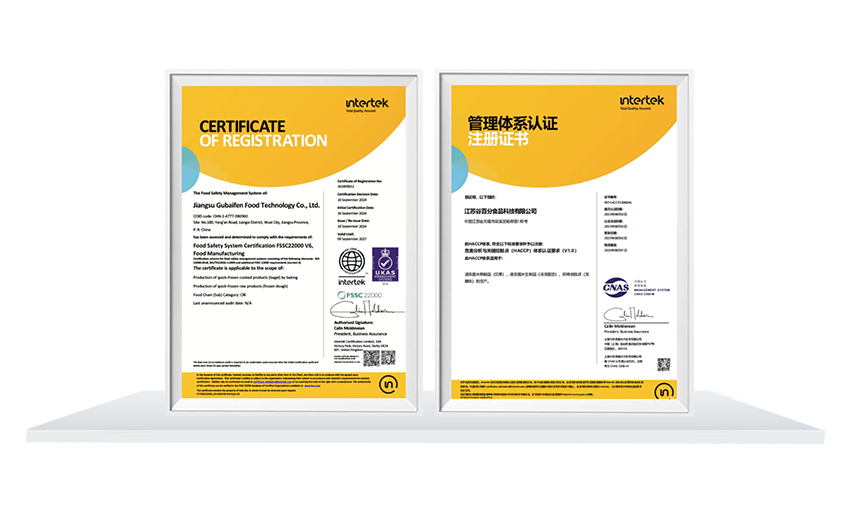
Why the Bagel Sandwich Outperforms Other Bread Formats in Foodservice Assembly
Among all bread formats used in sandwich construction, the Bagel Sandwich holds a structural advantage that is rarely discussed in commercial kitchen planning: the boiled-then-baked crust creates a moisture barrier that slows sogginess far more effectively than toast, brioche buns, or ciabatta. This matters enormously in foodservice and café environments where sandwiches are assembled hours before service or held in display cases. The dense, chewy crumb of a bagel absorbs sauce and condiment moisture at a slower rate, preserving the textural contrast between bread and Fresh fillings for longer. For grab-and-go retail formats — a growing segment among tea brands and convenience-oriented café chains — this physical property translates directly into longer display shelf life without quality degradation. Jiangsu Goobagel Food Technology Co., Ltd. has designed its frozen bagel portfolio with this downstream application in mind, engineering crumb density and crust thickness parameters that are optimized for sandwich assembly rather than standalone consumption.
Matching Bagel Varieties to Filling Profiles for a Balanced Complete Meal
Not every bagel variety is equally suited to every filling combination. Constructing a Complete meal from a bagel sandwich requires deliberate pairing of dough flavor, crust texture, and filling composition to achieve nutritional completeness and sensory balance. A plain or sesame bagel, with its neutral flavor base and firm crust, pairs well with protein-forward fillings like smoked salmon, poached egg, or grilled chicken, where the dough functions as a backdrop rather than a flavor contributor. An everything bagel or herb-infused variant, by contrast, already delivers aromatic complexity that competes with heavily seasoned fillings — making it better suited to mild, creamy proteins like ricotta or fresh mozzarella. From a nutrition standpoint, bagels are relatively dense in carbohydrates, which means filling selection should prioritize protein and fiber sources to create a meal that sustains energy rather than causing a rapid glycemic spike. The following table outlines pairing logic across bagel types and filling categories commonly used in commercial menu development:
| Bagel Variety |
Flavor Profile |
Recommended Filling Direction |
Meal Occasion |
| Plain |
Neutral, mildly tangy |
Smoked salmon, egg & cheese, deli meats |
Breakfast, brunch |
| Everything |
Savory, aromatic, toasted seeds |
Cream cheese, mild vegetables, avocado |
All-day, café menu |
| Whole Wheat |
Earthy, slightly nutty |
Grilled chicken, hummus, roasted vegetables |
Lunch, health-oriented menu |
| Cinnamon Raisin |
Sweet, warm spice |
Nut butter, honey mascarpone, fruit spreads |
Breakfast, afternoon snack |
| Cheese-Topped |
Rich, savory, umami |
Egg, bacon, caramelized onion |
Breakfast, brunch, grab-and-go |
Goobagel Food's catalog of 100+ clean-label bagel varieties gives commercial operators the raw material diversity needed to build differentiated sandwich menus across multiple dayparts without overhauling kitchen infrastructure.
Fresh Fillings in a Frozen Bagel Supply Chain: Where the Responsibility Boundary Lies
A common source of confusion among foodservice operators new to frozen bakery procurement is the assumption that a bagel sandwich supplier will deliver the complete assembled product, including Fresh fillings. In practice, the supply chain for a commercial bagel sandwich is almost always split: the frozen bagel base is sourced from a specialized manufacturer, while fresh components — proteins, vegetables, sauces, dairy — are sourced locally through the operator's existing fresh food suppliers. This split model exists for good reason. Fresh fillings have fundamentally different cold chain requirements, shelf lives, and food safety parameters than frozen bakery products. Attempting to freeze-assemble a complete bagel sandwich with fresh vegetables or dairy-based spreads typically results in texture and flavor degradation that undermines the quality positioning of the product. As a Classic Bagel Manufacturers and OEM partner, Jiangsu Goobagel Food Technology Co., Ltd. focuses on delivering a consistently high-quality, oven-ready bagel base, while providing operators with detailed specifications — including slice thickness, crumb density, and crust profile — that help them select filling components that will perform well in the assembled format. This technical support at the product specification level is what separates a professional manufacturing partner from a commodity ingredient supplier.
How Café Chains Standardize the Bagel Sandwich Across Multiple Locations
Scaling a Bagel Sandwich program across multiple café or foodservice locations presents a standardization challenge that is distinct from other menu categories. Unlike a hot beverage or a packaged snack, a sandwich involves assembly steps that introduce variability at the store level. To control this variability, multi-location operators typically build their sandwich programs around three standardization pillars:
- Portion-controlled bagel bases: Sourcing frozen bagels with consistent weight, diameter, and slice thickness eliminates one of the most common sources of portion inconsistency. Operators working with Goobagel Food as their OEM Classic Bagel Factory specify these parameters at the order stage, ensuring every location receives product to the same dimensional standard regardless of production batch.
- Standardized toasting protocols: Even with a consistent bagel base, reheating method variation across locations affects crust texture and internal temperature. Chains typically develop a toasting protocol — specifying equipment type, temperature, and duration — based on the specific frozen bagel format supplied, which requires close technical collaboration with the bagel manufacturer.
- Pre-portioned fresh filling kits: To reduce in-store preparation time and ensure consistent filling ratios, many chains pre-portion their fresh filling components centrally — either in-house or through a fresh food co-packer — and distribute these kits alongside the frozen bagel base. This approach supports the Complete meal positioning of the product while keeping per-unit labor costs predictable.
OEM Custom Bagel Development for Sandwich-Specific Applications
When brands commission a Custom Classic Bagel for sandwich use, the development brief typically includes specifications that go well beyond flavor. Sandwich-specific bagel development at Jiangsu Goobagel Food Technology Co., Ltd. addresses structural and functional requirements that are different from those for standalone consumption or stuffed variants. Key parameters in a sandwich-focused OEM development project include:
Internal Crumb Structure
A sandwich bagel needs a crumb that is firm enough to hold filling weight without collapsing under hand pressure, but not so dense that it creates excessive chewing resistance when combined with filling layers. This requires specific hydration and fermentation time calibration during development. Bagels destined for heavy protein fillings — stacked meats, thick egg patties — require a tighter, more structured crumb than those intended for light cream cheese or vegetable-forward fillings.
Slice Plane Optimization
Industrial slicing of frozen bagels for sandwich use must account for the position of the internal air pocket relative to the cut plane. An off-center slice creates two halves with unequal structural integrity — the thinner half may crack during toasting or buckle under filling weight. Goobagel's production process includes slice plane quality control checks that ensure the cut consistently bisects the bagel through its structural midpoint, which is particularly important for foodservice operators who rely on pre-sliced product for fast assembly of Fresh fillings during peak service hours.
Crust-to-Crumb Ratio by Application
The boiling time prior to baking directly controls the thickness and chewiness of the outer crust. For sandwich applications where the bagel will be re-toasted in a conveyor or deck oven at the operator's site, a slightly thinner crust profile is preferable — it allows the interior to reheat fully before the exterior over-crisps. For display-case grab-and-go formats where the bagel will be served at ambient temperature, a thicker, more protective crust is appropriate. These parameters are defined at the development stage and locked into the production specification for each Custom Classic Bagel order.
Positioning the Bagel Sandwich as a Complete Meal in Retail and Tea Brand Contexts
The bagel sandwich's emergence as a Complete meal offering in China's tea brand and lifestyle café sector reflects a broader shift in how these channels approach food pairing. Historically, tea brands treated food as a secondary revenue stream — low-margin, low-attention. As consumer expectations have evolved, the demand for substantive, satisfying food pairings has grown significantly, and the bagel sandwich format addresses this demand more effectively than pastries or light snacks. A well-constructed bagel sandwich with protein, dairy, and vegetable components delivers macronutrient balance that positions naturally alongside a specialty tea or coffee drink as a full meal replacement rather than an accessory. For retail operators, the visual cross-section of a bagel sandwich — the layered filling visible when the product is displayed cut-side-forward — also functions as in-store merchandising, communicating freshness and quality without additional signage. Goobagel Food's ability to supply consistently sized, clean-label bagel bases to tea brands and retail operators across China provides the product foundation that makes this positioning credible and scalable. Since 2019, the company has built supply relationships with leading brands that depend on this consistency to maintain menu standards across high-volume locations.

 中文简体
中文简体
 English