How Toasting Transforms Bagel Texture and Why It Demands a Purpose-Built Base Formula
The toasted to order experience of a Hot Sandwich Bagel is not merely a reheating step — it is a secondary baking event that fundamentally restructures the crust and crumb. When a pre-baked bagel is placed in a contact grill, conveyor toaster, or salamander, three simultaneous processes occur: residual surface moisture evaporates rapidly, re-crisping the crust; the Maillard reaction reactivates at the cut surface, generating new flavor-active compounds (pyrazines, furans) that were not present or were masked in the original bake; and internal starch gelatinization is partially reversed by the localized heat, temporarily softening the crumb adjacent to the heated surfaces before it sets into a firmer but more open texture. This means that a bagel intended for toasted service performs differently in the toaster than one optimized for ambient or cold consumption — and the base formula must account for this. A dough with too-high moisture retention will steam rather than crisp when toasted, producing a soft, chewy cut face instead of the characteristic golden, slightly crisp interior surface that makes a Hot Sandwich Bagel feel like a comfort meal. Jiangsu Goobagel Food Technology Co., Ltd. develops its hot sandwich bagel base formulas with specific moisture content targets that balance freeze-thaw stability during cold chain distribution against the surface drying behavior required for optimal toasted to order performance — a dual-optimization that requires iterative testing across multiple toasting appliance types rather than a single benchmark device.
Appliance Variability: Why a Hot Sandwich Bagel Must Perform Across Multiple Toasting Formats
One of the most operationally complex aspects of developing a commercially viable toasted to order bagel product is that the "toaster" in a café, tea brand outlet, or foodservice kitchen is never a single device — it is a heterogeneous collection of appliances with fundamentally different heat transfer mechanisms, each producing a different surface and crumb result on the same bagel. A contact grill (panini press) applies direct conductive heat from both faces simultaneously, producing strong Maillard browning on cut surfaces and press marks that signal handcrafted preparation. A vertical slot toaster uses radiant infrared heat from heating elements, producing more uniform surface browning but without the compression that drives moisture out of the crumb interior. A conveyor toaster applies a combination of radiant and convective heat over a fixed dwell time, prioritizing throughput consistency over finish quality. An oven or salamander uses convective or radiant heat from above, browning the top surface while leaving the underside largely unheated. Each of these formats interacts differently with the bagel's crust thickness, crumb density, and moisture profile. For Jiangsu Goobagel Food Technology Co., Ltd., this means that a Hot Sandwich Bagel SKU intended for café chain deployment must be validated across at least three of these appliance categories before commercial launch, with documented time-and-temperature protocols provided to the client for each equipment type they are likely to use — a technical support deliverable that accompanies the product and directly reduces kitchen inconsistency at the operator end.
Comfort Meal Architecture: Filling Combinations That Deliver Warmth, Satisfaction, and Structural Coherence
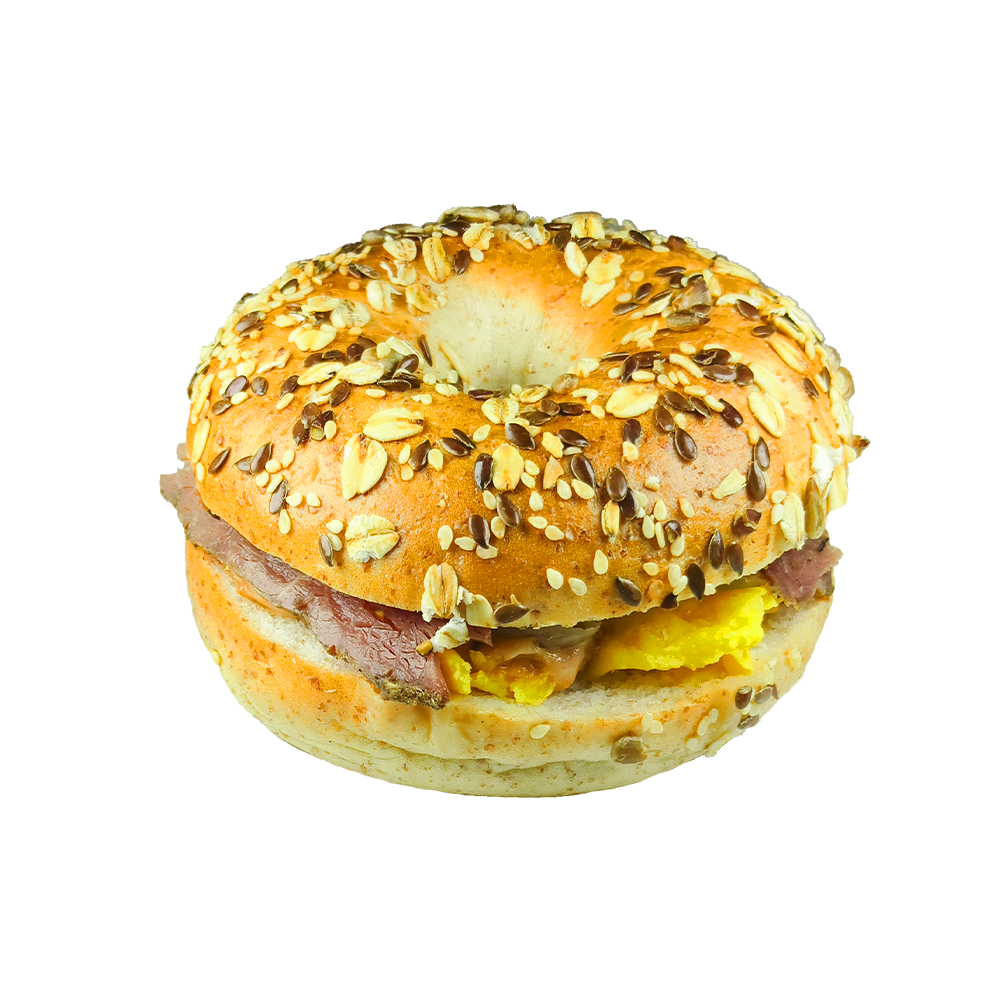
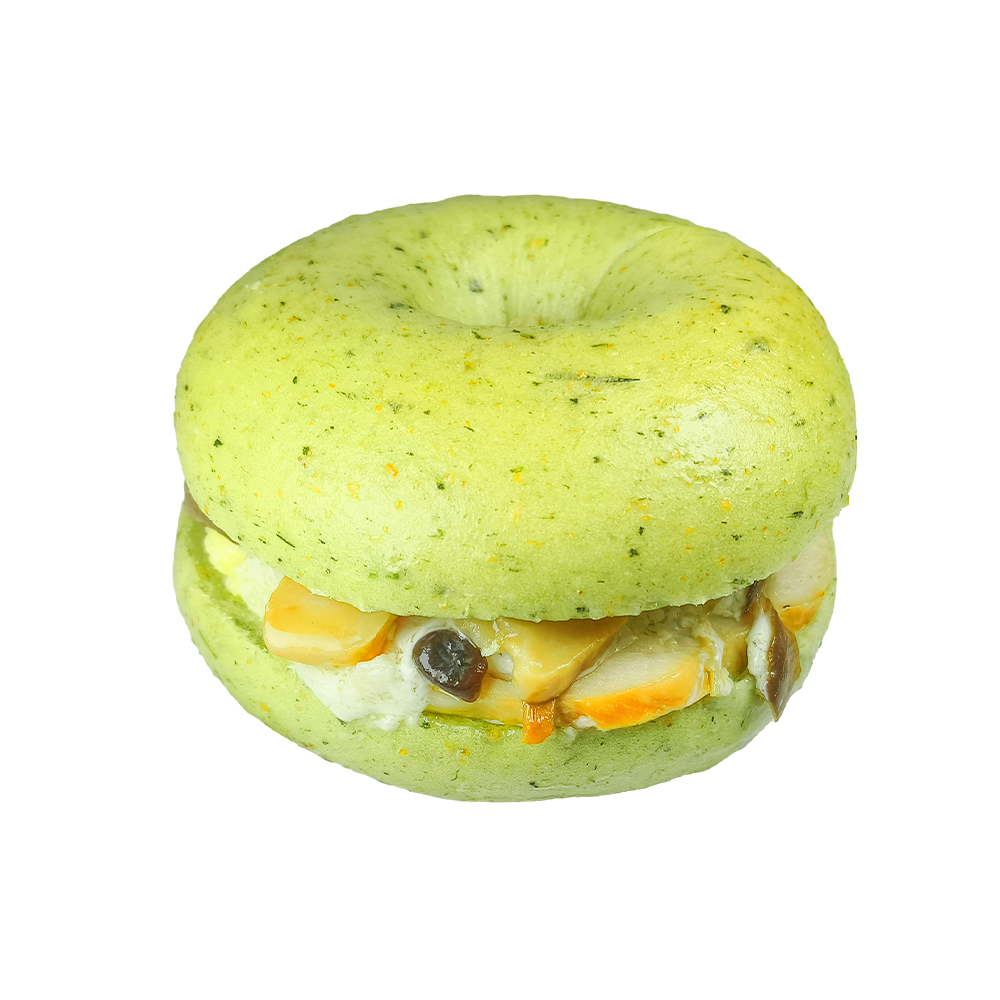
The comfort meal positioning of a Hot Sandwich Bagel implies a specific flavor and texture contract with the consumer: warmth, richness, satisfying weight, and a filling that feels generous rather than sparse. Translating this into filling system design requires understanding how each component behaves when heated and how the combination delivers the layered sensory experience associated with comfort eating. The most commercially successful hot bagel sandwich filling architectures share several structural principles: a protein anchor (egg, meat, or cheese) that provides substantive body and umami depth; a fat carrier (melted cheese, sauce, or spread) that lubricates the crumb-filling interface and distributes flavor across each bite; and a textural contrast element that prevents the eating experience from becoming monotonously soft. The table below outlines proven filling combinations structured around these principles, as applied in hot sandwich bagel product development:
| Filling Profile |
Protein Anchor |
Fat Carrier |
Textural Contrast |
Target Occasion |
| Classic breakfast |
Fried or steamed egg patty |
Melted cheddar or processed cheese slice |
Crispy turkey rasher or hash brown |
Morning daypart; commuter café |
| Pulled / shredded meat |
Slow-cooked beef or chicken |
BBQ sauce or chipotle mayo |
Pickled vegetable or slaw |
Lunch; quick-service restaurant |
| Melted cheese & vegetable |
Mozzarella or raclette |
Pesto or sun-dried tomato spread |
Roasted bell pepper or mushroom |
Vegetarian segment; tea brand |
| Premium deli stack |
Smoked salmon or pastrami |
Cream cheese or horseradish sauce |
Capers or thinly sliced red onion |
Premium café; weekend brunch |
Cheese Selection for Hot Applications: Melt Behavior as a Functional Criterion
Cheese is the component most responsible for the comfort meal perception in a hot bagel sandwich, and its selection for a toasted to order product must be driven by functional melt behavior rather than flavor alone. Not all cheeses melt in ways that are appropriate for a hot sandwich application: a cheese with low melt flow (such as halloumi or mature Parmesan) will retain its shape during toasting, producing a chewing experience rather than the flowing, coating melt that consumers associate with a satisfying hot comfort meal. The key determinants of melt behavior are moisture content, fat content, and the degree of proteolysis (protein breakdown) the cheese has undergone during aging. Young, high-moisture cheeses (fresh mozzarella, young cheddar, processed cheese slices) melt freely and coat filling surfaces evenly — ideal for the cheese-as-fat-carrier role in a hot sandwich. Aged cheeses with lower moisture and higher proteolysis (mature cheddar, gruyère) develop more complex flavor but melt unevenly and can produce an oily, broken appearance at the temperatures reached in a contact grill or conveyor toaster. Processed cheese formats (slices or sauces) are engineered specifically for consistent melt performance across a wide temperature range, making them the most operationally reliable choice for high-volume toasted to order café or foodservice operations where consistency across hundreds of daily serves is more valuable than artisanal flavor complexity. Goobagel Food's product development support for Hot Sandwich Bagel clients includes cheese selection guidance aligned with each client's specific toasting appliance and service format, ensuring that the melt behavior experienced in the development kitchen scales reliably to the actual operational conditions of their outlets.
Thermal Management in Toasted Bagel Service: Holding Time, Temperature, and Quality Degradation
In any foodservice or café chain operation, the toasted to order model involves a time gap between toasting completion and consumer consumption — whether because the customer queues, the order is prepared ahead of a rush period, or the sandwich is held in a warming drawer between preparation and service. Understanding how quality degrades during this holding window is essential for setting operational protocols that protect the comfort meal experience the consumer expects. The primary quality changes during hot-hold are: crust re-softening as steam from the warm filling migrates outward and re-moistens the toasted surface (significant from 5 minutes post-toast); filling temperature drop from the target serving temperature to below the warm threshold perceived by consumers (typically below 55°C, which occurs within 10–15 minutes in an uninsulated container); and fat separation in cheese-based fillings as the melted fat cools and begins to resolidify non-uniformly. Each of these changes has an associated time window within which the product is still commercially acceptable, and defining these windows operationally — rather than assuming consumers will receive the product immediately after toasting — is part of responsible product and service design. As a Classic Bagel Manufacturer and OEM Classic Bagel Factory, Jiangsu Goobagel Food Technology Co., Ltd. provides its hot sandwich clients with recommended maximum hold times by filling type, suggested packaging formats for service (paper wrapping versus foil versus insulated sleeve), and bagel base specifications tuned for crust resilience during short-duration hot-hold, all of which are validated as part of the product technical file delivered with each commercial SKU.
Deploying the Hot Sandwich Bagel Across Commercial Channels: Operational Fit and Menu Positioning
The Hot Sandwich Bagel occupies a strategically valuable menu position across multiple commercial channels in China's food and beverage market — it bridges the Western-influenced comfort meal format with the operational simplicity demanded by high-throughput service environments, and its toasted to order preparation ritual adds perceived freshness and craft value that a pre-assembled cold product cannot replicate. However, the product's commercial success in each channel depends on matching the menu positioning and operational requirements to the specific context:
- Café chains: The Hot Sandwich Bagel performs best as a daypart-anchored menu item — a breakfast or lunch centerpiece rather than an all-day snack. Positioning it alongside branded beverages as a combo drives average transaction value. The toasted to order preparation is a visible theater element that reinforces freshness perception at the counter. Jiangsu Goobagel Food Technology Co., Ltd. supports café chain clients with standardized bagel base specs, recommended filling combinations, and toasting protocol documentation that enable consistent execution across multi-site networks.
- Tea brand outlets: Tea brands in China increasingly seek food items that complement their beverage identity without requiring complex kitchen infrastructure. A hot bagel sandwich with a limited, curated filling menu requires only a contact grill or conveyor toaster — equipment already present in most tea brand kitchens — making it an operationally low-barrier addition to the food menu. The comfort meal positioning contrasts effectively with the light, sweet beverage profile typical of tea brand menus, creating a satisfying meal-occasion pairing.
- Convenience retail with in-store heating: The rollout of in-store microwave and toaster stations in Chinese convenience chains (7-Eleven, Lawson, Family Mart) has created a channel where the toasted to order model is viable at retail scale. Pre-assembled frozen hot sandwich bagels, thawed in-store and toasted to order on request, occupy a price-value position between ambient snacks and sit-down meals. Packaging must communicate heating instructions unambiguously and support the appliance types present in-store.
- Corporate and campus foodservice: High-volume batch preparation for breakfast or lunch service requires a bagel base that performs consistently when toasted in batches of 20–50 units per service period. Filling systems must be pre-portioned to ensure speed of assembly and cost-per-serve control. The comfort meal positioning resonates strongly in corporate and campus environments where consumers are seeking a satisfying, familiar hot meal option within a limited break window — a need that Goobagel Food's Supply Custom Classic Bagel model and 100+ clean-label variety portfolio are designed to address with stable quality and reliable supply across high-volume operational demands.

 中文简体
中文简体
 English