
 中文简体
 English

postmaster@goobagelfood.com
Content
A production manager forwards a spec sheet on a Tuesday morning: the crumb is soft, the crust color is on target, and the front of the pack still claims "good source of fiber." The open question is whether shifting from straight white flour to a 40% whole wheat blend will hold that claim once the bread is actually baked. In most cases the answer comes down to three numbers, flour extraction rate, bake loss, and crust-to-crumb ratio, and none of them are set by the oven curve.
Baking nutrition is a pre-bake problem. Heat destroys part of the vitamin load, moisture loss concentrates whatever remains, and the crust absorbs a disproportionate share of the damage. The levers worth pulling sit in formulation, fermentation, and process time, not in the cooling tunnel.
The working conclusion
- Nutrient density per 100 g of finished bread usually reads higher than the dough figures, because water leaves and solids stay. Absolute vitamin mass still declines.
- Crust bakes hotter and drier than crumb, so thiamine and available lysine losses cluster in that thin outer layer.
- Fermentation time is the cheapest nutritional lever available: a longer ferment lowers phytate and improves mineral absorption.
- Any claim printed on a pack should be backed by a finished-product assay, not by dough inputs alone.
How Baking Actually Changes Nutrient Density
Heat, moisture, and time act on nutrients in ways that partly cancel each other out. Four mechanisms cover most of what happens during a commercial bake.
Thermal degradation
Thiamine and folate are the most heat-sensitive B vitamins in a dough system, and losses climb with bake time and internal temperature. Lysine, the limiting amino acid in wheat, binds into Maillard reaction products and becomes less available for protein quality.
Moisture concentration
A lean dough typically loses 10% to 14% of its weight as water in the oven. Solids do not leave, so fiber, minerals, and protein per 100 g of finished bread read higher than the same figures in the dough. That is concentration, not a gain.
Crust chemistry
Crust is thinner, hotter, and drier than crumb, and published baking studies place a large share of total thiamine loss in that layer. Crust share is a design choice: bagels and thin formats push it up, sandwich loaves push it down.
Water leaching
Any step that puts dough into hot water dissolves surface B vitamins and can pull sodium out of the water itself. Boil time and water chemistry belong in the nutrition review, not only in the texture review.
Seeds and whole grains carry most of the mineral story. Sesame brings calcium, iron, magnesium, and zinc; flax and oats add soluble fiber. Whole seeds pass through the gut largely intact, so ground or pre-soaked inclusions give better bioavailability than a decorative topping. The same logic applies to the kettle-boiled crust that defines New York style bagel texture: it is a texture decision with a measurable nutritional consequence.
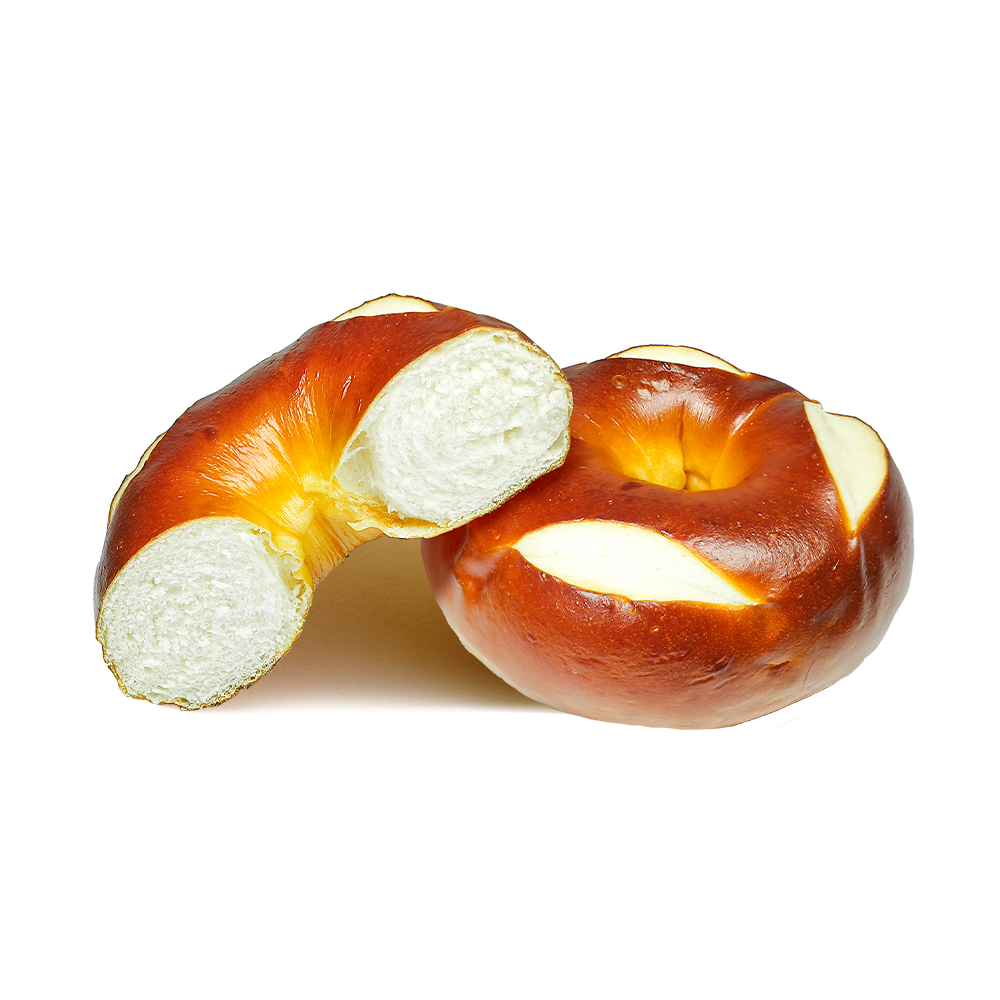
 High-Quality Wheat Source Salted Sesame BagelPremium Wheat + Dairy Butter + Morton Sea Salt: A True "Sea-Salt Butter" Profile We start with carefully selected wheat flour, use premium New Zealand dairy butter for...View Product →
Comparing Flour and Format Choices
Formulators rarely get to change one thing at a time. The comparison below maps the levers that appear most often in bakery nutrition reviews and what each one actually moves.
Lever
Nutrient effect
Practical impact
White flour, about 75% extraction
Fiber around 2.5 to 3 g per 100 g; bran and germ removed
Fortification returns thiamine, niacin, iron, and folic acid
Whole wheat, 100% extraction
Fiber around 10 to 12 g per 100 g; magnesium, zinc, and B vitamins retained
Phytate binds minerals, so a longer ferment improves absorption
Whole grain blend, 30% to 50% of flour
Finished bread gains roughly 4 to 6 g fiber per 100 g
The usual compromise between crumb texture and claim thresholds
Kettle boil before baking
Surface B vitamins leach into the water; sodium is picked up
Boil time and water chemistry become nutrition variables
Parbaked, then finish-baked in store
Second heat exposure adds roughly 3% to 8% extra thiamine loss
Foodservice friendly, but retention factors must enter label math
Sourdough ferment, 12 to 24 hours
Phytate reduction; slower starch digestion
Adds a day to the schedule and tightens pH control
Indicative ranges for finished baked goods; confirm against your own laboratory analysis before using them in a label calculation.
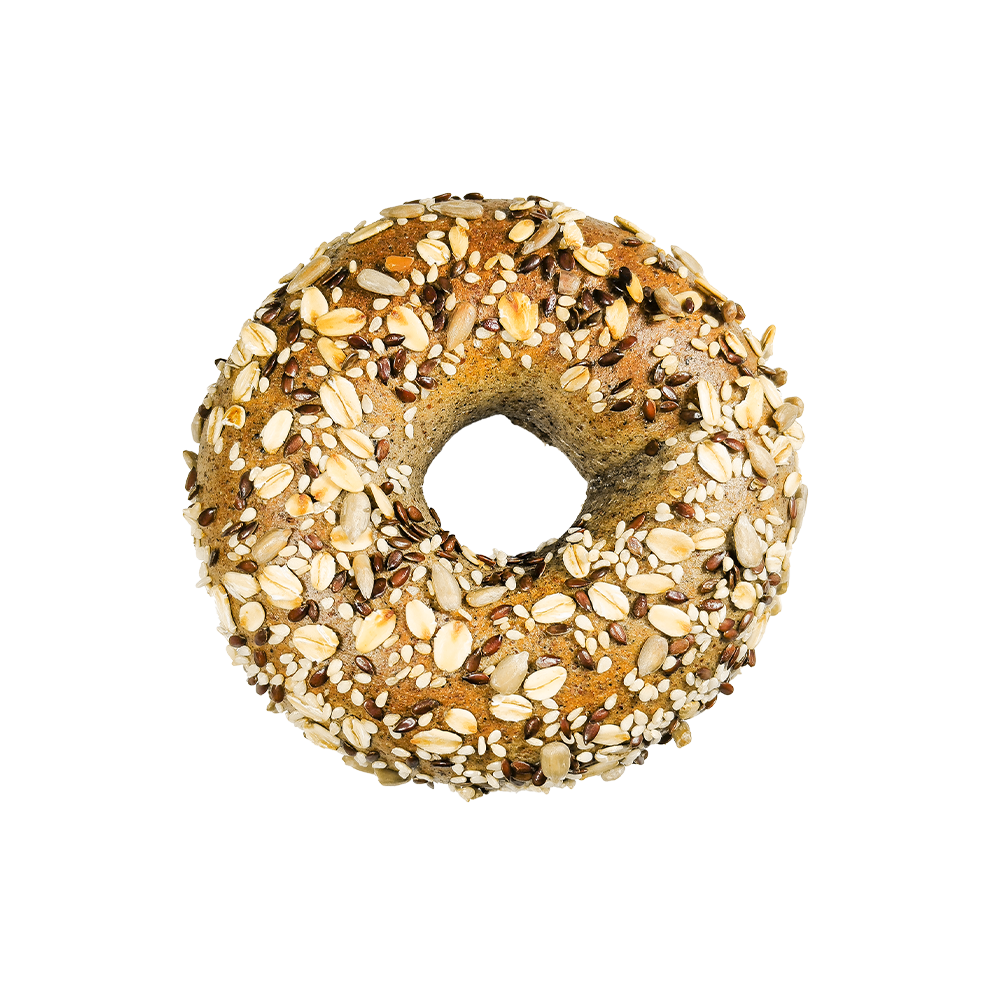
 Dietary Nutrition Dark Whole Wheat Multigrain BagelHigh-Proportion Dark Whole Wheat + Whole-Kernel Milling: Preserving the Grain's "Natural Essence" We craft this bagel around a high proportion of dark whole wheat flou...View Product →
The Metrics That Never Reach the Spec Sheet
Four numbers decide whether a baked good performs nutritionally, and none of them usually appears on a purchase order: thiamine retention, phytate load, sodium picked up during the boil, and available lysine. Retention is the easiest to model, because process route explains most of the variation.
Straight dough 82
Sponge and dough 88
16 h sourdough 91
Parbaked plus finish 74
Kettle boiled 68
Indicative relative thiamine retention index for a lean dough baked to a comparable crust color. The pattern matters more than the exact figures: every additional heat pass costs vitamins, while a slow acid ferment recovers part of the loss. Phytate and available lysine behave the same way, improving with ferment time and degrading with crust development. Fiber type matters too, since soluble oat and flax fiber behaves differently in the gut than the insoluble bran fraction of whole wheat.
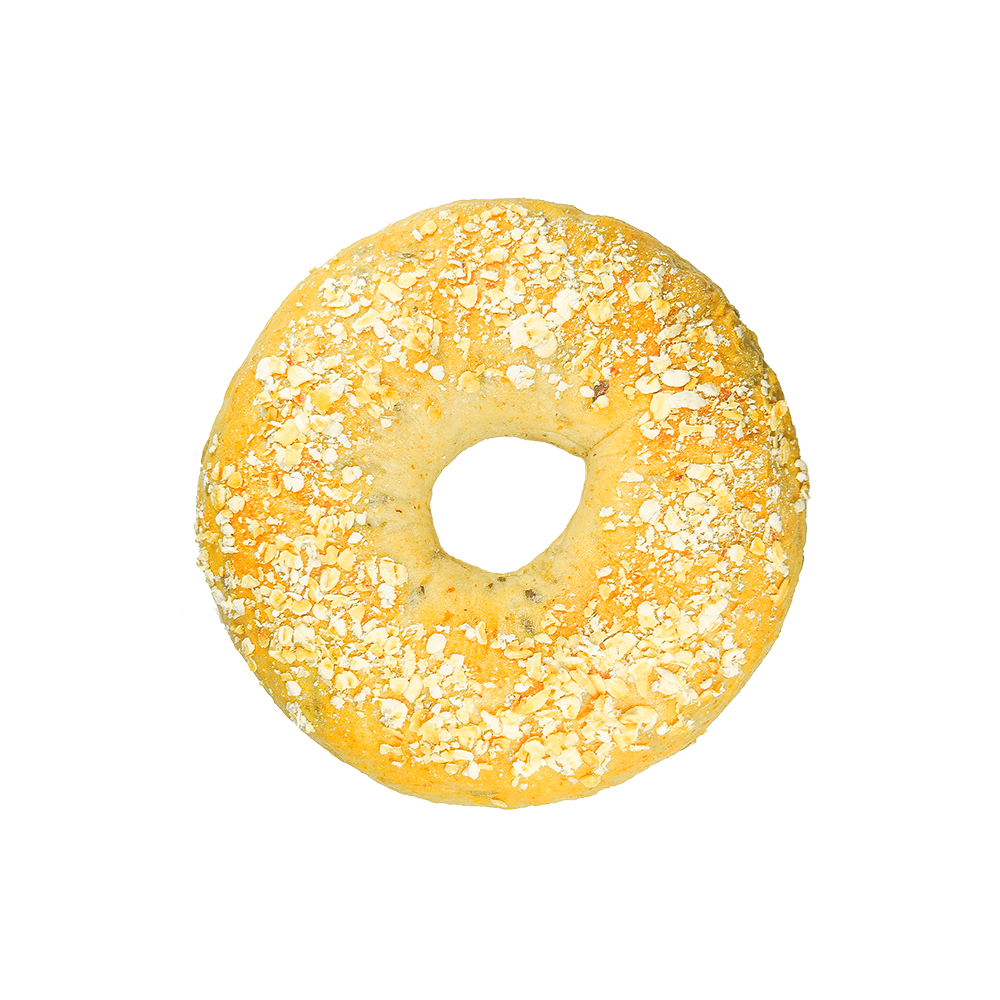 Low Fat Whole Wheat Oat Flaxseed BagelTrue Whole-Wheat, Whole-Kernel Milled: Where Bran and Germ Build the "Honest Grain Flavor" We prioritize true whole wheat, milling from whole kernels to retain as much...View Product →
Where Baking Nutrition Decisions Concentrate
Nutrition pressure does not arrive at the same point in every channel. Retail packaged bakery buyers push on claims and shelf life, coffee and tea chains push on portion size and sugar, in-store bakery teams push on fresh perception, and export programs push on label compliance across several rulebooks at once.
Retail packaged bakery, 38%
Coffee and tea chains, 27%
In-store bakery and foodservice, 21%
Export and private label, 14%
The practical reading is that a supplier working across several of these channels needs more than one nutritional position for the same base dough. A seeded multigrain item can carry a fiber claim in retail, sit as a lighter option in a coffee chain, and still need a retention-adjusted label for an export market that calculates nutrients differently.
A Reformulation Sequence That Survives an Audit
- Fix the claim target first. A "good source of fiber" position typically needs 10% of the daily reference value per serving, a "high fiber" position needs 20%. Write the number down before touching the formula.
- Assay the current product. Send finished bread for fiber, sodium, thiamine, and protein. Dough-based estimates miss crust losses and the concentration effect of the bake.
- Change one variable at a time. Move extraction rate first, then fermentation, then inclusions. Changing all three together makes an unsuccessful trial impossible to read.
- Re-check the process window. A 40% whole grain load usually needs two to four points more hydration and a gentler mix. If preservatives come out at the same time, shelf-life planning has to start in parallel, as outlined in this overview of clean label bagel formulations without preservatives.
- Verify with a second assay and lock the spec, including the retention factor that will be applied in the label calculation. One sample is not substantiation.
Keeping the Claim Valid After Launch
- Use documented nutrient retention factors for label calculation, or run and archive your own bake-loss study.
- Keep per-batch assay records. Claim substantiation normally requires a sampling plan rather than a single result.
- Track sodium from the boil and from inclusions, since both can quietly push a reduced sodium position out of reach.
- Check rounding rules before launch. Small differences in fiber or sodium decide whether a claim is even eligible.
- Re-verify whenever a supplier changes flour extraction rate, seed sourcing, or water treatment.
- Document cold-chain and shelf-life conditions if nutrient stability over time forms part of the claim.
None of this requires an exotic ingredient list. It requires deciding which numbers matter, measuring them on the finished product, and keeping the process window inside the range where those numbers hold. Bakeries that supply retail brands, coffee chains, and export customers usually find the same thing: a modest shift in extraction rate and ferment time buys more nutritional value than any addition made after the dough is mixed, and it costs far less than a failed claim.
