
 中文简体
 English
postmaster@goobagelfood.com
Content
- 1 How Mold Actually Gets a Foothold in Bread
- 2 Comparing Mold Inhibitors: Dose, pH Window and Label Cost
- 3 The Hidden Metric: Mold-Free Days Nobody Prints on the Pack
- 4 Where Each Strategy Sits in Commercial Bakery
- 5 Why the Delivery Format Changes the Decision
- 6 Choosing a Mold Inhibitor: A Six-Step Flow
- 7 Label Declaration, Limits and Ongoing Verification
A truck leaves the plant with parbaked bagels that tested clean, sits in summer traffic for four hours, and arrives with condensation on the inside of the liner. Nine days later the customer sends a photo: one bagel out of four dozen has a grey-green patch near the seam. The buyer's first question is always the same. What mold inhibitor is in the bread, and why did it stop working?
The short answer, before the detail: calcium propionate is still the most effective mold inhibitor for yeast-raised bread and bagels, and no clean-label ingredient matches it gram for gram. But the additive is rarely the deciding factor on its own. Water activity, pH, cooling time, packaging atmosphere and post-bake hygiene usually decide whether a product reaches day 12 or fuzzes out at day 6.
Working rule for B2B bakeries: stabilise the process and the package first, then choose the inhibitor that matches your label and your market. Picking an additive before the process is stable only hides a problem until a customer finds it.
How Mold Actually Gets a Foothold in Bread
Mold spores are not a manufacturing defect. They arrive on flour dust, on packaging film, on air currents in the cooling room, and on the hands of anyone who touches a cooled product. What you can control is not whether spores land, but whether the surface of the bread stays friendly to them.
Four variables do most of the work:
- Water activity. Fresh bread and bagels sit near 0.94 to 0.96 aw. Below roughly 0.90, mold growth slows sharply, which is why a well-baked crust and a dense crumb behave better than a soft, moist crumb.
- pH. Propionates and sorbates only work inside defined pH windows. A dough at pH 5.8 will not get the same protection from potassium sorbate as one at pH 5.2.
- Packaging atmosphere. Sealing warm product traps moisture, the crust condenses, and the wettest point in the bag becomes the first colony. Modified atmosphere packing with carbon dioxide or nitrogen buys days that no additive can.
- Post-bake contamination. Slicers, blades, belt surfaces and cooling racks are the usual transfer points. A clean oven counts for little if the slicer is only wiped once a shift.
Water activity
Measure aw on the crumb and separately on the crust. Surface moisture after cooling is the number that predicts mold, not the average.
pH and acidulants
Every organic acid salt has an active pH range. Testing finished pH, not dough pH, tells you whether the dose is doing anything.
Pack and gas
Film thickness, seal integrity, headspace and residual oxygen decide how long the product stays protected after it leaves the oven.
Cooling discipline
Bagging above roughly 35 degrees C puts free moisture into the pack. That single habit can cancel an effective mold inhibitor in bread.
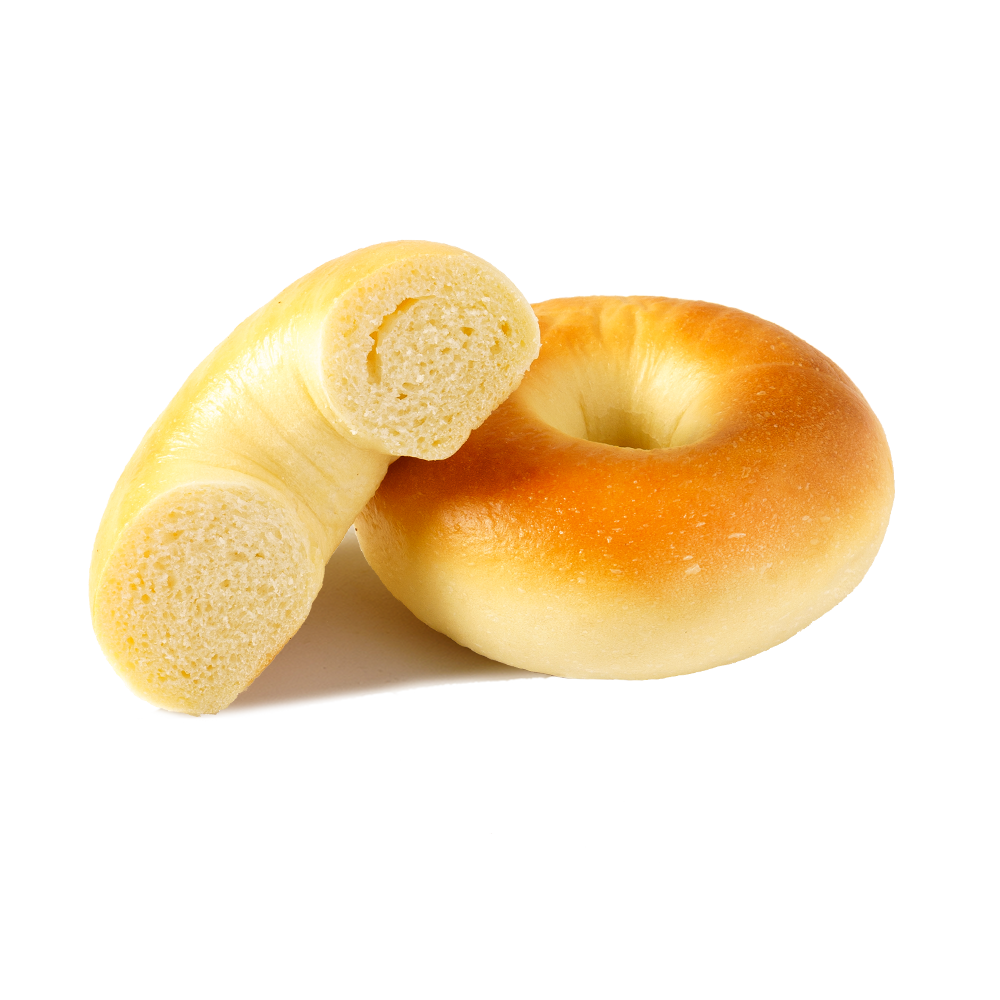
A kettle-boiled plain bagel is a useful baseline for this discussion: dense crumb, low residual moisture, and a thin crust that dries quickly after the boil and bake. It is also the product most sensitive to process drift, because with almost no filling to buffer moisture migration, any condensation inside the pack shows up as surface mold first.
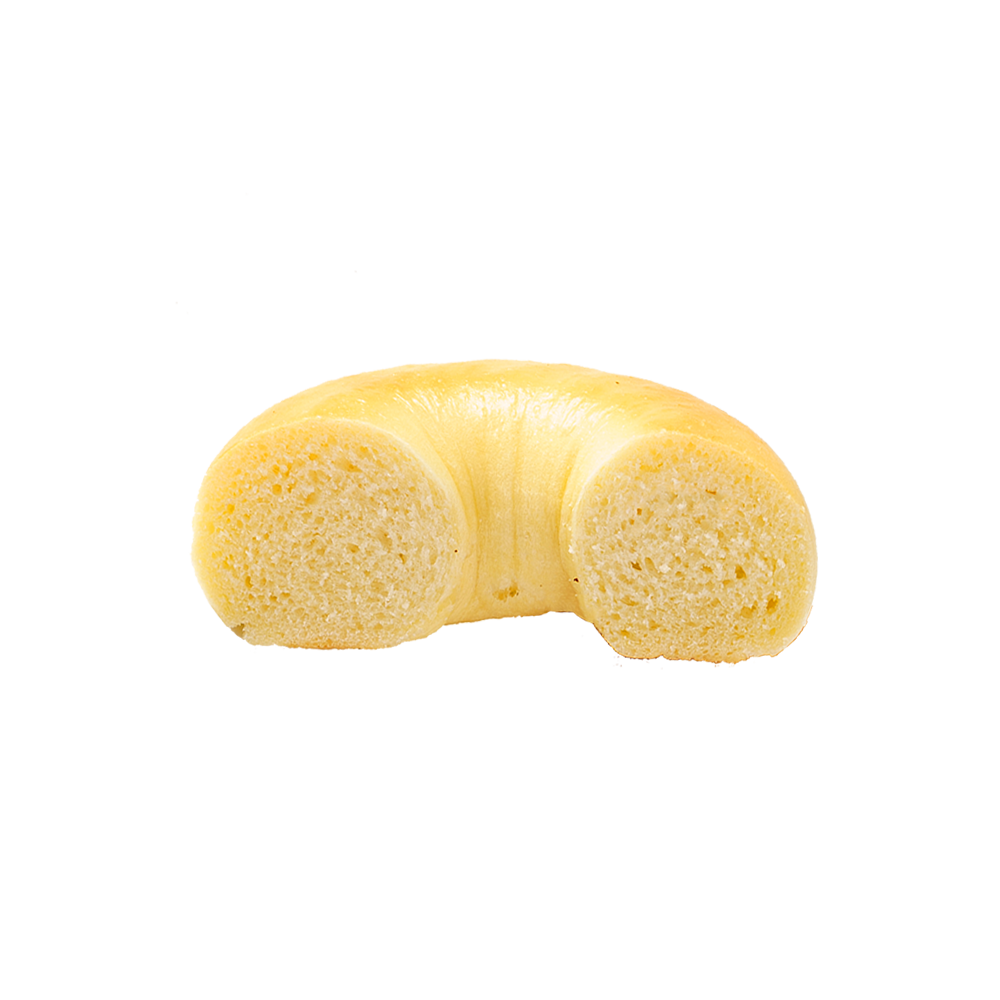 Glossy And Brittle Plain BagelSimple Formula + Precise Craft: Back to the Bagel's "Pure Grain Character" We source high-grade wheat flour that far exceeds the commodity flour commonly used across t...View Product →
Comparing Mold Inhibitors: Dose, pH Window and Label Cost
Most commercial options fall into three families: organic acid salts, acidulants that shift pH, and cultured or fermented ingredients that generate organic acids during fermentation. They are not interchangeable, and swapping one for another without a challenge test is how shelf-life complaints start.
Dose ranges are typical specification ranges for yeast-raised bread and bagels. Confirm them against your own formula, water activity and the additive rules of each market before you commit to a recipe.
The Hidden Metric: Mold-Free Days Nobody Prints on the Pack
Shelf-life claims are written in weeks, but mold decisions are made in days. Published clean-label evaluations report mold appearing on control bread within 3 to 5 days, while propionate-treated loaves hold out considerably longer. Plant trials on bagels follow the same shape, though the absolute numbers move with water activity, cooling and film.
No inhibitor
4 days
Vinegar 2 percent
6 days
Cultured wheat 3 percent
8 days
Calcium propionate 0.3 percent
12 days
Propionate plus gas packing
18 days
Directional figures from published shelf-life trials and bakery plant experience, tested in a sealed pack at 22 to 25 degrees C. Read them as a ranking, not a guarantee.
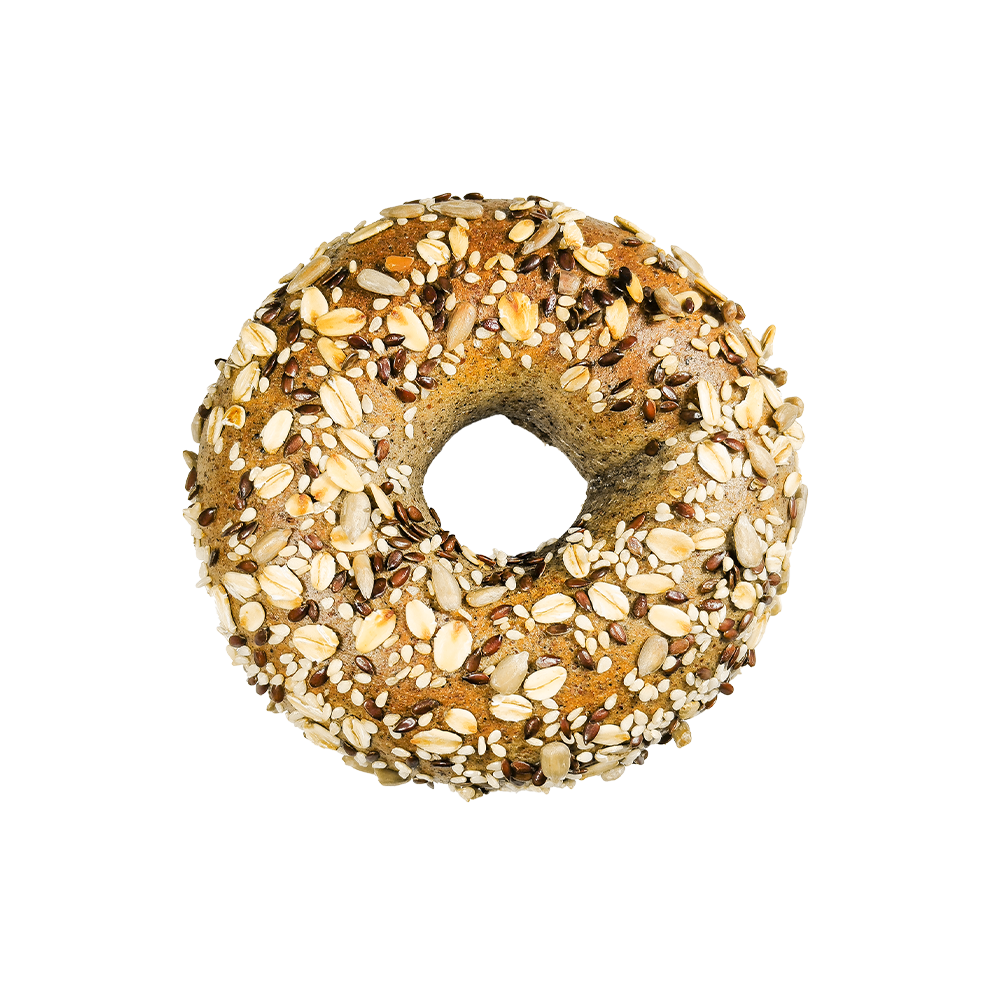
The substrate matters as much as the additive. Whole-grain and seeded products carry more spores on the surface and hold moisture differently, so the same dose that protects a white loaf may fall short in a multigrain bagel. That is why whole-grain recipes usually need either a higher acidulant load, gas packing, or a shorter declared life.
 Dietary Nutrition Dark Whole Wheat Multigrain BagelHigh-Proportion Dark Whole Wheat + Whole-Kernel Milling: Preserving the Grain's "Natural Essence" We craft this bagel around a high proportion of dark whole wheat flou...View Product →
Where Each Strategy Sits in Commercial Bakery
Read through the specification sheets of commercial bread and bagel producers and a rough pattern appears. Propionates still carry the largest share of ambient-shelf-life products, sorbates handle surface and niche applications, clean-label acidulants have grown quickly in the past decade, and a minority of frozen producers rely on gas and hygiene alone.
- Propionates, about 55 percent. Ambient bread, buns and bagels with a declared life beyond a few days.
- Sorbates, about 15 percent. Surface application, sweet baked goods, and formulas that can hold a lower pH.
- Clean-label acidulants, about 22 percent. Retail brands that will not print a preservative on the pack.
- Gas and hygiene only, about 8 percent. Mostly frozen and short-life chilled lines.
A directional picture of specification practice in commercial bakery, not a market study. Shares shift with category and region.
Why the Delivery Format Changes the Decision
The same mold inhibitor behaves differently depending on what you ship. A parbaked bagel that finishes in a store oven gets one more kill step, so the inhibitor mainly protects the window between your freezer and the customer's oven. A raw dough bagel carries no protection from a bake it has not had yet, which is why the cold chain, not the additive, does the heavy lifting. A thaw-serve product is chilled rather than frozen, and depends on filling water activity and pack gas. Foodservice buyers evaluating parbaked frozen bagel formats for foodservice usually care more about the freeze-thaw and finish-bake behaviour than about the preservative line on the spec sheet.
Filled and hot-sandwich formats sit at the opposite end. Meat, cheese and vegetable fillings add water, sugar and protein, all of which raise the risk, while the shorter chilled life means the mold question becomes a food-safety and dating question rather than a long-shelf-life one.
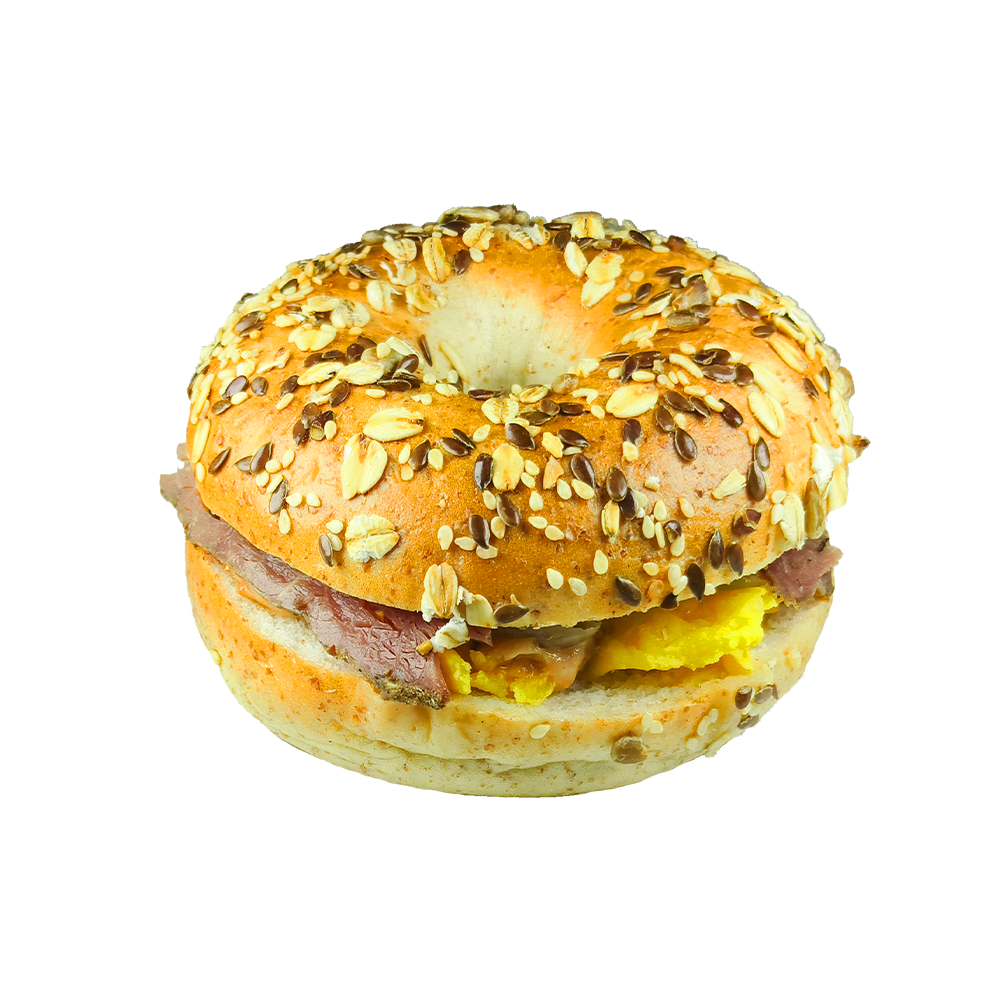 Sauerkraut Slow-Roasted Beef Cheese BagelMultigrain Bagel Base: Distinct Grain Texture + High-Fiber Ratio for a "Heartier, More Filling" Foundation The base is a multigrain bagel dough with a bold toasted aro...View Product →
Choosing a Mold Inhibitor: A Six-Step Flow
- Set the number first. Decide the shelf-life target in days, the storage temperature, and whether the label may carry a preservative. Everything else follows from those three answers.
- Measure the product, not the dough. Record finished water activity, crumb pH and crust pH on at least three production batches before changing anything.
- Fix the cheap levers. Cooling before packing, slicer sanitation, film seal integrity and residual oxygen usually deliver more days per yuan than any additive.
- Run a challenge test on your own product. Inoculate with a mixed mold spore suspension, store at the real abuse temperature, and count days to visible growth. Generic loaf data does not transfer to a dense bagel crumb.
- Pilot the dose. Move in steps of 0.05 percent for propionates or 0.5 percent for acidulants, and check flavour, volume and crust colour at each step.
- Lock the specification. Write the dose, the acceptable pH range and the cooling target into the process sheet, then re-verify twice a year.
Label Declaration, Limits and Ongoing Verification
Two things catch producers out after the shelf-life work is done: how the ingredient reads on the label, and what the destination market allows.
- Declaration wording. Calcium propionate appears as a preservative. Vinegar or cultured wheat flour appears as an ordinary ingredient, which is exactly why clean-label programs use it, though it still contributes propionic acid to the finished product.
- Market limits. Propionates and sorbates are regulated additives. The EU caps them in prepacked bread at levels commonly cited near 2,000 mg per kg, China's GB 2760 sets category-specific maximum levels, and the US treats propionates as GRAS with good manufacturing practice. Confirm the current text before reformulating for export.
- Retained samples. Keep control packs at 22 to 25 degrees C and an abuse set at 30 degrees C, and inspect weekly. A photo log is more convincing than a written claim when a customer disputes a date code.
- Seasonal review. Humidity, transport distance and warehouse temperature change the effective shelf life without changing the recipe.
Where a brand wants shelf life without a preservative declaration, the practical route is a formulation built around acidulants, water activity and packaging rather than a single substitute ingredient. That is the logic behind clean-label bagel formulations without preservatives, and it is why the format and the pack have to be designed together.
The honest summary for anyone specifying a mold inhibitor in bread: buy the additive last. Calcium propionate still delivers the most protection per gram, cultured wheat flour is the closest label-friendly substitute, and gas packing plus cooling discipline outperforms both when the process is tight. Bakeries that treat shelf life as a system rather than an ingredient stop chasing mold complaints one photo at a time, and start shipping products whose date code they can actually defend.
