
 中文简体
中文简体
 English

postmaster@goobagelfood.com
Content
- 1 The Physics of Freezing and Reheating a Composite Product
- 2 Thermal Profiling: Oven, Air Fryer, and Microwave Methods Compared
- 3 The Two-Stage Hybrid Method for Optimal Quality
- 4 Managing Water Activity and Sogginess
- 5 Doneness Verification and Food Safety Thresholds
- 6 Commercial Par-Baking and Freezing: Why It Works
- 7 Troubleshooting Common Conversion Failures
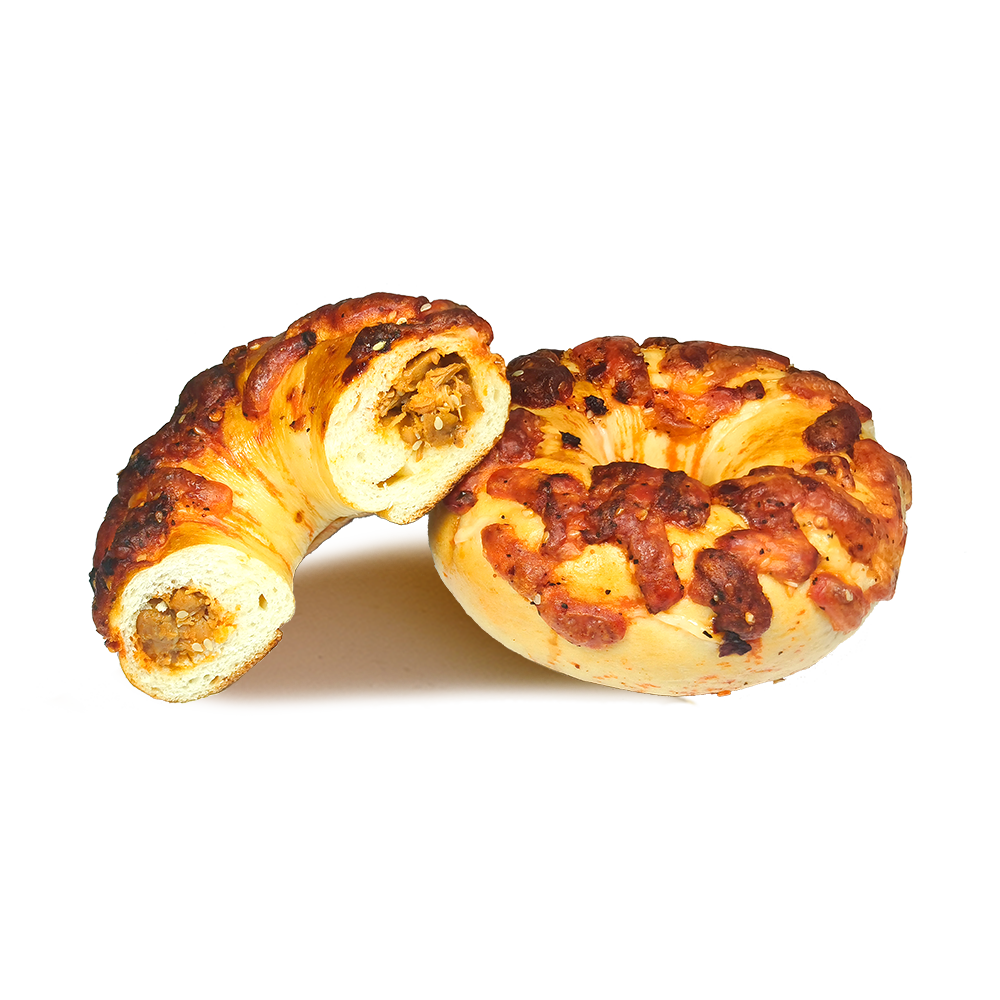
The critical factor in successfully converting a frozen stuffed bagel into a product that tastes freshly baked is managing the thermal lag between the dense dough exterior and the cold, often high-moisture filling. Unlike a uniform frozen dough piece, a stuffed bagel presents two distinct thermal masses. The goal is to apply enough energy to fully thaw and heat the frozen core to a safe, palatable temperature (above 74°C or 165°F) without over-baking the outer shell into a hard, dry crust. The most reliable method for achieving this balance is a two-stage thermal process: a covered or steamed thawing phase followed by a dry, high-heat finishing phase to restore the crust's texture.
The Physics of Freezing and Reheating a Composite Product
To master the conversion, you must first understand what happens during freezing. The bagel dough and the filling freeze at different rates due to their distinct water activity levels. The cream cheese or cheese-based filling inside a stuffed bagel has a higher free water content than the surrounding dough, meaning it crystallizes more aggressively. During frozen storage, these ice crystals can rupture the starch granules inside the filling, which is why a poorly reheated stuffed bagel often leaks water and separates into a greasy, curdled mess.
The thermal processing goal, therefore, is not just heating; it is controlled re-emulsification. You must apply heat rapidly enough to minimize the time the fat and water spend in a separated state while the ice melts. A frozen stuffed bagel taken from a storage temperature of -18°C (0°F) needs to pass through the "danger zone" of slow melting quickly. Using a conventional oven preheated to a true 175°C (350°F) provides the thermal driving force necessary to overcome the latent heat of melting in the filling without scorching the sesame seeds or toppings on the crust.
Thermal Profiling: Oven, Air Fryer, and Microwave Methods Compared
Each heating appliance transfers energy through a fundamentally different physical mechanism, producing vastly different textures even if the internal temperature reaches the same target. Convection ovens transfer heat through a fluid air medium, air fryers use high-velocity forced air with a concentrated radiant component, and microwaves use dielectric excitation that targets water molecules directly. Choosing the wrong method sacrifices the crust entirely, leaving you with a steamed, chewy shell.
| Heating Method | Core Mechanism | Typical Cycle Time | Crust Result |
|---|---|---|---|
| Convection Oven | Ambient air convection & conduction from tray | 18-22 minutes at 175°C | Crisp, even browning |
| Air Fryer | High-velocity radiant & convective hybrid | 10-14 minutes at 160°C | Very crisp, rapid darkening of toppings |
| Microwave (1000W) | Dielectric heating of polar water molecules | 90-120 seconds | Soft, leathery, steamy |
| Hybrid (Microwave + Oven) | Flash thaw via microwave, then oven finish | 60 seconds + 8-10 minutes | Good texture, fastest total method with quality |
The Two-Stage Hybrid Method for Optimal Quality
Relying on a microwave alone is the single biggest mistake in frozen-to-fresh conversion of bread products. Microwave radiation penetrates approximately 1 to 1.5 inches into a food surface, meaning the outer dough layer heats simultaneously with the filling. However, because the dough has a lower moisture content than the cheese filling, the outer starch matrix rapidly gelatinizes and then toughens as steam escapes. The result is a hot but unpleasantly chewy bagel.
The hybrid method bypasses this failure mode. Start by wrapping the frozen stuffed bagel in a slightly damp paper towel and microwaving it on 50% power for approximately 60 to 90 seconds. The damp towel creates a steam environment that prevents the dough from drying out while the filling thaws. Immediately transfer the bagel, now thawed but soft, into a preheated air fryer or oven at 190°C (375°F) for 5 to 8 minutes. This second stage drives off the surface moisture rapidly, triggering the Maillard reaction on the exterior crust while leaving the interior filling fully molten but not separated. This process is the closest replication of the original par-baking and freezing cycle used in commercial manufacturing.
Managing Water Activity and Sogginess
Sogginess at the dough-filling interface is the primary quality defect in reheated stuffed bagels. This occurs because water vapor released from the melting filling cannot escape through the dense dough quickly enough and condenses at the boundary layer. The solution lies in steam venting and airflow. Before heating a frozen stuffed bagel from scratch, cut it in half along the equatorial seam. This is counterintuitive because it is often sold as a solid, uncut unit, but separating the two hemispheres exposes the frozen filling directly to the dry heat source.
Placing the halves cut-side up in an air fryer basket or on a perforated pizza pan allows the melting moisture to evaporate freely rather than pooling against the bread. The fat content of the filling—typically cream cheese, which has a moisture content of roughly 55%—will render slightly and fry the inner crumb surface, creating a golden, slightly crisp interior face that a whole-bagel bake cannot achieve. If you must heat from a whole frozen state, probe the center with a metal skewer to create a thermal chimney that aids internal steam escape.
Doneness Verification and Food Safety Thresholds
Visual cues like crust color are misleading indicators of internal doneness. The sugars and egg wash on the bagel surface will brown long before the frozen core reaches a safe temperature. A stuffed bagel with a cream cheese or dairy-based filling is a potentially hazardous food in its thawed state and must be heated past the thermal death point for common pathogens. The FDA recommends reheating commercially processed frozen foods to an internal temperature of 74°C (165°F).
Use an instant-read probe thermometer inserted into the geometric center of the filling to confirm the endpoint temperature. Do not rely on a timer alone, as variations in starting temperature between a deep freezer at -23°C and a frost-free freezer at -15°C can alter the required dwell time by up to 30%. After reaching the target temperature, a resting time of one minute should be observed. During this rest, latent heat redistribution continues to equalize the temperature between the filling and the crust, ensuring no cold pockets remain.
Commercial Par-Baking and Freezing: Why It Works
Understanding the industrial process helps the consumer optimize their reheat technique. Commercial stuffed bagels are rarely fully baked before freezing. Instead, they undergo a par-bake process where the dough is baked to roughly 80% completion at a lower temperature to set the structure without developing full color. The product is then rapidly cryogenically frozen using liquid nitrogen or a spiral freezer to lock the partially gelatinized starch in a stable state. This prevents the starch retrogradation that causes staling.
When you reheat a par-baked frozen bagel, you are essentially completing the final 20% of the baking process. The residual leavening agents in the dough may still have a slight puff of activity. For this reason, the reheat phase should mimic the initial par-bake environment: rapid heat transfer to finish starch gelatinization and set the crust. A convection oven with good air circulation replicates the industrial impingement oven environment better than a static conventional oven, making it the preferred tool for achieving a bakery-fresh texture at home.
Troubleshooting Common Conversion Failures
Burnt Toppings, Frozen Center
This indicates the oven temperature is too high relative to the frozen thermal load. The exterior dehydrates and scorches before the conductive heat wave reaches the core. Reduce the oven temperature by 25°C and tent the bagel with aluminum foil for the first half of the cycle. The foil reflects radiant heat away from the sensitive toppings while allowing ambient heat to penetrate the dough mass evenly.
Leaking or Exploded Filling
Dairy-based fillings expand by approximately 15% to 20% in volume when transitioning from frozen solid to liquid melt. If the dough shell has no pre-existing weak point, the filling will find or create one, bursting through the thinnest part of the sidewall. Slicing the bagel before heating, as described earlier, provides a pressure release valve. If reheating whole, score a shallow slit no more than 2mm deep into the thickest part of the bagel's sidewall to act as a controlled vent.
Tough, Rubbery Crust
This defect is caused by microwave overexposure or steaming for too long in a sealed environment. Once the hydrated starch in the crust exceeds a moisture content of roughly 35%, it transitions to a rubbery gel. The only remedy is a brief blast of dry, radiant heat at a temperature above 200°C for 1-2 minutes to flash off the surface water and re-crisp the outer millimeter of the crust without further cooking the interior.
