
 中文简体
中文简体
 English

postmaster@goobagelfood.com
Content
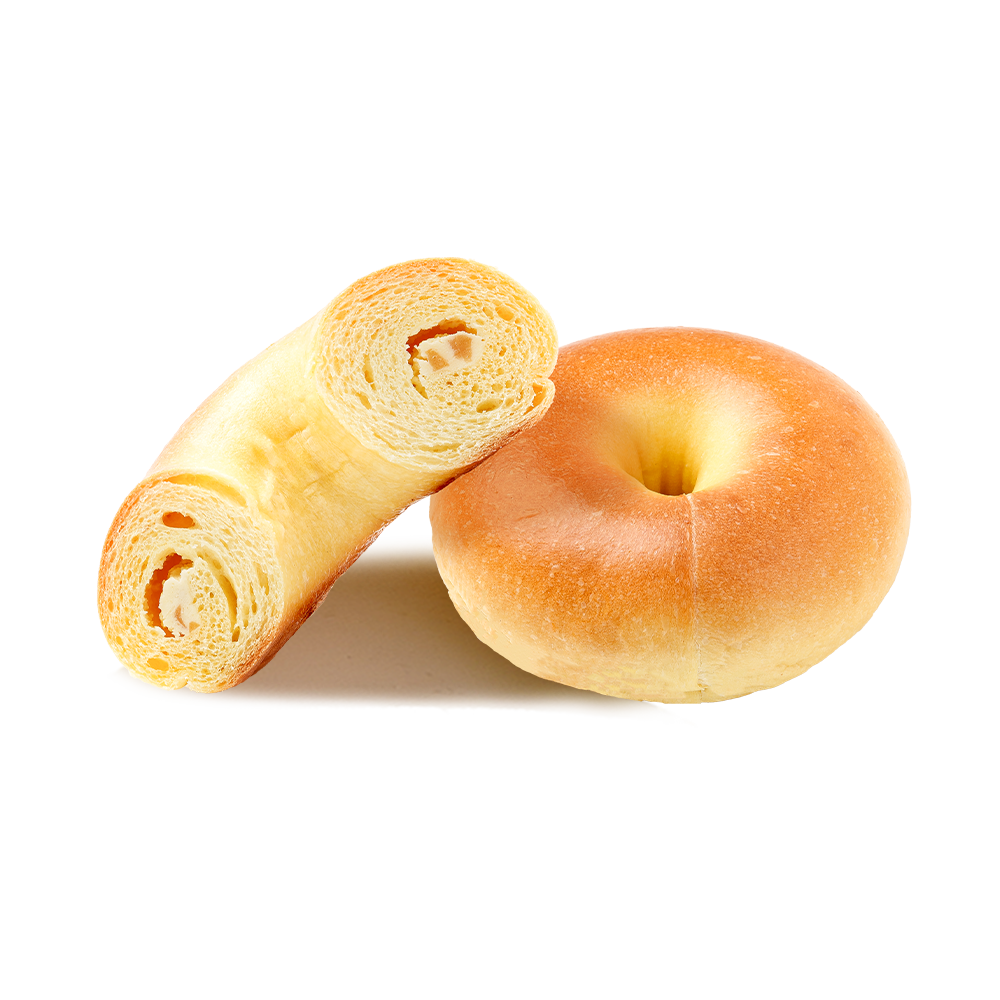
A café chain purchasing manager reviews the 2025 supplier plan with order data finally in hand. Ingredient costs rose for four straight quarters, the store team asked repeatedly for a simpler bake-off routine, and the five best-selling breakfast SKUs all involved a bagel—two of them seeded, one of them stuffed with cream cheese. The muffin basket no longer carries the morning daypart.
The same pattern shows up across retail bakeries and foodservice operators in the 2025 bakery trends data. Buyers made two moves at once: they simplified production through frozen formats, and they upgraded the ingredient story with visible grains, cleaner labels, and higher-value fillings.
The core conclusion
Operators who outperformed in 2025 did not add more SKUs. They shifted production format—from scratch baking to raw dough, parbaked, or thaw-serve frozen bagels—while pushing cleaner ingredient decks, visible seeds, and stuffed lines that commanded stronger price points.
Consumers Were Buying Ingredients, Not Just Bagels
Category launch data for 2025 shows a 22% year-over-year increase in new bakery products carrying digestive or gut health claims. Consumer conversation analytics around crunchy and crusty textures rose 15% during the year and were already tracking toward another 19% gain in 2026. These trends converge on the bagel, which already has a chewy crust, whole-grain potential, and a fermented-dough story that fits gut health messaging.
Four attribute clusters explain most of the 2025 demand shift:
- Gut-friendly positioning. Fermented dough and whole grains carry a wellness halo, and bagels made with preferments and high-fiber flours capture that value.
- Visible seeds and grains. Sesame, onion, flax, and oat toppings make a bagel look nutritious before the first bite, which is why retail buyers treat seeding as a quality signal.
- Protein at breakfast. Bagel sandwiches loaded with egg, cheese, or meat extend the breakfast window and lift average transaction value.
- Lower-sugar formulations. Reduced-sugar and no-added-sugar bagels won placement in coffee chains and convenience sets that wanted a better-for-you claim without sacrificing taste.
A frozen bagel program is a practical route to these attributes because the base dough can be formulated for clean-label results while the frozen format controls cost.
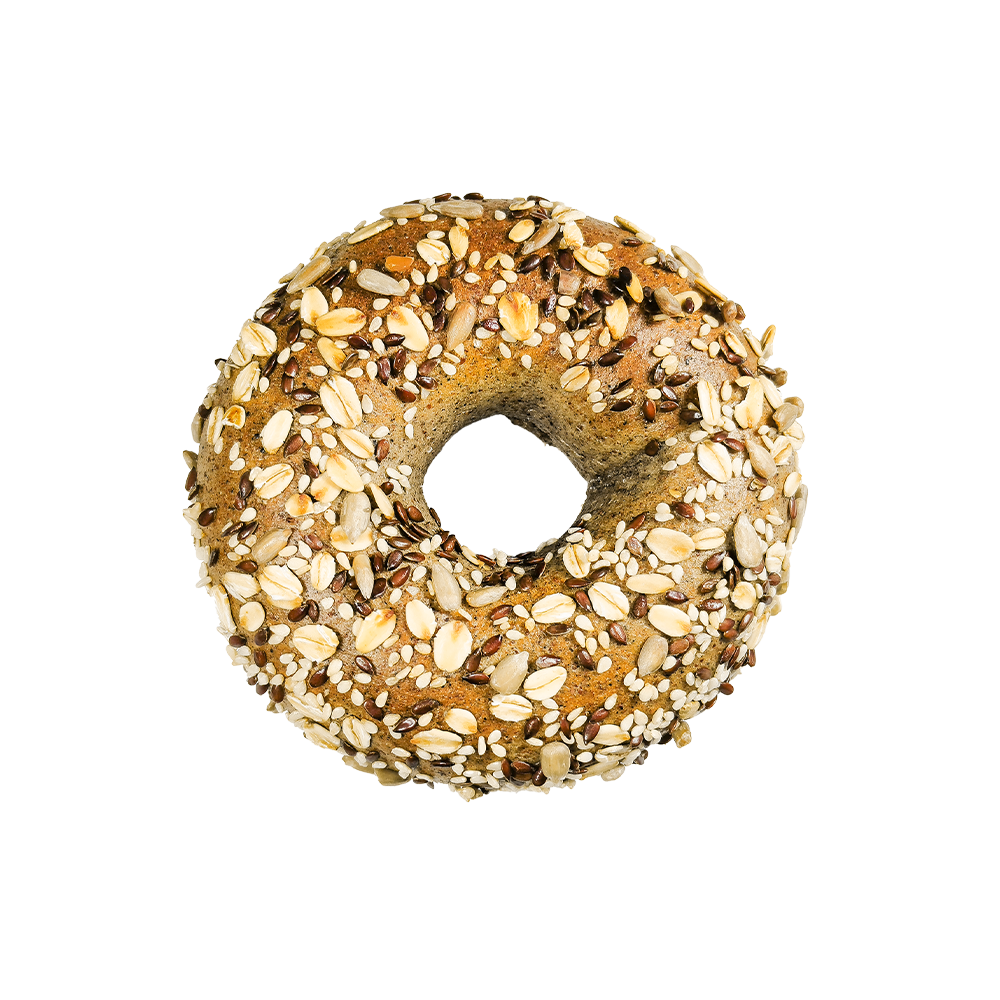 Clean-Label Dark Whole Wheat Multigrain Bagel with SeedsThis bagel uses high-proportion dark whole wheat and whole-kernel milling, topped with oats, flaxseed, and sesame for a crunchy crust. Its hearty texture suits clean-label frozen bakery programs.View Product →
Clean Labels and Kettle-Boiled Craft
"Clean label" in frozen bakery means no artificial preservatives, recognizable ingredients, and a short declaration that survives freezing and baking. That is harder than it sounds, because the freezing process exposes weak dough structure. Manufacturers meet the requirement through precise water activity control, controlled freezing curves, and packaging that prevents moisture migration. The result is a bagel that bakes up with the same crumb and crust as a daily-scratch product.
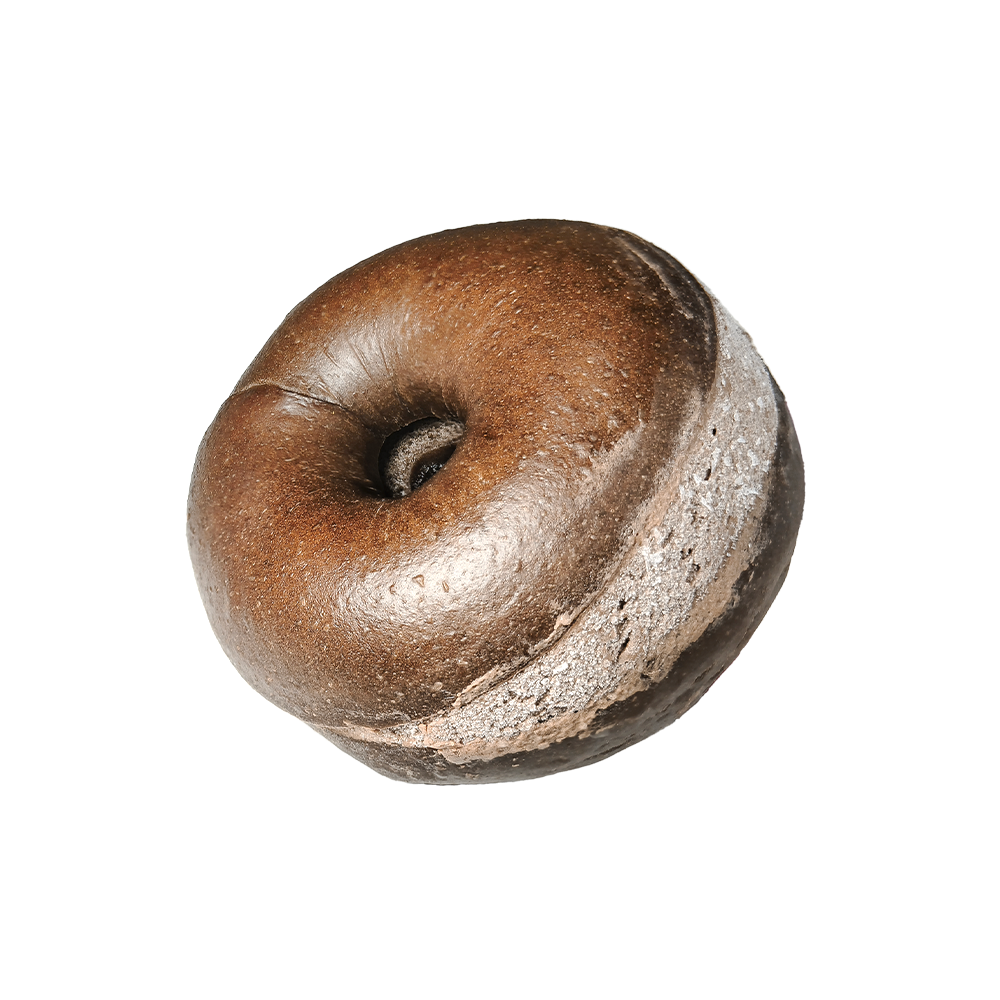
Operators looking for the classic New York-style eating experience increasingly source clean-label bagel formulations without preservatives and kettle-boiled New York-style bagel texture from frozen suppliers who boil in production and freeze immediately. This transfers the highest-skill step to the factory and leaves the store with a simple finish bake.
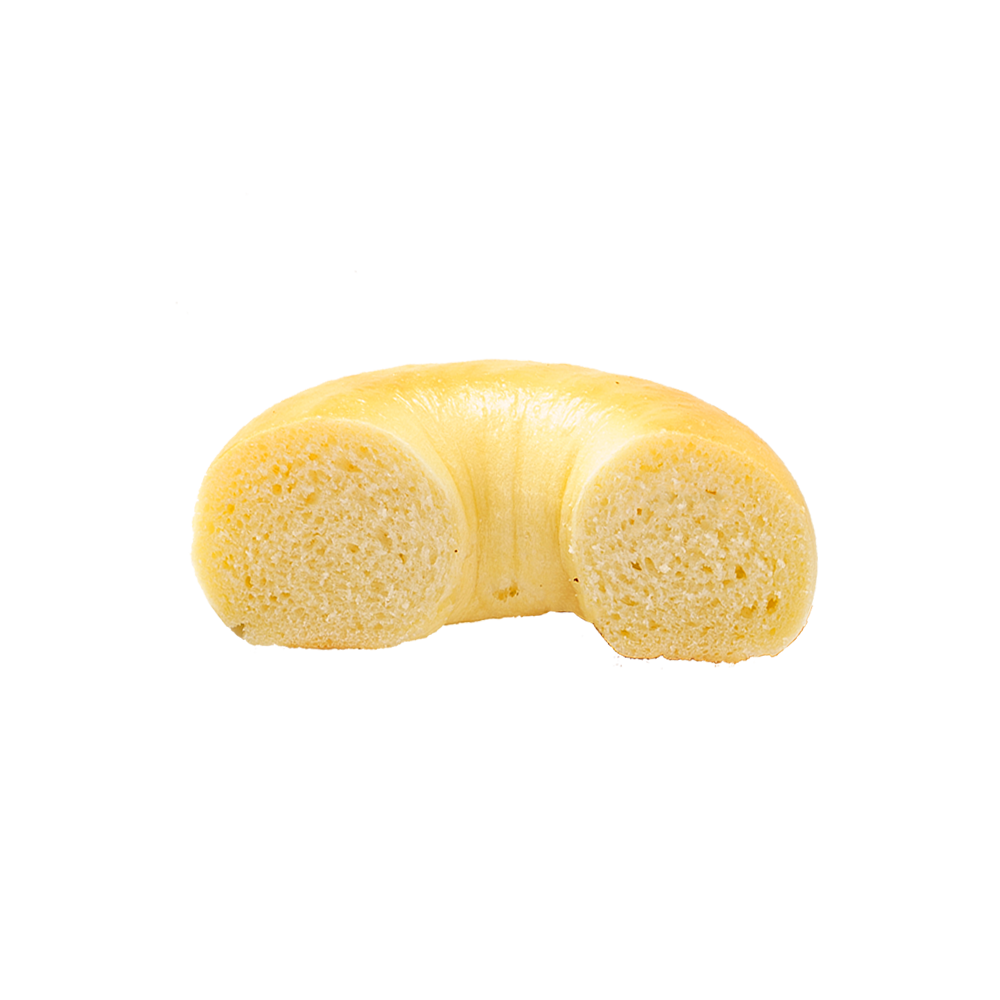 Kettle-Boiled Glossy Plain New York-Style BagelA simple formula with high-grade wheat flour delivers a crisp-then-chewy crust and honeycomb crumb. It's a versatile base, ideal for operators seeking authentic New York-style texture in frozen form.View Product →
Production Format Benchmarks for 2025
For bakery buyers, format choice determines labor costs, equipment needs, and final texture consistency. The 2025 order books showed a clear migration toward formats that reduce skilled labor without giving up the freshly baked signal.
| Parameter | Raw Dough | Parbaked | Thaw & Serve |
|---|---|---|---|
| Final bake required | Yes, fully from proofed state | Yes, short finish bake | No |
| Equipment needed | Proofer + oven | Oven only | Refrigerated display |
| Skilled labor | High | Medium | Low |
| Texture control | Full control | Good and consistent | Fixed by factory |
| Ideal channel | Artisan bakery | Café chains | Retail grab-and-go |
Multi-location operators preferred parbaked formats because they cut labor and still deliver a fresh-baked signature. Single-site shops that wanted the strongest artisanal claim kept raw dough programs, while convenience and office coffee settings moved to thaw-serve.
Hidden Metrics Behind the 2025 Shift
Standard sales dashboards miss the early demand signals. Three data points mattered most for 2025 bakery planning:
15%
Crunchy/crusty conversation growth, 2025
19%
Crunchy/crusty conversation growth, 2026P
22%
New bakery launches with gut-health claims
The first two bars track online conversation growth around crunchy and crusty textures. The third bar tracks digestive and gut health claims in new bakery launches. Together they point to a consumer who wants texture-first baked goods with a functional ingredient story—exactly what a well-formulated bagel delivers. US consumer panels from the same period add a nuance: 62% of consumers say they prefer soft bagels, meaning operators need both a tender crumb for sandwiches and a crusty shell for the artisanal signal.
Where Bagel Demand Concentrated
Frozen bagel programs expanded beyond the breakfast bakery shelf in 2025. The channel mix shifted as coffee chains, tea shops, and foodservice kitchens added bagel formats to their own menus.
Representative channel mix
- Retail bakery counters — 30%
- Coffee and tea chains — 25%
- Foodservice and restaurants — 20%
- Convenience and grab-and-go — 15%
- Private-label and OEM programs — 10%
What each channel wanted
Coffee chains led the switch to parbaked formats because a bagel can finish in the same oven as croissants.
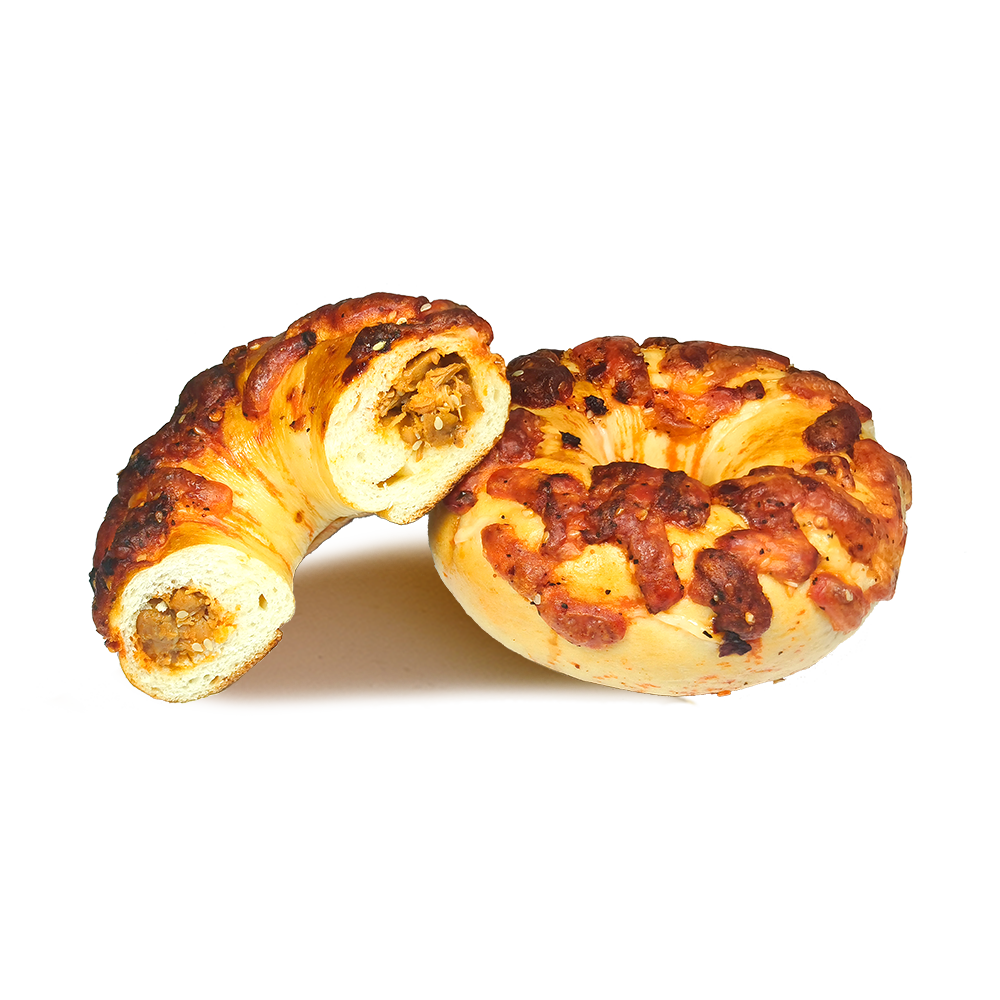
Tea shops preferred stuffed bagels as a higher-margin snack paired with milk tea or fruit drinks.
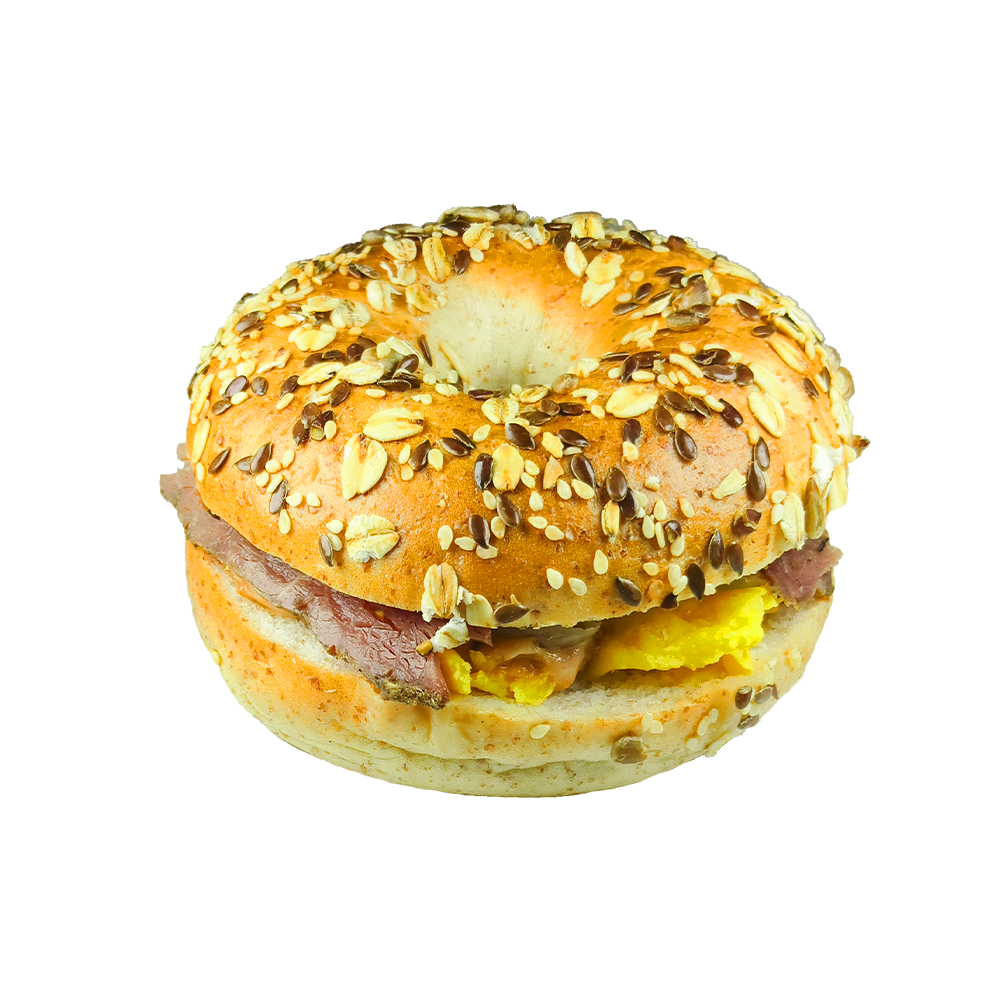
Foodservice buyers favored hot-sandwich bagel formats that reheat quickly under a salamander or panini press.
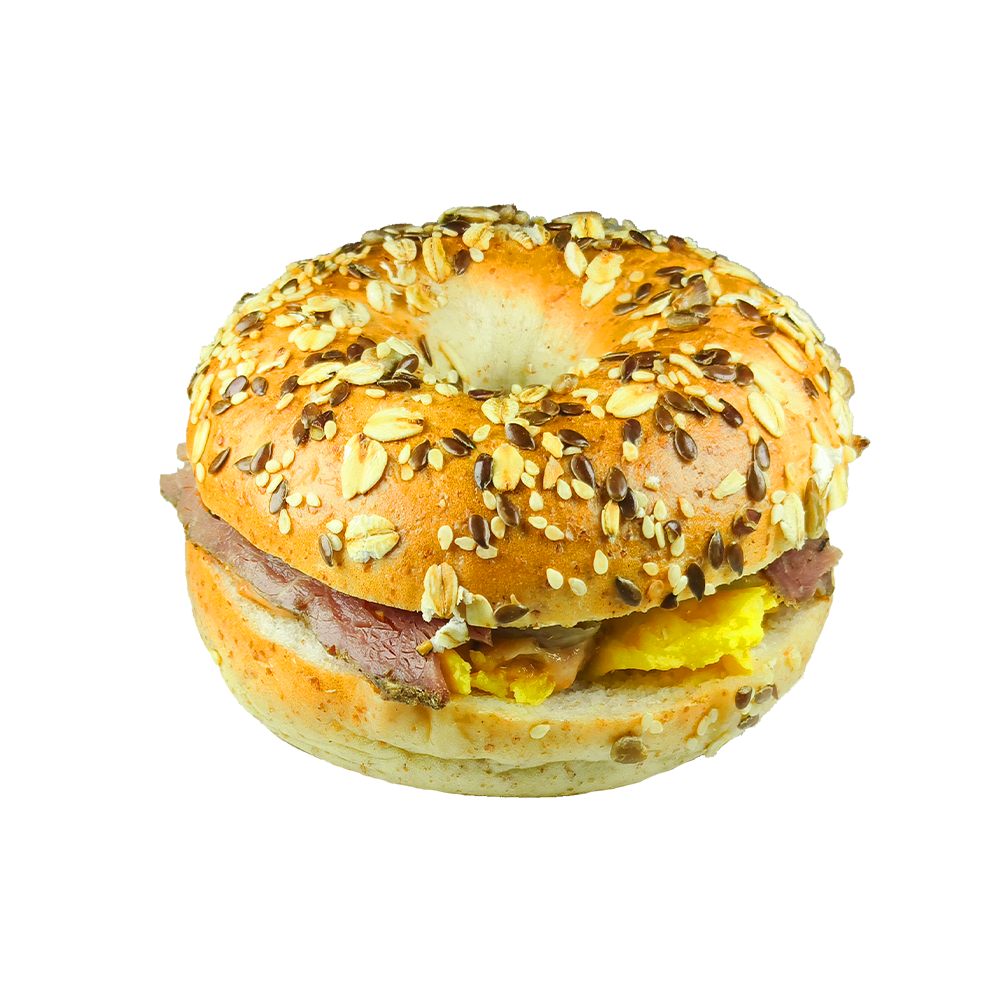 Hot-Sandwich Bagel with Sauerkraut, Slow-Roasted Beef, and CheeseA multigrain bagel base carries lactic-fermented sauerkraut, low-temperature slow-roasted beef, and melted imported cheese. Designed as a hearty, meal-worthy hot sandwich, it reheats quickly for foodservice.View Product →
A Four-Step Selection Sequence for 2025
Operators who planned their bagel program in 2025 followed a consistent sequence. The same logic applies to any bakery category review.
1
Define the labor budget. If the store team cannot hold proof and bake schedules reliably, raw dough adds operational risk. Parbaked or thaw-serve formats remove that variable.
2
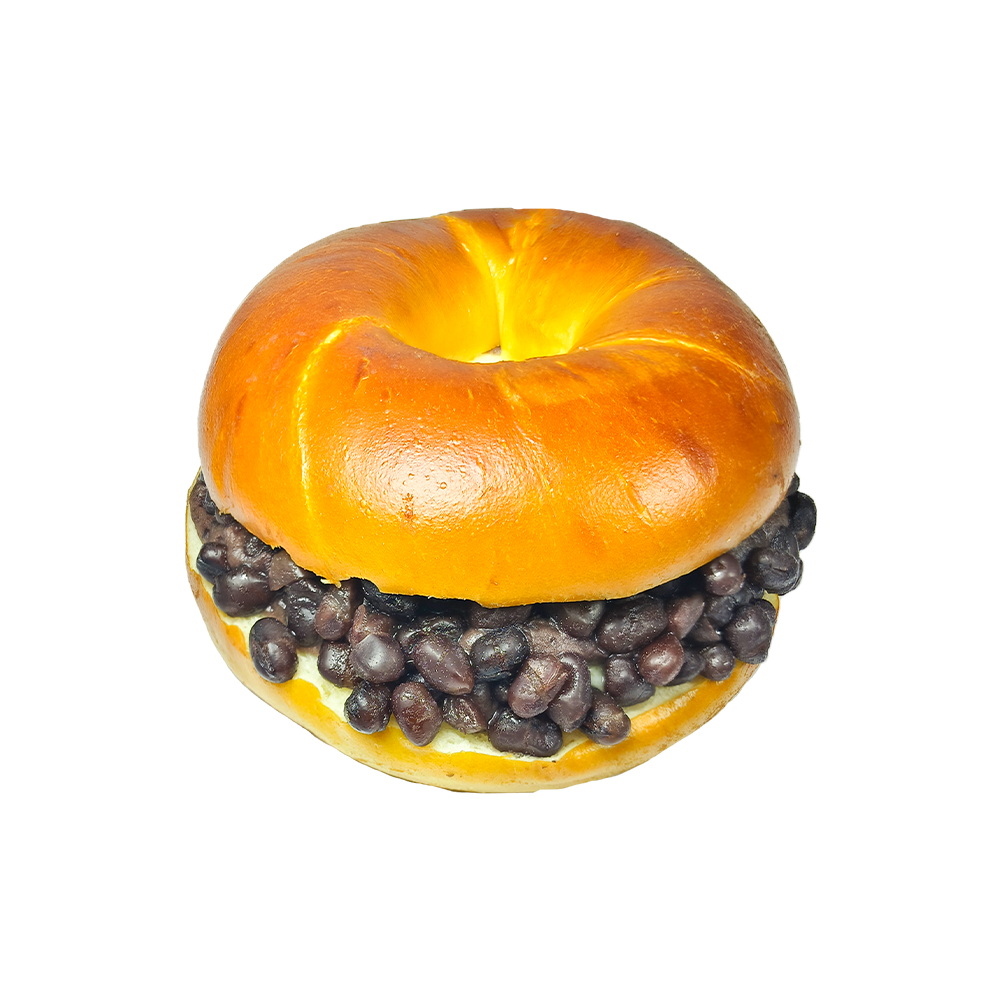
Map the menu daypart. Breakfast sandwiches need a sturdy hot-sandwich bagel format. All-day snacking and dessert occasions call for stuffed cream-cheese and fruit varieties.
3
Audit the cold chain. Bagel texture depends on consistent frozen storage. A single thaw-refreeze cycle degrades the crumb, so confirm receiving temperatures and freezer stability before committing to a supplier.
4
Validate label claims. Confirm that the finished product matches the story on your menu—no artificial preservatives, whole-grain content, sugar levels, and allergen declarations all need to be audit-ready.
Maintenance, Compliance, and Cold-Chain Discipline
A frozen bagel program only performs as well as the operation around it. The 2025 operators who avoided quality complaints paid attention to four details:
- Temperature discipline. Confirm receiving temperatures remain below −18°C and freezer cycling stays stable. Defrost-refreeze cycles change texture and shorten shelf life.
- Allergen control. Visible sesame seeds and dairy fillings change allergen risk. Keep seeded and stuffed varieties separate from plain production, and update prep surfaces and signage.
- Label and claim audits. Menu claims must match the actual product specification. If you promote "clean label," the finished product formulation must contain no artificial preservatives.
- Shelf-life validation. Run regular sensory checks on thawed and baked product, documenting when texture and moisture drift outside acceptable range.
The bakeries that performed best in 2025 treated bagels as a complete system—formats, labels, cold chain, and menu placement designed together. That integration is what turns a bakery trend into a repeatable profit line.
