
 中文简体
 English

postmaster@goobagelfood.com
Content
- 1 What actually makes it a baguette hot dog
- 2 The bread spec: numbers that predict whether the sandwich works
- 3 Hold time: the metric that quietly decides margin
- 4 Where the format earns its margin
- 5 Choosing a carrier: a five-step flow
- 6 When a bagel makes the better sausage carrier
- 7 Maintenance, allergens, and compliance
At a corner stand in Lyon, a grilled sausage goes into a split demi-baguette, gets a layer of raclette, and finishes with a thin smear of Dijon. It outsells the standard hot dog for a simple reason: texture. The crust cracks, the crumb absorbs the fat, and the bread-to-sausage ratio keeps every bite savory instead of bready. If you are costing a foodservice line, planning a café menu, or just cooking for four at home, the conclusion is the same — a baguette hot dog is a bread-first sandwich, so the bread is the part you actually have to spec.
Sausages are forgiving. Baguettes are not. A bun that is a little soft still sells; a baguette that is too thick, too pale, or too fresh from the oven will pull the sausage out on the first bite and leave a plate of crumbs. Most failures in this format happen before the sausage is ever grilled.
What actually makes it a baguette hot dog
Four components matter, and three of them are decisions made before service begins. The meat is the easiest variable to fix; the bread and the build are where operators lose money.
- Bread: a demi-baguette of roughly 15–18 cm, baked dark enough that the crust is audible when pressed, with an open and slightly irregular crumb.
- Sausage: a frankfurter-style pork link, a Toulouse sausage, or a cheese-filled link, with a 22–30 mm diameter so it seats into the cut without stretching the bread open.
- Cheese: raclette or comté, sliced rather than grated, melted over the sausage under a salamander. It acts as a moisture barrier between meat and crumb, which is a structural job, not a garnish.
- Mustard: Dijon, applied to the crumb rather than the sausage so it does not slide off during the first bite.
Ratio target
Bread should be about 40–45% of the finished weight. Above 50%, the sandwich reads as a bread roll with a garnish.
Cut style
Two angled V-cuts leave a hinge at the base. The hinge holds cheese and mustard in place; a full split lets everything drain out.
Heat window
60–90 seconds under a salamander melts raclette without drying the crust. Longer and the crumb starts steaming from the inside.
Assembly order
Mustard on crumb, cheese on sausage, sausage into bread. Reversing the order puts wet mustard directly against the crust and softens it within minutes.
The bread spec: numbers that predict whether the sandwich works
A baguette bought purely on price is the most common cost trap in this format. The five figures below are what we check before a bread is approved as a sausage carrier, whether it arrives parbaked, frozen, or fully baked.
- Crust thickness of 1.5–2.5 mm. Thinner shatters into shards on the tray; thicker resists the bite and drags the sausage out of the bread.
- Alveoli of 3–5 mm in the crumb. A tight, sandwich-loaf crumb turns gummy the moment melted cheese hits it.
- Length of 15–18 cm. Under 15 cm, a 12 cm sausage overhangs and the sandwich looks underbuilt on the shelf.
- Bake profile: 240–250 °C with steam for the first 8–10 minutes, then a dry finish for colour. Steam gives the blistered crust; the dry phase gives the sound.
- Format: parbaked and finished on site usually beats fully baked delivery for this application, because the last six minutes of baking rebuild the crust that a cold chain flattens.
Planning figures for a sausage sandwich programme; hold windows reflect quality loss from steam migration, not food safety limits.
Hold time: the metric that quietly decides margin
Cost per unit tells you what a sandwich costs to make. Usable hold time tells you how many you will throw away. In a warm display, moisture from the sausage migrates upward into the crumb and the crust softens first — which is why a baguette that was perfect at 11:00 is chewy and flat by 12:15.
110
90
72
65
50
Split bagel
Soft milk bun
Brioche
Pretzel roll
Baguette
The practical implication is simple. A baguette hot dog rewards a finish-to-order model and punishes batch holding. If your service style requires 90 minutes or more under heat, either switch carriers or hold the bread separately and build on demand — the second option usually costs less than the waste.
Where the format earns its margin
Baguette hot dogs are not spread evenly across channels. They cluster where there is a display counter, a grill, or a coffee crowd willing to eat something savory at 10 a.m.
- Bakery-café 38% — counter service, high crust expectations, best fit for parbaked finishing.
- Coffee and tea chains 27% — savory anchor for a sweet-heavy menu, usually built to order.
- Foodservice and restaurants 22% — lunch and late-night menus, where a warm hold is acceptable for short windows.
- Retail grab-and-go 13% — the hardest channel for a crusty carrier; soft breads and split bagels dominate here.
The 13% figure is the one worth remembering. If your volume depends on a chiller case rather than a grill, the baguette is working against you, and a denser, chewier carrier will hold quality longer.
Choosing a carrier: a five-step flow
1
Fix the eating occasion.
A sit-down lunch tolerates crust shards; a walking lunch does not. Decide this before tasting anything.
2
Match service model to hold window.
Finish-to-order suits a baguette. Warm display from morning to afternoon does not, no matter how good the bake.
3
Test with the wettest topping on the menu.
Relish, caramelised onion, and sliced tomato expose crumb weakness faster than a plain sausage ever will.
4
Confirm the supply format.
Frozen parbaked, raw dough, or thaw-and-serve each change your labour cost and your equipment list. This sandwich build guide walks through the trade-offs for hot and cold programmes.
5
Run a three-day hold test at real humidity.
A bench test in a dry room will flatter any bread. Test inside the display cabinet, with the sausage in place.
When a bagel makes the better sausage carrier
If the brief is a hot sausage sandwich with a longer hold and a chewier bite, a split bagel is a legitimate engineering answer rather than a trend. The boiled-then-baked crust resists steam migration, the dense crumb does not collapse under melted cheese, and the natural split gives you a hinge without cutting. For the crust mechanics behind that, the kettle-boiled texture notes are a useful reference point.
Two things need adjusting when you swap a baguette for a bagel. First, the sausage diameter: a bagel half is shallower than a demi-baguette, so a 26–28 mm link sits better than a fat 32 mm one. Second, the mustard layer should go on the cut face and be pressed lightly so it seals the crumb before the cheese melts. For high-volume operations, parbaked formats let a kitchen finish the crust on site instead of shipping fully baked bread — the parbaked foodservice overview covers the thaw-and-bake steps.
For an all-day menu, the practical split is: baguette for the lunch and evening dayparts where it can be built to order, and bagel carriers for the morning and grab-and-go dayparts where the sandwich may sit for an hour or more. Simple, neutral bases do the most work here, because the sausage and cheese are already the loud ingredients.
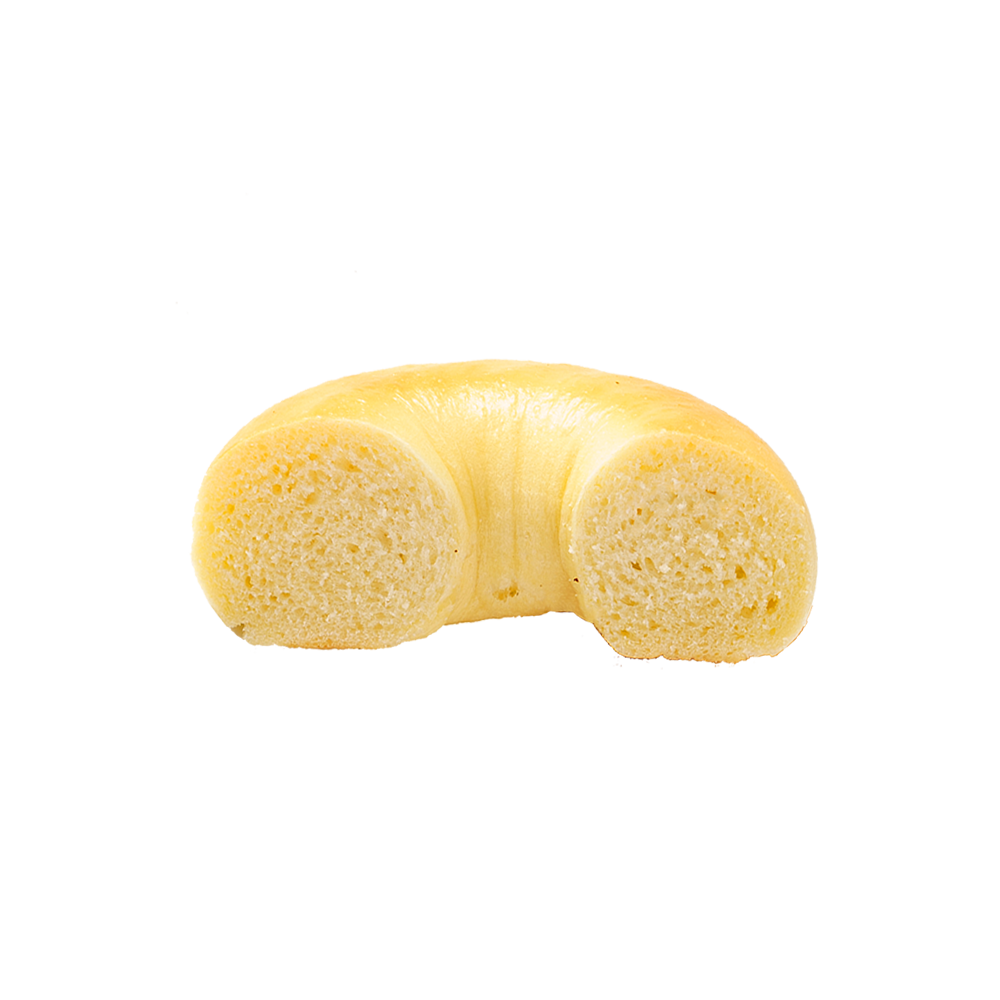 Glossy and Brittle Plain Bagel for All-Day MenusA neutral, versatile frozen bagel base with glossy crisp crust and chewy crumb, suited to morning and grab-and-go sandwich programmes.View Product →
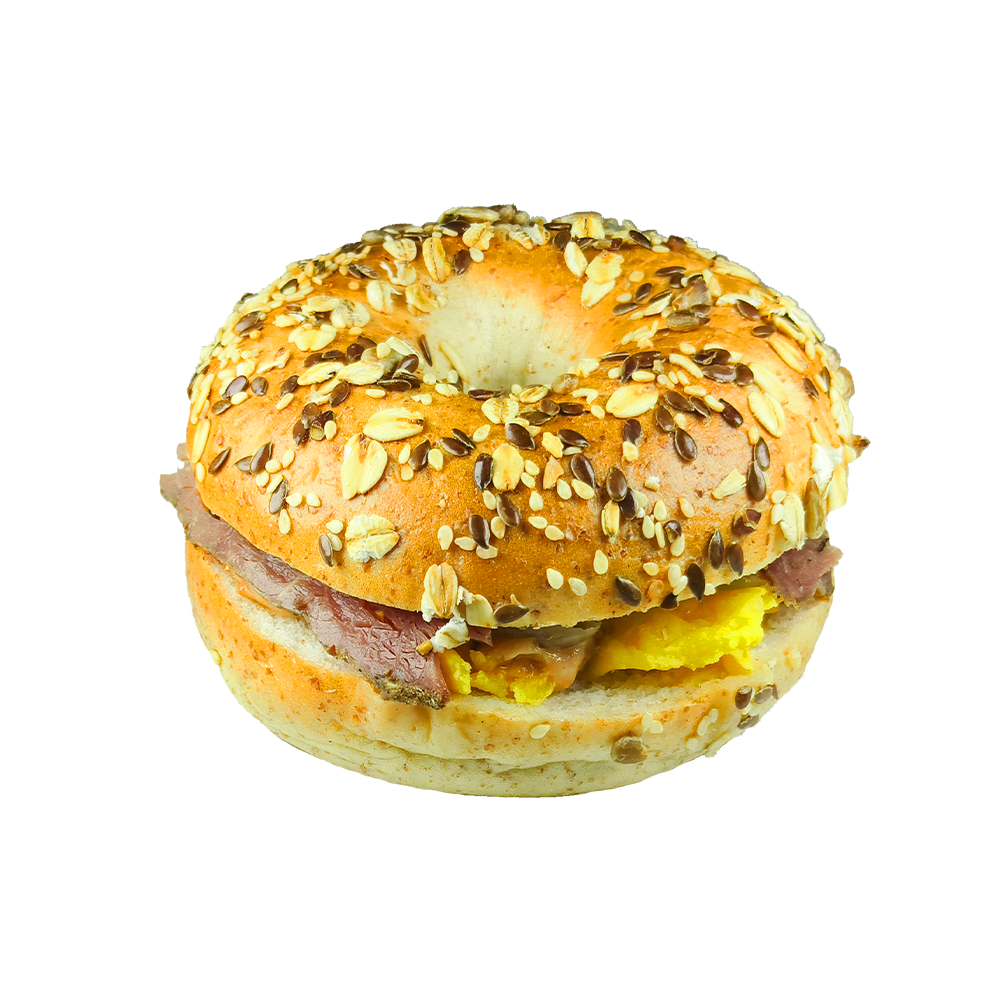 Sauerkraut Slow-Roasted Beef Cheese Bagel SandwichA hearty multigrain bagel sandwich with tangy sauerkraut, slow-roasted beef and melted cheese, suited to filling grab-and-go or meal-worthy menus.View Product →
 Spinach Chicken Mushroom Bagel SandwichA frozen bagel sandwich with spinach dough and smoked chicken, mushroom and bamboo shoot fillings, positioned for breakfast and convenient light meals.View Product →
Maintenance, allergens, and compliance
Once the recipe is locked, the operational details decide whether the programme survives an audit and a busy Saturday. These are the items that most often come back as corrections.
- Allergen mapping: wheat, milk, and mustard are the obvious declarations in a classic build; egg and sesame appear as soon as you change the bread or add a glaze.
- Sesame rules vary by market and are now a named allergen in several, so a seeded carrier requires its own label and its own line-cleaning record.
- Cold chain: frozen bread should be held at −18 °C or below with no partial thaw cycles; every refreeze costs crust quality and creates a texture complaint.
- Hot hold records: log cabinet temperature and discard times, not just start times. The quality window and the safety window are different numbers.
- Clean-label claims: if the bread is marketed as preservative-free, the shelf life and thaw protocol must match that claim on the pack and in the staff handbook.
Train the assembly station on the cut, not just the recipe. A correctly baked baguette is ruined by a knife that goes all the way through, and that is a training failure, not a supplier failure.
A baguette hot dog works when the bread is chosen for the service model rather than the price list. Pick the crust and crumb to match your hold time, cut a hinge instead of a split, put the mustard on the crumb, and check the sandwich at minute 45 rather than minute 5. Do that, and the format delivers the two things that keep it on a menu: a bite worth repeating and a waste line you can defend.
