
 中文简体
 English
postmaster@goobagelfood.com
Content
- 1 The Conclusion First: Three Wins Must Happen Together
- 2 Formulation Methods That Improve Consumer Value Without Breaking Texture
- 3 Process and Freezing Methods: Where Texture Is Won or Lost
- 4 Clean-Label Methods Need a Preservation Strategy, Not a Preservative Swap
- 5 Data Comparison: Four Production Routes and Their Trade-Offs
- 6 Hidden Metrics: What Buyers Test After the Label Is Approved
- 7 Industry Application: Where Novel Bagel Formats Fit
- 8 ROI and Selection Guide: A Four-Step Method
- 9 Maintenance and Compliance: The Unseen Part of Consumer Value
At a recent product review, a retail buyer laid out 18 bagels labeled high-fiber, low-sugar, or clean-label. Only three survived a blind thaw-and-eat test; the rest were dry, gummy, or collapsed after two freeze-thaw cycles. The lesson is practical: novel baked goods earn repeat purchase only when formulation, process, and delivery format are designed as one system. Methods for producing novel baked goods with enhanced consumer value therefore start with the eating experience, not the claim on the front of pack.
The Conclusion First: Three Wins Must Happen Together
Build consumer value around three measurable wins: first-bite texture and aroma, freeze-thaw and display stability, and a label plus portion that fit the buyer’s use case. Ingredient substitution alone rarely delivers all three. A fiber blend that improves the nutrition panel can raise water binding and make a bagel tough; a par-baked format that protects crumb softness can add freezer cost. The successful method is a paired change: formulation plus process plus format.
For bagels, the margin for error is narrow because the product is judged on chew, crust, and symmetry. A small shift in added water or proof time can move the crumb from resilient to bready. That is why novel baked goods should be developed against a texture target, not only a nutrition target.
Formulation Methods That Improve Consumer Value Without Breaking Texture
Start With Flour and Water, Not Claims
Wholegrain and fiber are common routes to higher consumer value, but they compete for water and disturb gluten. A practical method is to pre-hydrate coarse brans, blend wholegrain with strong white flour, and test moderate replacement levels before scaling. Enzymes such as xylanase and amylase can soften crumb and delay staling; hydrocolloids can restore dough strength. Each addition still needs a bake-off and a freeze-thaw check, because a soft bench sample can become a dense thawed bagel.
Treat Sugar, Fat, and Salt Reduction as a System
Sugar reduction changes fermentation, browning, and water activity. Replace part of the sugar with fiber or polyols only after checking dough stickiness and crust color. Fat replacers can lubricate the crumb, but they may shorten shelf life or weaken freeze-thaw tolerance. Salt reduction affects gluten and microbial stability, so it should be matched with process and chilling controls rather than treated as a simple recipe edit.
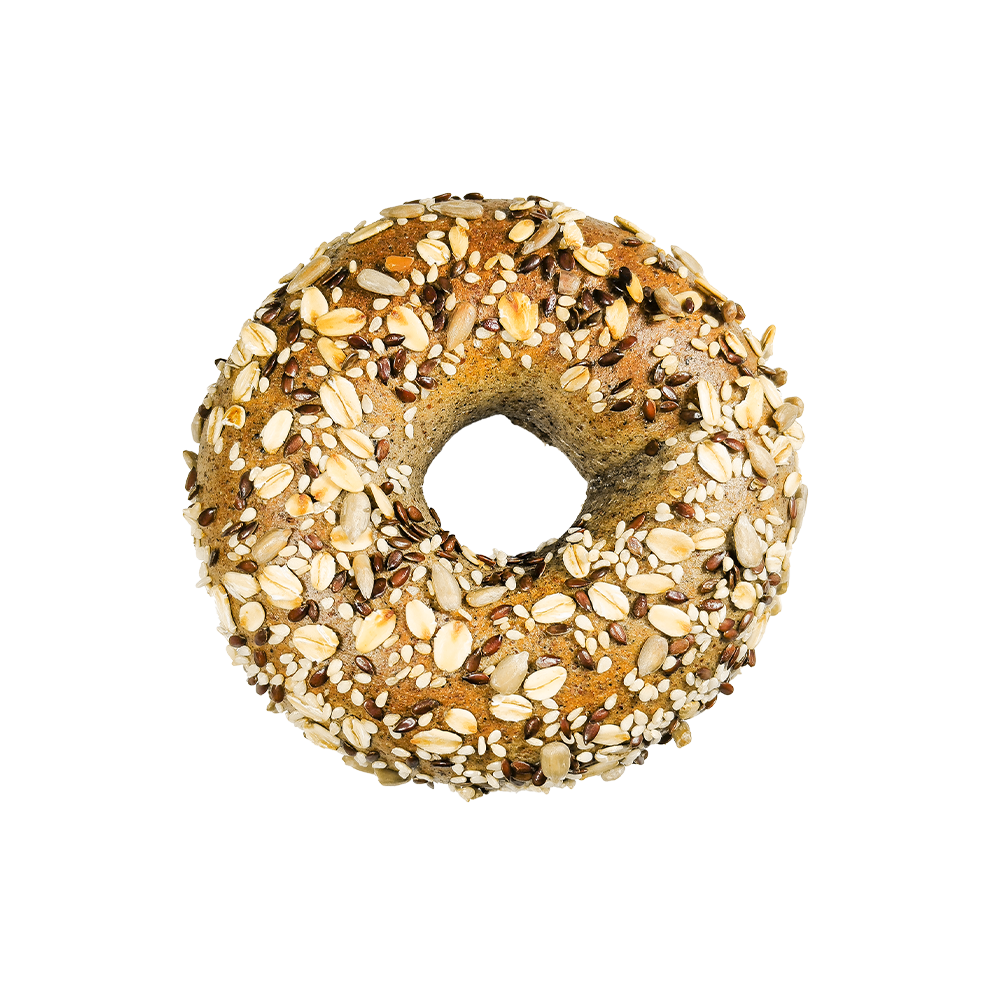 Multi-Grain Bagels with Oats and Mixed SeedsA seeded multi-grain bagel with high fiber and hearty texture, suited to clean-label frozen bakery and foodservice formulation reviews.View Product →
Process and Freezing Methods: Where Texture Is Won or Lost
Kettle-boiled bagels rely on a gelatinized crust. The method that protects consumer value is controlled proof, a short boil, and a bake profile that sets the crust without drying the crumb. For frozen formats, blast freezing and cold-chain discipline matter as much as the recipe. A well-formulated dough can still fail if the core temperature drops too slowly or if the product thaws during distribution. Par-baked frozen bagel formats for foodservice are useful here because they shift final bake to the store while protecting crumb structure in the freezer.
Filled and sandwich formats add another layer: filling water activity, sealing, and reheat instructions. A cream-cheese filling that tastes excellent on the bench may weep after thawing or support microbial growth if the cold chain is interrupted. The practical test is to measure texture and drip after two freeze-thaw cycles, not only on the day of production.
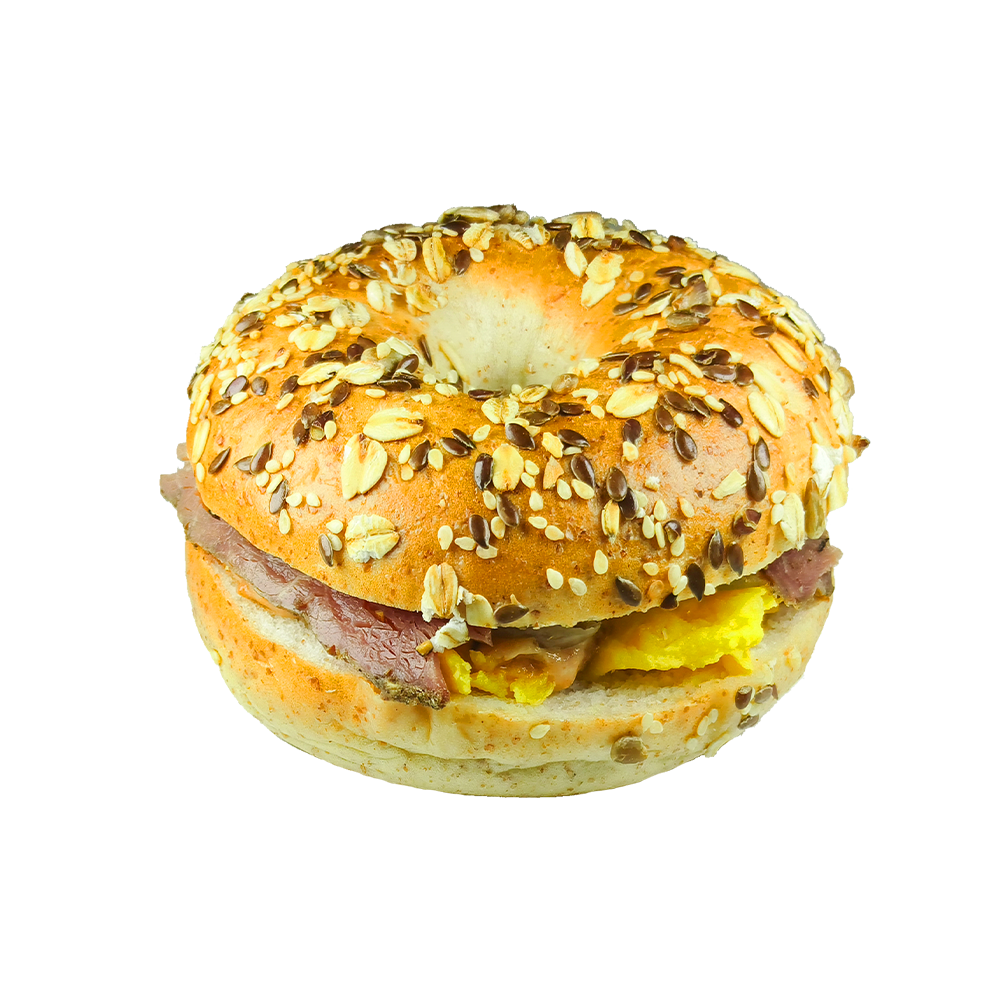 Hot Sandwich Bagels with Savory FillingsA warm sandwich bagel series with cold cuts, vegetables, and mushrooms, useful for retail and foodservice menus needing controlled reheat and cold-chain handling.View Product →
Clean-Label Methods Need a Preservation Strategy, Not a Preservative Swap
Removing preservatives is not a formulation trick; it is a shelf-life redesign. The workable methods are pH control, water activity management, modified atmosphere packaging, hygienic filling, and frozen or chilled distribution. For bagels, clean-label often means shortening ambient shelf life and shifting the product toward frozen or chilled channels. Clean-label bagel formulations without preservatives still need challenge testing, distribution limits, and clear thaw or reheat instructions. A cleaner label with an unstable supply chain is not enhanced consumer value; it is a recall risk with better marketing.
Data Comparison: Four Production Routes and Their Trade-Offs
Table note: risk ratings are relative and should be confirmed through plant trials, shelf-life testing, and cold-chain validation for each specific recipe and market.
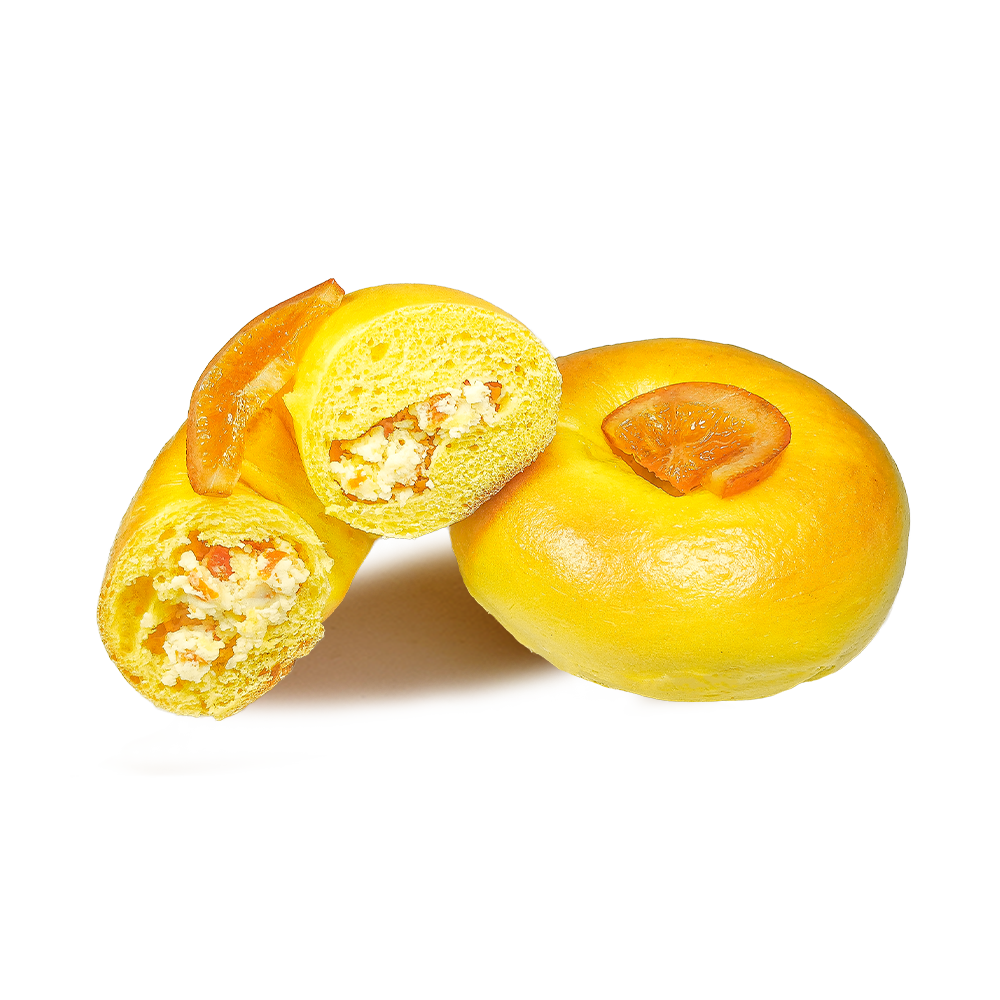 Cream Cheese Bagels with Orange and RoseA filled bagel series with New Zealand cream cheese, butter, and fruit or rose flavors, suited to café retail and frozen distribution checks.View Product →
Hidden Metrics: What Buyers Test After the Label Is Approved
Labels show protein, sugar, and fiber. Buyers also test thaw drip, firmness drift, bake loss, and freeze-thaw cycles. These hidden metrics decide whether a novel baked good survives the supply chain. The chart below uses illustrative pilot scoring to show where reformulation projects usually concentrate risk.
Freeze-thaw stability
78
Thaw drip control
62
Firmness drift
54
Label complexity
46
Industry Application: Where Novel Bagel Formats Fit
Different channels value different outcomes. Retail needs consistent size and freeze stability; foodservice needs reheat tolerance; coffee and tea chains need hand-held portability; export customers need cold-chain customization. The pie chart below shows a practical split for a frozen bagel portfolio.
- Retail: 34% — stable pack size and thaw tolerance
- Foodservice: 29% — par-baked and reheat-friendly formats
- Coffee and tea: 21% — filled and sandwich formats
- Export and cold chain: 16% — customized freezing and labeling
ROI and Selection Guide: A Four-Step Method
1. Define the consumer job
Choose breakfast, snack, or lunch. Set chew, filling, and portion targets before choosing ingredients.
2. Lock the texture target
Measure firmness, crust, and thaw drip. Set a tolerance band that reflects what consumers will actually notice.
3. Choose the delivery format
Match raw dough, par-baked, or thaw-serve to the customer’s kitchen capability and labor model.
4. Validate shelf life and cost
Run freeze-thaw, microbial challenge, and landed-cost models. The cheapest formula is rarely the lowest-cost product once waste and labor are counted.
Maintenance and Compliance: The Unseen Part of Consumer Value
Novel baked goods fail after launch when allergen control, batch records, and cold-chain audits are treated as paperwork. A practical maintenance plan includes supplier approval for every flour and inclusion, line changeover verification, metal detection, and label reconciliation. For export, check destination labeling and shelf-life claims. For clean-label projects, keep challenge-test records and distribution limits. A product that is novel, stable, and properly documented is far more valuable than one that is merely novel.
The strongest methods for producing novel baked goods with enhanced consumer value are not the most exotic. They are the ones that align recipe, process, and format around a measurable eating experience. Start with a texture target, prove it through freeze-thaw, and only then scale the claim. That sequence protects repeat purchase and turns novelty into a durable product.
