How Seed Adhesion Technology Determines Crunchy Topping Performance
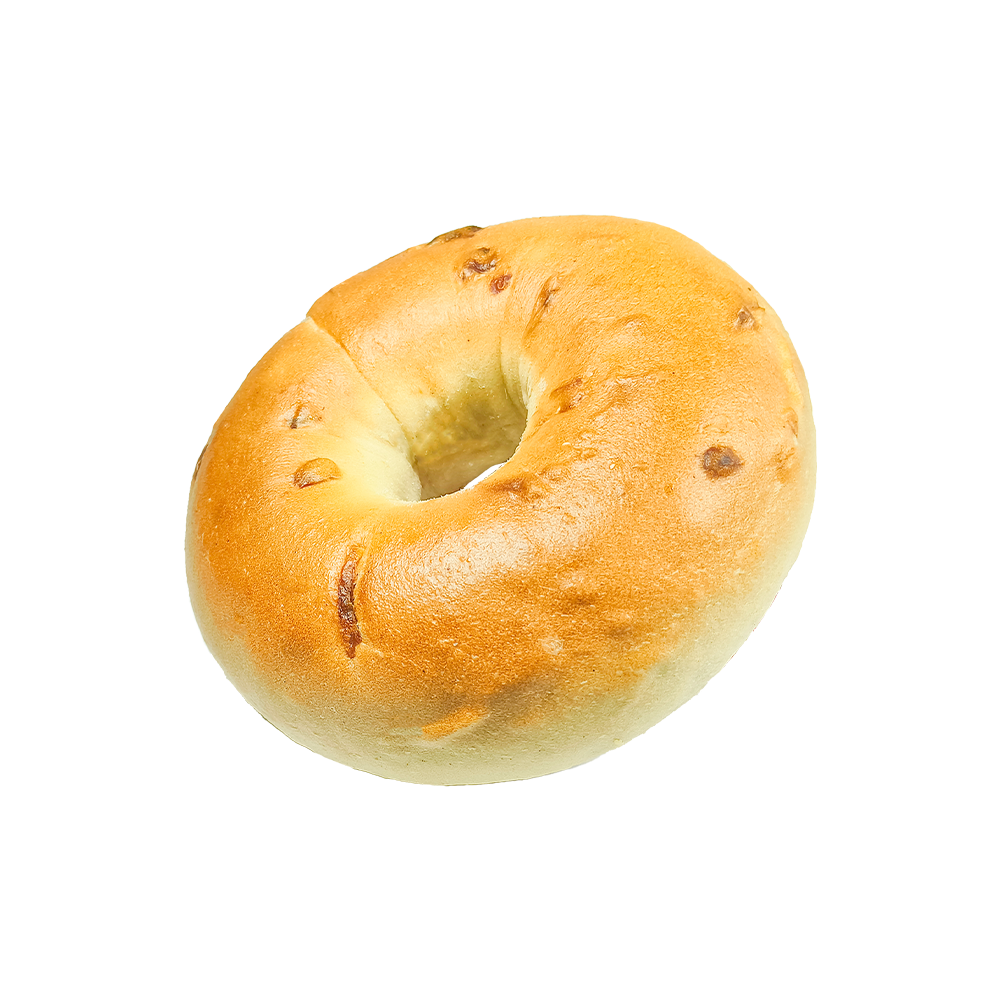
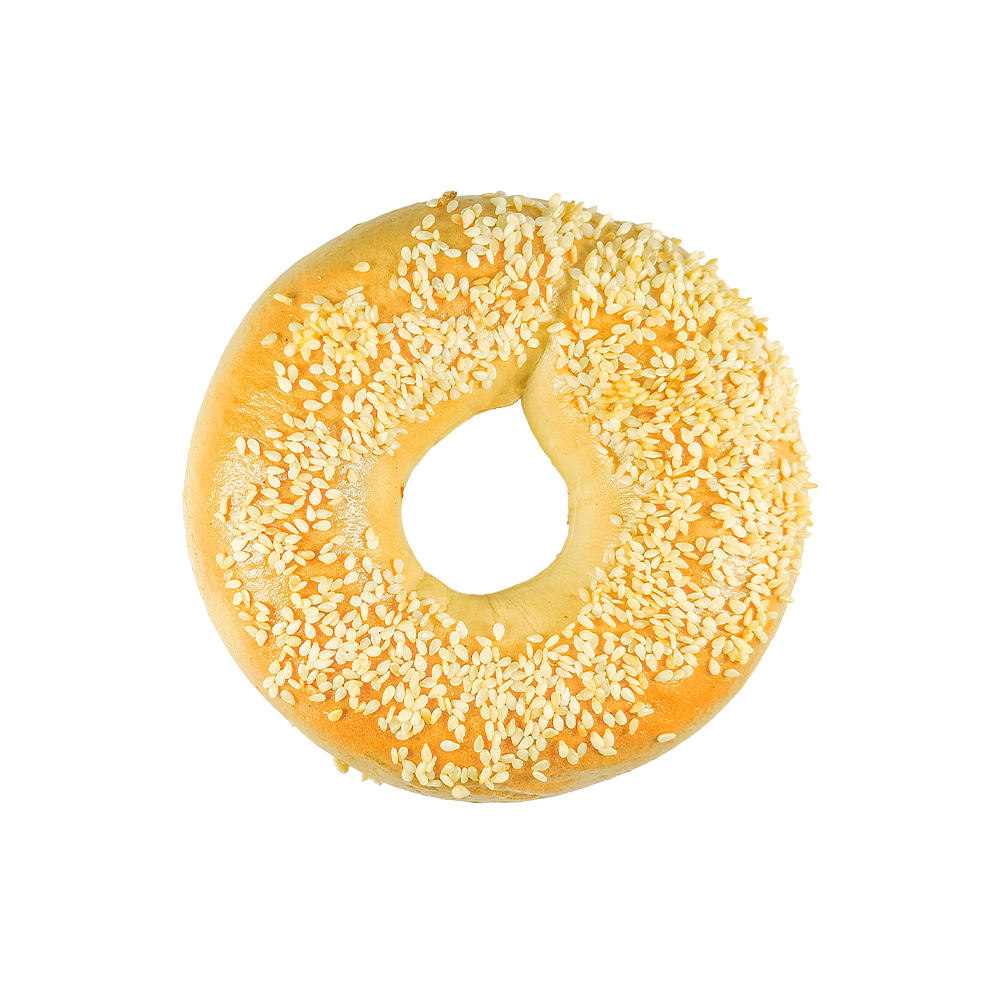
One of the most technically demanding aspects of producing a Savory & Seeded Bagel at industrial scale is achieving consistent seed adhesion that survives freezing, thawing, handling, and toasting — all without the use of artificial binders. The conventional approach relies on the kettle-boiling or steam-injection step: a freshly shaped bagel passes through a boiling water or steam chamber, developing a gelatinized starch surface that acts as a natural adhesive for seeds applied immediately after. Timing is critical — seeds applied to a surface that has cooled even slightly will show significantly higher shedding rates. At Jiangsu Goobagel Food Technology Co., Ltd., process engineering for the crunchy topping application step is calibrated to a defined surface temperature window, with seed application occurring within seconds of the bagel exiting the boiling or steam stage. For a multi-seed blend that combines seeds of different densities and sizes — such as sesame, poppy, flax, and sunflower — uniform distribution further requires a controlled vibration or tumble-coating mechanism rather than a simple gravity drop, ensuring heavier seeds do not disproportionately sink to the underside during application.
The Flavor Chemistry Behind Bold Aroma in Roasted Seed Toppings
The bold aroma associated with a well-made seeded bagel is not simply the smell of seeds — it is the result of a complex cascade of thermal reactions specific to each seed variety. Sesame seeds, for example, undergo Maillard browning and sesamol oxidation simultaneously during oven baking, producing furans, pyrazines, and sulfur-containing volatile compounds that define the characteristic roasted, nutty scent. Poppy seeds contribute a distinctly earthy, slightly floral aroma driven by the oxidation of their high linoleic acid content. These aroma compounds are highly volatile, meaning they peak during baking and in the minutes immediately after, but degrade over time in frozen storage if the product is not properly sealed. This is why packaging selection for a Savory & Seeded Bagel is not merely a branding decision — barrier properties against oxygen and moisture directly determine how much bold aroma the consumer experiences when they open the bag weeks after production. Goobagel Food's R&D approach treats aroma retention as a formula and packaging co-design problem, selecting seed roast levels and modified atmosphere packaging (MAP) parameters together rather than separately.
Seed-by-Seed: What Each Component Contributes to a Multi-Seed Blend
A well-designed multi-seed blend is not a random assortment — each seed type is selected for a specific functional or sensory contribution. Understanding these roles allows product developers to tune the blend ratio for target consumer profiles, cost constraints, or nutritional claims. The following table outlines the primary contributions of seeds commonly used in commercial seeded bagel production:
| Seed |
Primary Sensory Role |
Key Aroma Compounds |
Functional Consideration |
| White Sesame |
Nutty crunch, visual coverage |
Pyrazines, furans, sesamol |
High oil content; prone to rancidity if over-roasted |
| Black Sesame |
Visual contrast, deeper roast note |
Anthocyanin-related volatiles |
Stronger bitter undertone at high ratios |
| Poppy Seed |
Mild crunch, earthy floral note |
Linoleic acid oxidation products |
Regulated in some markets; check import compliance |
| Flaxseed |
Dense texture, subtle nuttiness |
Hexanal, grassy notes |
High ALA omega-3; supports nutrition claim |
| Sunflower Seed |
Substantial crunch, mild sweetness |
Tocopherol-derived volatiles |
Larger size requires pre-processing for even adhesion |
| Pumpkin Seed |
Bold crunch, rich savory depth |
Pyrazines, terpenes |
Premium positioning; higher unit cost |
Managing Oxidative Rancidity in High-Oil Seed Toppings During Frozen Storage
Seeds are concentrated sources of unsaturated fatty acids, and oxidative rancidity is the primary shelf-life limiting factor for any Savory & Seeded Bagel in frozen distribution. The problem is not the freezing itself — lipid oxidation proceeds even at -18°C, albeit more slowly than at ambient temperature. It is accelerated by light exposure, oxygen permeability in the packaging, and the degree of seed roasting prior to application. Lightly roasted seeds retain more antioxidant compounds (tocopherols, sesamol in sesame) that inhibit oxidation, but deliver a less developed bold aroma. Deeply roasted seeds generate more aroma-active pyrazines but have depleted antioxidant reserves and are more vulnerable to subsequent oxidation in storage. This trade-off is a core formulation decision that Jiangsu Goobagel Food Technology Co., Ltd. navigates through accelerated shelf-life testing at elevated temperatures, establishing oxidation benchmarks (peroxide value, anisidine value) that define acceptable roast levels for each seed type in the multi-seed blend before locking a commercial formula. Products distributed through longer cold chain routes — such as export channels or nationwide logistics in China — require more conservative roast levels than those with faster inventory turnover in local retail.
Savory Topping Systems Beyond Seeds: Seasonings, Salt, and Surface Flavor Layering
A fully realized Savory & Seeded Bagel topping system often incorporates elements beyond the core seed blend to build flavor complexity on the crust surface. Coarse salt crystals, dried onion flakes, garlic granules, and dried herb particles are commonly applied alongside seeds in commercial bagel production, each contributing distinct aroma and flavor dimensions. However, each additive introduces its own process variable. Coarse salt, for instance, is hygroscopic — in high-humidity environments or with certain bagel surface moisture levels, it can dissolve during baking and leave white residue marks rather than visible crystals, undermining the premium crunchy topping appearance. Dehydrated onion and garlic are prone to scorching at the high surface temperatures of bagel baking (crust temperatures can reach 180–200°C), producing bitter off-notes if particle size is too fine or moisture content too low. Goobagel Food's product development team typically validates surface seasoning blends in isolation before combining them with the seed component, building a flavor layering protocol that ensures each element performs as intended rather than interfering with adjacent ingredients' thermal behavior.
Texture Engineering: Balancing Crust Crunch with Interior Chew in a Seeded Bagel
The textural contract of a classic bagel — a crackly, seed-studded exterior giving way to a dense, chewy interior — is not the result of a single formula variable but of a coordinated set of process decisions. Dough hydration directly affects crumb density; lower hydration formulas (around 52–56% baker's percentage) produce the tight, chewy crumb associated with New York-style bagels, while higher hydration opens the crumb and softens the chew, creating a product more similar to a soft roll. The crunchy topping itself derives its texture from the rapid surface dehydration that occurs in the first minutes of oven baking — seeds exposed to direct radiant or convective heat lose surface moisture quickly and develop a crisp, roasted character. Maintaining this crunch after freezing and reheating is where many commercial bagels fail: ice crystal formation during freezing can fracture the surface starch layer, and reheating in a microwave (the most common consumer method in China) introduces steam that re-softens the crust. Goobagel Food addresses this by engineering a slightly thicker gelatinized starch shell at the boiling stage, which provides greater structural resilience through the freeze-thaw cycle and delivers closer-to-fresh crunchy topping performance even after microwave reheating.
OEM Considerations for Custom Seeded Bagel Development Across Commercial Channels
When café chains, tea brands, or foodservice operators approach an OEM Classic Bagel Factory for a custom Savory & Seeded Bagel, the specification brief typically reveals significant differences in what each channel prioritizes. Retail clients emphasize visual shelf impact and sealed-bag aroma release — the bold aroma must be immediately perceptible when the consumer opens the packaging, which favors higher roast levels and oxygen-scavenger sachets. Foodservice buyers focus on throughput and consistency — they need a product that performs identically whether reheated in a convection oven, a contact grill, or a toaster, across hundreds of units per service period. Café and tea brand operators occupy a middle ground: they want a visually distinctive multi-seed blend that photographs well for social media, combined with reliable reheating performance across staff with varying skill levels. As a Classic Bagel Manufacturer with a fully integrated supply chain, Jiangsu Goobagel Food Technology Co., Ltd. structures its custom development process to capture these channel-specific priorities early, using the following framework to align formula and process decisions:
- Retail channel: Prioritize aroma retention via MAP packaging and optimal seed roast levels; design seed blend for high visual coverage and photogenic cross-section; include allergen declaration for all seed components.
- Foodservice channel: Optimize for reheating robustness across multiple appliance types; standardize portion weight to ±3g tolerance for cost-per-serve consistency; minimize surface seasoning scorching risk with coarser particle sizes.
- Café and tea brand channel: Develop a signature multi-seed blend with proprietary ratio for brand differentiation; ensure crunchy topping survives the display case environment (ambient humidity and temperature); package in formats compatible with single-serve display refrigeration.
- Cross-channel OEM: Where a single formula must serve multiple channels, anchor core dough and seed adhesion parameters to the most demanding spec (typically foodservice), then differentiate via packaging, portion, and surface seasoning variations for retail and café applications.
This channel-aware development model, supported by Goobagel Food's 100+ clean-label variety portfolio and Supply Custom Classic Bagel capabilities, is what enables brand clients to bring a commercially viable Savory & Seeded Bagel to market with consistent quality across very different operational environments.

 中文简体
中文简体
 English