Meat Filling Moisture Management: The Core Technical Challenge in Minced Meat Bagel Production
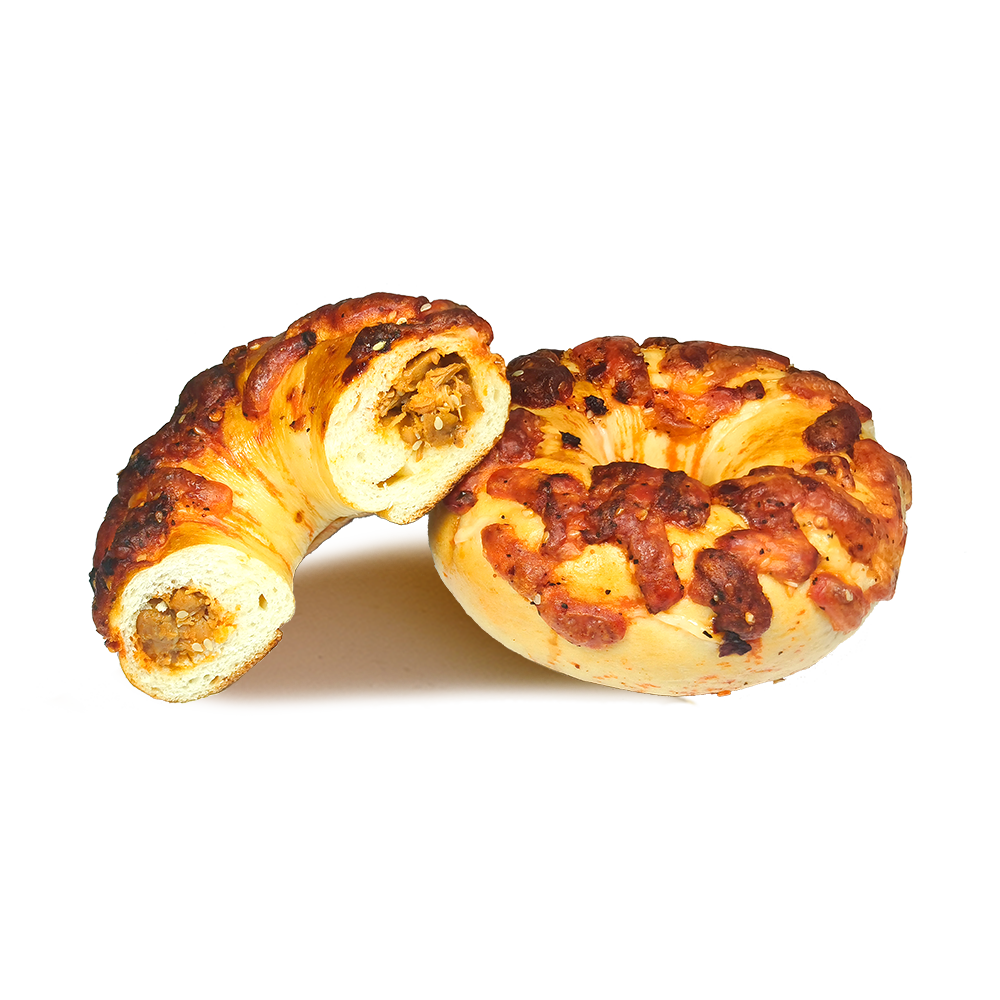
Incorporating a minced meat filling into a frozen bagel product demands a level of moisture engineering that has no parallel in plain or seed-topped varieties. Raw or pre-cooked minced meat contains free moisture that behaves very differently from the bound moisture in a dough matrix — during baking, this free water vaporizes and migrates outward into the surrounding crumb, creating a wet, gummy interface zone between filling and bread that undermines both texture and structural integrity. The severity of this effect depends on the fat-to-lean ratio of the meat, the degree of pre-cooking, and the particle size of the mince. Coarsely ground meat retains more intracellular moisture than finely ground, releasing it more abruptly during the oven stage. At Jiangsu Goobagel Food Technology Co., Ltd., minced meat filling development for the Minced Meat Bagel line involves a pre-cooking and moisture reduction step that brings the filling to a target water activity level before it is encased in dough — typically targeting a water activity (Aw) of 0.92–0.95, which is low enough to limit outward moisture migration during baking while remaining sufficient for a juicy, savory & hearty eating experience after reheating. Additionally, a thin moisture barrier layer — applied as a light egg wash or starch gel coat on the inner dough surface before filling — significantly reduces the rate of moisture transfer during the bake and freeze-thaw cycles that follow.
Halal Certification in Frozen Meat Bakery: What the Process Actually Requires
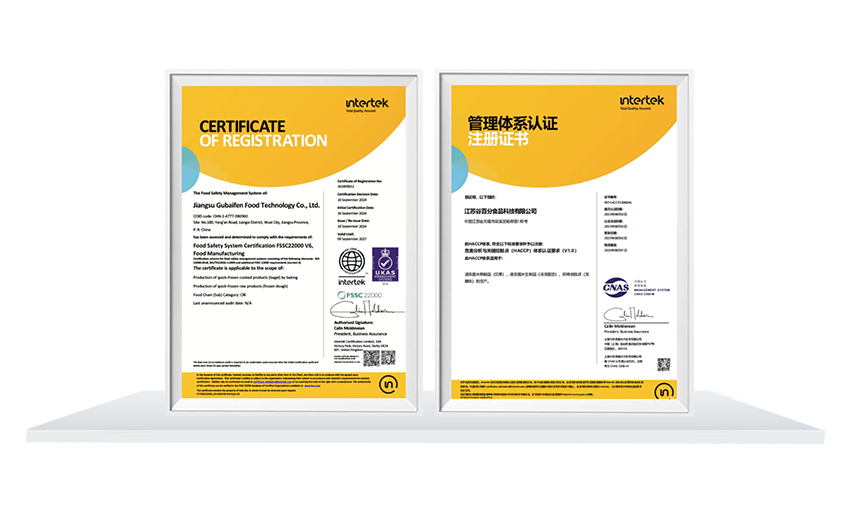
Offering a genuine halal option in a frozen minced meat bagel product is not simply a matter of sourcing halal-certified meat — it requires a system-level certification approach that covers the entire production environment, ingredient supply chain, and operational protocols. Under major halal certification standards (JAKIM, MUI, ESMA, and China's GB/T 26604), a product can only carry a halal claim if every ingredient — including processing aids, flavoring carriers, emulsifiers, and enzyme preparations used in the dough — has been verified as halal-compliant. In a bagel dough context, this specifically flags L-cysteine (a common dough conditioner, sometimes derived from porcine hair), certain bread improver enzyme blends that may include porcine lipase, and any mono- and diglycerides derived from non-halal animal sources. Beyond ingredients, the production line itself must be free from cross-contamination with non-halal materials, which in a multi-product bakery like an OEM Classic Bagel Factory means either dedicated halal production runs with validated cleaning protocols between runs, or a physically segregated halal production line. Jiangsu Goobagel Food Technology Co., Ltd. structures its halal option production scheduling to meet these requirements, supporting clients who need documentation packages for export markets or domestic Muslim consumer segments — an increasingly strategically important demographic in China's foodservice and retail landscape.
Meat Species and Cut Selection: How They Shape Flavor, Texture, and Cost in a Savory Filling
The choice of meat species and specific cut for a minced meat bagel filling directly determines the flavor intensity, fat distribution, bind quality, and cost structure of the finished product. Different species deliver fundamentally different flavor profiles in a baked application, and within each species, the choice of cut affects both the fat-to-lean ratio and the concentration of flavor-active compounds released during cooking. The table below compares the main meat options used in commercial savory bagel filling production:
| Meat Type |
Flavor Profile |
Halal Option |
Key Formulation Note |
| Beef (chuck / brisket) |
Rich, deep umami; classic savory & hearty profile |
Yes, with halal slaughter certification |
20–25% fat ratio ideal; too lean causes dry crumble after baking |
| Lamb (shoulder) |
Distinctly aromatic; preferred in Middle Eastern and Northwest Chinese cuisines |
Yes, with halal slaughter certification |
Branched-chain fatty acids create strong aroma; balance with onion and spice to modulate |
| Chicken (thigh) |
Mild, neutral; high consumer acceptance across demographics |
Yes, with halal slaughter certification |
Lower fat than beef; requires added fat or binder to prevent dry texture |
| Turkey (breast blend) |
Lean, mild; positioned as lower-fat savory option |
Yes, with halal slaughter certification |
Very low fat; must blend with thigh meat or add plant oil to achieve cohesive filling texture |
Seasoning Architecture for a Savory & Hearty Meat Filling in a Baked Application
Seasoning a minced meat filling for a baked bagel application requires a fundamentally different approach from seasoning meat for direct consumption. In a baked product, the filling is enclosed within dough, which means that volatile aromatic compounds — the primary drivers of immediate aroma perception — are partially trapped and then released only upon slicing or biting. This enclosure effect actually amplifies certain aroma compounds relative to an open-cooked meat product, particularly sulfur-containing volatiles from onion and garlic, which can become overpoweringly pungent if not carefully calibrated. Simultaneously, the dough surrounding the filling absorbs fat-soluble flavor compounds during baking, meaning the filling must be seasoned at a higher intensity than would be appropriate for a standalone meat patty, to compensate for flavor absorption by the bread matrix. Goobagel Food's product development process for savory & hearty bagel fillings addresses this through bake-adjusted seasoning benchmarks — testing flavor intensity of the filling both pre-bake and post-bake as an enclosed filling, then back-calculating the required raw seasoning level to hit the target finished-product flavor profile. Key seasoning variables that require specific calibration in this context include salt (affects both flavor and water activity of the filling), black pepper (volatile oil loss during baking), and onion/garlic in dehydrated form (concentration effect during baking can cause bitterness if particle size is too fine).
Food Safety Considerations Unique to Meat-Filled Frozen Baked Products
A Minced Meat Bagel presents a more complex food safety profile than plain or vegetable-filled baked goods, because the meat filling introduces pathogen risk vectors — primarily Salmonella, Listeria monocytogenes, and E. coli O157:H7 — that require specific critical control points in the production process. The key food safety design decision is whether the meat is fully cooked before enclosure in the dough (fully cooked format) or whether the cooking step occurs entirely during the consumer's reheating. A fully cooked format — where the filling reaches a validated internal temperature of 75°C or above during production — provides the highest safety margin and simplifies consumer handling instructions, but requires precise temperature management to avoid overcooking the dough exterior while fully cooking a dense meat center. A raw-fill format, while offering certain textural advantages (juicier filling), places the entire pathogen kill step at the consumer end, requiring unambiguous cooking instructions and consumer oven capability verification — a significant liability in retail settings where end-user compliance cannot be guaranteed. As a Classic Bagel Manufacturer supplying retail and foodservice operators across China, Jiangsu Goobagel Food Technology Co., Ltd. defaults to a fully cooked meat filling protocol for all Minced Meat Bagel SKUs, validating internal temperature achievement across the range of product weights and formats in its portfolio using thermal process validation records that are available to OEM clients as part of the product technical file.
Positioning the Minced Meat Bagel Across Foodservice, Café, and Retail Channels
A savory & hearty meat-filled bagel product occupies a distinct space in the commercial food market — it functions simultaneously as a portable meal solution, a premium snack, and a culturally adaptive format that resonates with both Western-influenced food culture and Chinese consumers' strong appetite for savory filled baked goods. Effective channel positioning requires tailoring both the product specification and the commercial narrative to fit each channel's operational context and customer expectations. Goobagel Food works with clients across all major channels and has identified the following channel-specific positioning parameters as most commercially relevant for a Minced Meat Bagel product:
- Foodservice and institutional channels: Emphasize portion weight consistency (±5g tolerance for cost-per-serve management), reheating versatility across convection ovens and contact grills, and halal option availability for institutional buyers serving diverse populations such as university campuses, corporate canteens, and hospital food programs. Bulk frozen packaging (10–20 units per bag) is standard.
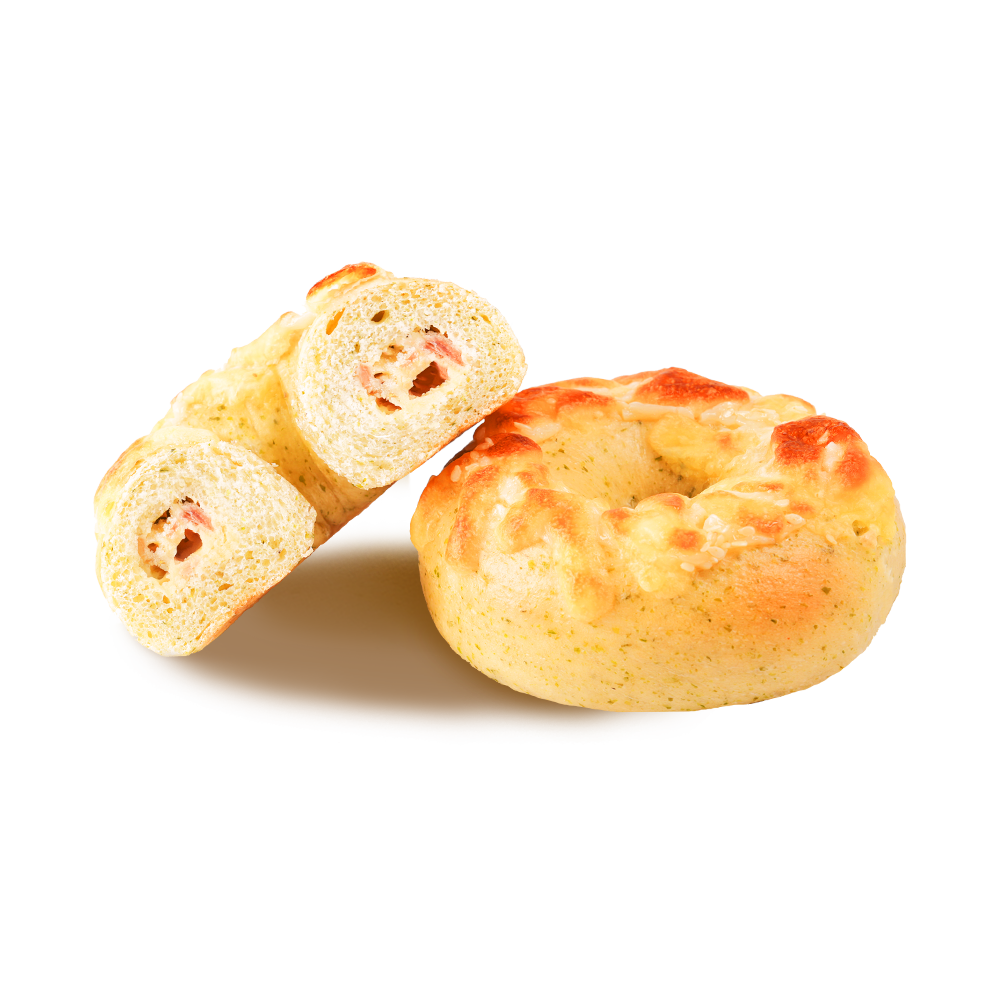
- Café and tea brand channels: Focus on visual cross-section appeal — a clearly visible, well-distributed meat filling creates strong social media and display case impact. Smaller portion formats (80–100g) suit the snack-meal occasion typical of café dayparts. Branded packaging inserts supporting the halal option certification documentation are increasingly requested by café operators targeting Muslim consumer demographics.
- Retail channels: Packaging should communicate the savory & hearty eating experience through visible filling in window packaging or cross-section imagery; front-of-pack protein content callout supports meal replacement positioning; halal certification mark prominently displayed drives incremental purchase from halal-observant consumer households, which represent a significant and growing retail segment in major Chinese cities.
- Export and cross-border e-commerce: The halal option is often a non-negotiable requirement rather than a positioning choice for export to Southeast Asian, Middle Eastern, and Central Asian markets. Jiangsu Goobagel Food Technology Co., Ltd.'s OEM Classic Bagel Factory capabilities include producing export-specification Minced Meat Bagel products with multilingual halal certification documentation and market-specific packaging formats, supporting brand clients who need a single manufacturing partner for cross-market distribution.
With a fully integrated supply chain from raw material sourcing through to distribution and a portfolio of 100+ clean-label bagel varieties, Goobagel Food provides the production depth and channel expertise to help clients bring a commercially viable, safety-validated, and positioning-optimized Minced Meat Bagel to market across China's most demanding commercial food channels.

 中文简体
中文简体
 English