What Defines NY-Style Classic Bagel Texture and Why It Is Difficult to Replicate Industrially
The NY-style classic bagel occupies a very specific textural position in the global bakery landscape: a thin, shiny, slightly crackly crust encasing a dense, tight, chewy crumb with almost no open air pockets. This profile is the product of a particular combination of high-gluten flour (typically 13–14% protein content), low hydration dough (around 53–57% baker's percentage), a lengthy cold retard fermentation of 12–24 hours, and the defining kettle-boiling step in alkaline or malt-enriched water immediately before baking. Each of these variables interacts: the cold retard slows yeast activity while allowing enzymatic activity to develop flavor complexity and tighten the gluten network; the boiling step gelatinizes the outer starch layer and sets the crust structure before the interior has fully expanded in the oven, physically limiting oven spring and producing the characteristic dense crumb. The challenge in industrial frozen production — as experienced by Jiangsu Goobagel Food Technology Co., Ltd. in developing its NY-style Cream Cheese Bagel line — is that the long cold retard is difficult to standardize across large batch volumes without introducing variability in fermentation progression, and the boiling step requires precise water chemistry control (pH, malt content, and temperature) to replicate the crust character consistently across thousands of units per shift. Steam-injection oven alternatives can approximate some surface effects but do not fully replicate the gelatinization depth achieved by submersion boiling, which remains the gold standard for authentic NY-style classic production.
Cream Cheese as a Filling Ingredient: Stability, Migration, and Freeze-Thaw Performance
Using cream cheese as a creamy filling in a frozen bagel product introduces a set of food science challenges that are fundamentally different from applying it fresh at the point of service. Standard cream cheese at refrigeration temperature is a stable oil-in-water emulsion held together by a casein protein network and stabilized by a combination of fat globule distribution and water activity. At freezing temperatures, ice crystal formation disrupts this protein network, causing syneresis — the weeping of free moisture — upon thawing. The result, without formulation intervention, is a filling that appears watery, grainy, or separated when the consumer opens the product. Industrial cream cheese fillings for frozen applications are therefore reformulated compared to their retail counterparts: stabilizers such as locust bean gum, xanthan gum, or modified starch are incorporated to bind free water and resist ice crystal damage; fat content is often increased to 33–36% to improve freeze-thaw emulsion stability; and pH is carefully managed (typically 4.4–4.8) to maintain the protein network integrity through multiple temperature cycles. At Goobagel Food, the creamy filling specification for each Cream Cheese Bagel SKU includes explicit freeze-thaw cycle testing — a minimum of three cycles between -18°C and +4°C — before any formula is approved for commercial production, ensuring that the filling texture the consumer experiences matches the quality benchmark regardless of cold chain variability during distribution.
Filled Bagel Production Methods: Co-Extrusion vs. Post-Bake Injection vs. Pre-Fold
There are three primary methods for incorporating a creamy filling into a bagel in industrial production, and each carries distinct trade-offs in terms of filling distribution, process complexity, flavor development, and consumer experience. Understanding these differences is essential for any brand specifying a Cream Cheese Bagel product with a classic or premium positioning:
| Method |
How It Works |
Filling Distribution |
Key Limitation |
| Co-extrusion |
Filling and dough are extruded simultaneously; filling is encased before shaping |
Uniform central pocket; consistent fill weight |
Filling must withstand boiling step without leaking; requires heat-stable cream cheese formula |
| Post-bake injection |
Baked bagel is injected with filling via nozzle after cooling |
Concentrated fill zone; visible injection point |
Filling does not bond with crumb; migration risk in freeze-thaw; shorter shelf life |
| Pre-fold / sandwich format |
Pre-sliced bagel is assembled with filling layer before freezing |
Full surface coverage; visible filling on cross-section |
Filling exposed at edges; requires higher-viscosity formula to prevent flow during freezing |
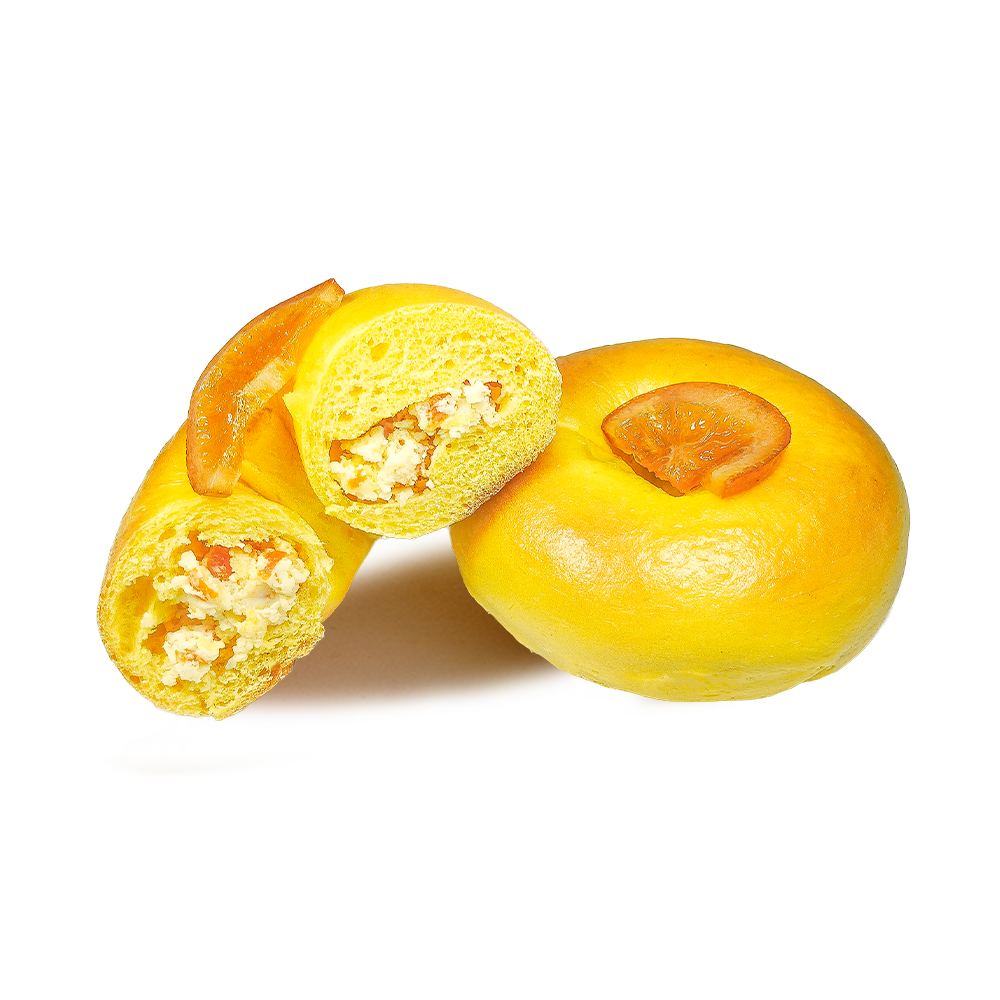
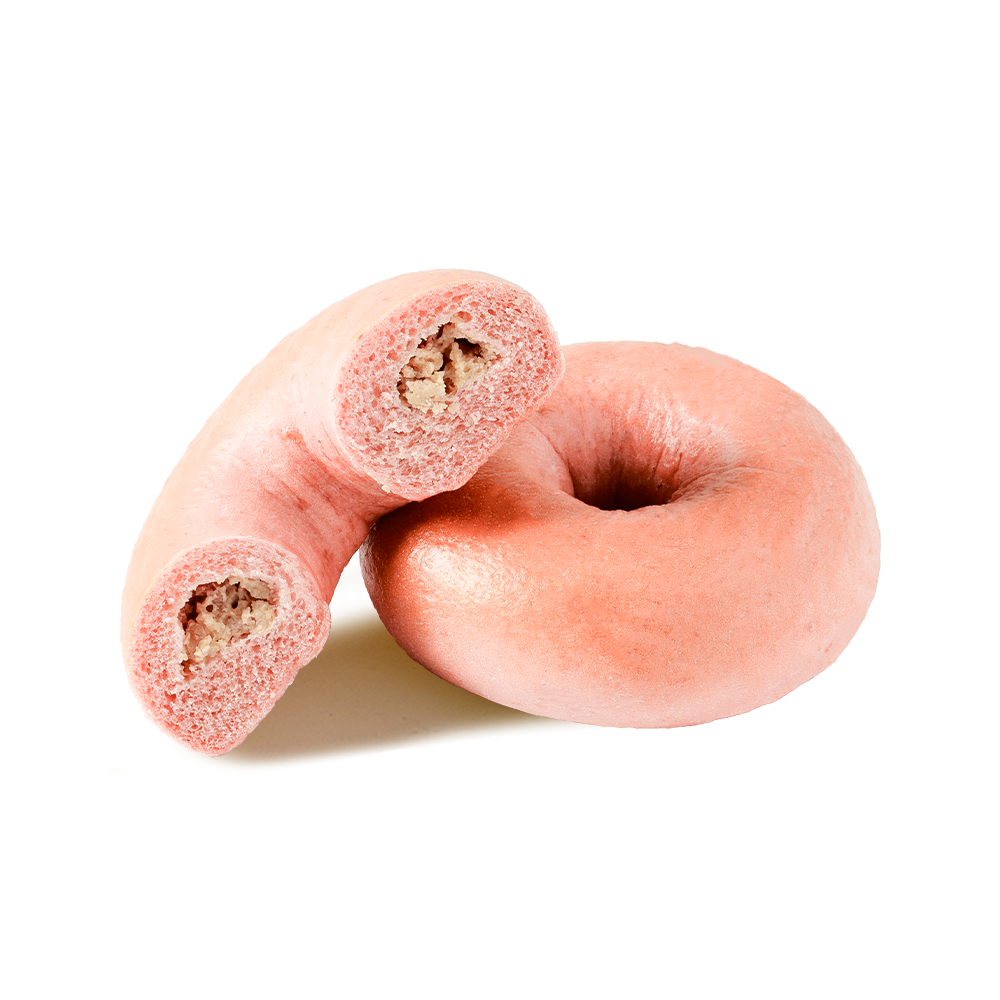
For a Cream Cheese Bagel positioned as a premium retail or café product with strong NY-style classic credentials, the co-extrusion method delivers the most controlled eating experience — a clean cross-section with a visually centered creamy filling pocket — but demands the most sophisticated formula engineering to survive the boiling step intact. Jiangsu Goobagel Food Technology Co., Ltd. has developed heat-stable cream cheese filling variants specifically designed for co-extrusion bagel production, a capability that distinguishes its OEM Classic Bagel Factory offer from simpler post-bake filling operations.
Cream Cheese Flavor Profiling: How Acidulation Level Affects Consumer Perception
The flavor of cream cheese is primarily defined by its lactic acid content, diacetyl concentration, and fat level — and small shifts in any of these variables produce meaningfully different consumer experiences. A traditional NY deli cream cheese operates at a relatively high acidity (pH 4.4–4.6), producing a clean, tangy, slightly sharp flavor that contrasts sharply with the mild, yeasty sweetness of a classic bagel. This contrast is fundamental to why the Cream Cheese Bagel pairing works as a flavor system: the acid cuts through the starchy richness of the bagel and stimulates salivation, making each bite feel refreshing rather than heavy. In the Chinese market context, consumer research consistently shows a preference for milder acidity in dairy products compared to Western benchmarks — meaning a cream cheese filling formulated to a strict NY-style pH may polarize Chinese consumers who are accustomed to softer, sweeter dairy flavors. Goobagel Food navigates this by offering OEM clients a choice of filling acidity profiles: a standard NY-profile cream cheese for café chains and premium retail targeting consumers with Western food experience, and a milder, higher-fat variant with reduced lactic acid intensity for mainstream retail and tea brand applications where broader palatability is the priority. This market-adaptive approach to creamy filling specification is part of what has enabled the company to work effectively with leading brands across China's diverse food service landscape.
The Role of Bagel Crumb Density in Supporting a Creamy Filling Without Structural Failure
A detail frequently overlooked in cream cheese bagel product development is that the bagel itself — not just the filling — must be structurally engineered to support the weight and moisture of the creamy filling during eating. An overly open, soft crumb structure (the type produced by high hydration or over-proofed dough) will compress under the pressure of a dense filling, causing the filling to squeeze out the sides when bitten — a significant consumer experience failure that is particularly acute in a pre-filled sandwich format. The tight, dense crumb of an authentic NY-style classic bagel is not merely a textural preference; it functions as a structural containment system for the filling. The gluten network in a properly developed, low-hydration bagel dough creates a matrix of small, evenly distributed air cells that resist compression uniformly, distributing the mechanical stress of a bite across the entire crumb cross-section rather than channeling it toward the filling pocket. Jiangsu Goobagel Food Technology Co., Ltd. specifies crumb density targets (measured as crumb firmness in grams-force via texture analyzer) for each Cream Cheese Bagel format in its 100+ variety portfolio, ensuring that dough formula and proofing parameters are co-optimized with filling viscosity to deliver a structurally coherent eating experience across both fresh-thawed and toasted consumption scenarios.
Clean Label Compliance in Cream Cheese Filling: Navigating Stabilizer Declarations
The requirement for freeze-thaw stable creamy filling and the parallel demand for clean-label ingredient declarations create a genuine tension in Cream Cheese Bagel product development. Conventional industrial cream cheese stabilizer systems rely on carrageenan, locust bean gum, and modified starches — ingredients that are functionally effective but increasingly scrutinized by health-conscious consumers and restricted under certain clean-label certification frameworks. Managing this tension requires a clear-eyed assessment of which stabilizer options are both technically viable and label-acceptable for the target market. The following list outlines the main stabilizer categories and their clean-label status:
- Locust bean gum (carob bean gum): Broadly accepted as natural; derived from carob seeds; effective at low use levels (0.1–0.3%); compatible with most clean-label standards including EU organic certification. Preferred first-choice stabilizer for premium clean-label cream cheese fillings.
- Xanthan gum: Fermentation-derived; generally accepted in clean-label contexts though some premium natural certifications exclude it; highly effective for freeze-thaw stability at 0.05–0.15% use levels; must be balanced against potential stringy mouthfeel at higher concentrations.
- Native (unmodified) starch: Fully clean-label; lower freeze-thaw performance compared to modified starches; viable when combined with gum stabilizers rather than used as sole stabilizer system; tapioca and rice starches preferred for neutral flavor impact.
- Modified starch (E1400 series): Highly effective technically; broadly permitted under food additive regulations; excluded from "no additives" or strict clean-label claims; appropriate for conventional retail products where label positioning does not explicitly prioritize natural ingredients.
- Carrageenan: Strong gel-forming capacity; increasingly avoided in clean-label formulations due to consumer perception concerns; not suitable for products targeting health-food retail, fitness-oriented channels, or brands with explicit "no controversial additives" positioning.
As a Classic Bagel Manufacturer operating across retail, foodservice, and café chain channels, Jiangsu Goobagel Food Technology Co., Ltd. maintains parallel filling formulations using both conventional and clean-label stabilizer systems, allowing OEM clients to match their specific label positioning requirements without compromising the freeze-thaw performance and creamy filling texture integrity that define a commercially successful Cream Cheese Bagel product.

 中文简体
中文简体
 English